
Wire for Garden Trellis: 4 Types Compared by Use

Plants Trellis Training Wire, 175 Ft is the most direct match for everyday garden trellis training because its 20-gauge galvanized wire is flexible and rust resistant. Choose a stainless steel cable or heavier utility wire instead when your design needs a different thickness or a sturdier support line.
Trellis wire supports climbing stems along a frame or wall; the right type depends on the span, plant growth and how much tension the support needs.
We earn a commission if you buy through links on this page. As an Amazon Associate I earn from qualifying purchases. Products are compared on manufacturer specifications, not hands-on testing.
- Best overall: Plants Trellis Training Wire, 175 Ft – 20-gauge galvanized wire is flexible for training plants along trellises and walls.
- Best for long runs: CELYND 1/16-Inch Stainless Cable, 328 Ft – The 328-foot coil provides the longest length among these standalone wires.
- Best for heavier support: OOK 9-Gauge Solid Steel Utility Wire, 50 Ft – The 9-gauge solid-core wire is rated to hold up to 165 pounds.
| Product | Best for | Gauge / diameter | Length | Material | Shop |
|---|---|---|---|---|---|
| Plants Trellis Training Wire, 175 Ft | Plant training | 20 gauge | 175 ft | Galvanized steel | Check Price on Amazon |
| CELYND 1/16-Inch Stainless Cable, 328 Ft | Long cable runs | 1/16 in | 328 ft | 304 stainless steel | Check Price on Amazon |
| 1/16-Inch Stainless Wire Rope, 100 Ft | Compact cable runs | 1/16 in | 100 ft | 304 stainless steel | Check Price on Amazon |
| OOK 9-Gauge Solid Steel Utility Wire, 50 Ft | Heavy-duty support | 9 gauge | 50 ft | Galvanized steel | Check Price on Amazon |
Wire for Garden Trellis Options
Match the wire’s thickness and material to your trellis span, layout and plants.
Plants Trellis Training Wire, 175 Ft

For flexible plant training, Plants Trellis Training Wire, 175 Ft uses 20-gauge galvanized wire rather than a thicker cable or solid-core utility wire. The 175-foot coil is intended for trellises and wall-climbing plants, and its zinc coating is rust resistant. Its flexibility suits tying or guiding growth along a support where a thin line is useful. The tradeoff is its fine gauge: choose a sturdier wire if your design needs a heavily tensioned structural span or support for substantial plant weight. Measure the route before cutting so you can plan continuous runs and attachment points.
Bottom line: Choose this for flexible plant training on a trellis or climbing wall.
CELYND 1/16-Inch Stainless Cable, 328 Ft

CELYND 1/16-Inch Stainless Cable, 328 Ft gives trellis builders the longest coil here, with 328 feet of 1/16-inch 304 stainless steel cable. Its 7×7 strand construction is flexible for bending and routing, and the package includes 150 crimping sleeves for forming secured ends. The maker gives a breaking strength of 480 pounds; that figure is not a safe working-load rating for a trellis, so do not use it to justify an unsupported span or load-bearing use. This cable suits longer layouts where corrosion resistance and the extra length matter, but it requires suitable end fittings and secure anchors.
Bottom line: Choose this for long cable runs where flexible stainless cable is useful.
1/16-Inch Stainless Wire Rope, 100 Ft
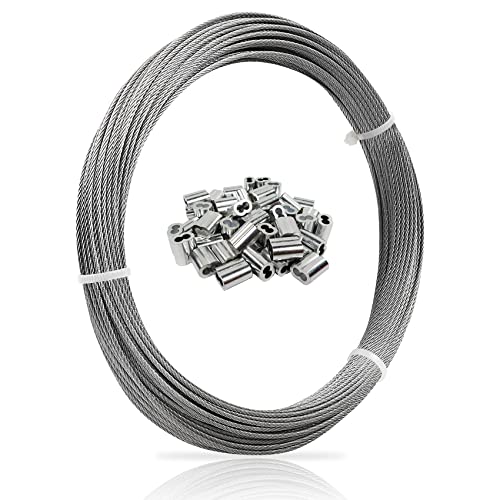
1/16-Inch Stainless Wire Rope, 100 Ft offers a shorter 100-foot coil of 1/16-inch 304 stainless steel rope, with 50 aluminum crimp sleeves for finishing cut ends. Its 7×7 strand build is flexible enough to form loops and turns, making it a fit for smaller trellis layouts or projects where a long coil would leave excess. The maker gives a 368-pound breaking strength, but breaking strength is not a working-load limit; the anchors and fittings also affect the support. Choose another type if you want a solid-core wire or a fine training wire rather than a cable.
Bottom line: Choose this for a compact layout that calls for flexible stainless cable.
OOK 9-Gauge Solid Steel Utility Wire, 50 Ft

OOK 9-Gauge Solid Steel Utility Wire, 50 Ft stands apart as 9-gauge solid-core galvanized steel wire, rather than a fine training wire or stranded cable. Its 50-foot coil can be cut to length, and the maker gives a capacity of up to 165 pounds. That capacity does not establish a safe working load for any particular trellis: span, attachment method and outdoor conditions matter. The heavier solid construction suits projects needing a more substantial line, but it is less suited to delicate training or layouts that call for easily routed cable. Plan attachment points before cutting.
Bottom line: Choose this when a short trellis run needs heavier solid-core wire.
How to choose trellis wire by plant and span
Choose the wire based on whether it guides stems or carries a tensioned span. Fine training wire is useful for directing growth, while stainless cable or heavier solid wire is better suited to a frame that needs a more substantial line. A useful starting layout for many climbing plants is horizontal support lines spaced about 12 to 18 inches apart; vigorous or heavy vines may need closer support and stronger anchors. Span length also changes the choice: longer unsupported runs sag more, so add intermediate supports rather than relying on a wire’s breaking-strength figure. For small, delicate stems, use soft plant ties and leave room for stem growth instead of cinching stems directly to taut wire.
Use this guide to match the main wire types to a common trellis need:
| Need | Wire type | Consideration |
|---|---|---|
| Guiding stems | Fine galvanized training wire | Flexible, but not a heavy structural line |
| Long routed runs | Stranded stainless cable | Needs compatible fittings and anchors |
| Short, substantial line | Solid galvanized utility wire | Heavier and less suited to delicate ties |
Wire thickness, tension and safe support
Wire diameter alone does not tell you how much weight a finished trellis can safely hold. A cable’s breaking strength is the force at failure, not its allowable working load, and a weak anchor or fitting can fail first. Keep people and pets away from tensioned wire during installation, and do not use garden trellis wire as a climbing or human-support line. For a lightweight vine wall, short spans with several well-anchored lines usually make more sense than a single long, highly tensioned run. If the span is long or the plant is heavy, add support posts or intermediate anchors; do not assume a product strength figure covers those parts of the structure.
Galvanized steel versus stainless cable
Galvanized steel has a zinc coating that helps limit corrosion, while stainless cable is made from corrosion-resistant steel alloy; neither choice removes the need to inspect an outdoor trellis. Stainless cable is stranded, which lets it bend around a planned route, but crimp sleeves and anchor fittings must match the cable diameter. Solid utility wire has a different feel and use from flexible cable, so select it for a more substantial, cut-to-length line rather than fine stem guidance. In coastal or regularly wet locations, material and fitting corrosion resistance matter especially; pair compatible materials where possible to reduce corrosion at connections.
Installing and maintaining a garden wire trellis
Lay out posts, anchor points and line spacing before cutting wire; a 12- to 18-inch vertical spacing is a common starting point for many climbing plants, adjusted to growth habit and support needs. Keep cable runs straight and secure their ends with fittings designed for that diameter; pliers-crimped sleeves need a firm, complete crimp to keep a loop from slipping. Avoid sharp cut ends where stems or hands can snag, and cap or cover exposed ends. Check the trellis at least once each growing season and after strong wind for loosened anchors, sagging runs, rust or worn ties. Replace damaged sections before new growth adds more weight.
Frequently Asked Questions
How far apart should garden trellis wires be?
For many climbing plants, horizontal lines spaced about 12 to 18 inches apart are a useful starting point. Use closer spacing for plants with fine tendrils or where young growth needs frequent guidance.
Can stainless steel cable support heavy vines?
A stainless cable may suit a tensioned trellis, but its breaking strength is not a safe working-load rating. The anchors, fittings, span and plant weight all affect the finished support, so add intermediate supports for long runs.
Is galvanized wire suitable for an outdoor trellis?
Galvanized wire has a zinc coating that helps resist corrosion outdoors. Inspect it and its connections each growing season, particularly in persistently wet or coastal conditions.
How do I attach climbing plants to trellis wire?
Use soft plant ties and leave slack so stems can thicken without being constricted. Check ties as plants grow, and loosen or replace any that begin to bite into stems.
Can trellis wire be used as a safety cable?
No; garden trellis wire should not be used to support people or pets. A wire’s breaking strength does not establish a safe working load, and anchors or fittings may fail first.