
Sougayilang Fly Reels: 3 Models Compared by Fit

For most anglers shopping for a Sougayilang fly reel, Sougayilang Large Arbor 5/6 is a straightforward 5/6 choice because its size, 0.33-pound weight and one-way drag match a conventional trout setup. Choose another model if you need a 7/8 reel or prefer a multi-disc drag system.
A fly reel holds backing and fly line, balances the rod, and controls line when a fish runs; rod weight and line weight should guide the size choice.
We earn a commission if you buy through links on this page. As an Amazon Associate I earn from qualifying purchases. Products are compared on manufacturer specifications, not hands-on testing.
- Best overall: Sougayilang Large Arbor 5/6 – A 5/6 large-arbor reel weighing 0.33 pounds, with one-way roller-bearing drag.
- Best for multi-disc drag: Sougayilang CNC 5/6 Silver – A 5/6 reel combines a multi-disc carbon-steel and stainless-steel drag with a 0.45-pound weight.
- Best for 7/8 setups: Sougayilang Colorful Fly Reel 7/8 – The 7/8 option weighs 0.6 pounds and uses a large spool for quick line take-up.
| Product | Best for | Size | Weight | Drag system | Shop |
|---|---|---|---|---|---|
| Sougayilang Large Arbor 5/6 | Light 5/6 setups | 5/6 | 0.33 lb | One-way roller bearing | Check Price on Amazon |
| Sougayilang CNC 5/6 Silver | Multi-disc drag | 5/6 WT | 0.45 lb | Multi-disc carbon steel/stainless steel | Check Price on Amazon |
| Sougayilang Colorful Fly Reel 7/8 | Heavier 7/8 rods | 7/8 WT | 0.6 lb | Multi-disc carbon steel/stainless steel | Check Price on Amazon |
Sougayilang Fly Reels Compared
Match reel size to your rod and line first, then compare weight and drag design.
Sougayilang Large Arbor 5/6
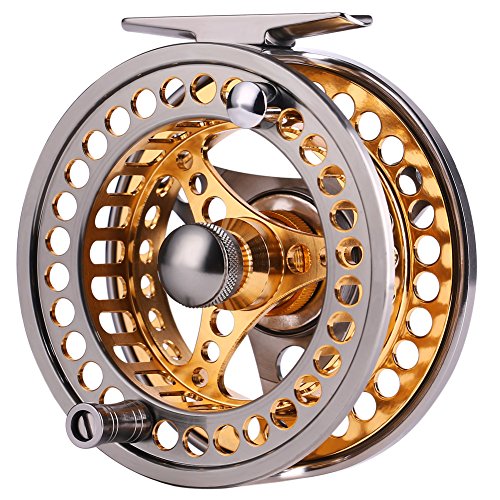
At 0.33 pounds, this 5/6 reel is the lightest of the three standalone reels, making its weight a useful distinction for a light rod setup. The one-way roller bearing engages drag in one direction; the reel also has a 1:1 gear ratio and can be converted for left- or right-hand retrieve. Its click-style system is simpler than the multi-disc drag in the other two reels, so anglers seeking finer drag adjustment may prefer a different design.
Bottom line: Choose this for a light 5/6 outfit and a simple one-way drag.
Sougayilang CNC 5/6 Silver

The 5/6 silver reel stands apart with a multi-disc carbon-steel and stainless-steel drag system rather than a simple click-style arrangement. The reel measures 3.3 inches long by 3.3 inches wide and 1.0 inch high, with a weight of 0.45 pounds. That added weight matters when balancing a lighter rod, so it suits anglers prioritizing the multi-disc drag over minimizing reel weight. The 5/6 size is the same general line-weight class as Sougayilang Large Arbor 5/6, but its drag design and weight differ.
Bottom line: Pick this if you want a multi-disc drag in a 5/6 size.
Sougayilang Colorful Fly Reel 7/8

The colorful reel is the only 7/8 option here, making it the match to consider when your rod and line are in that heavier class rather than 5/6. Its multi-disc carbon-steel and stainless-steel drag includes a freewheel bearing, while the large spool is designed for quick retrieval and reduced line memory. The dual-molded handle adds a different grip style from the other two reels. Its higher size and weight are a poor fit for a light 5/6 rod, so confirm your rod’s line class before choosing it.
Bottom line: Choose this for a 7/8 rod and line rather than a lighter outfit.
How to Choose a Sougayilang Fly Reel
Choose by rod and line weight before comparing drag or color: a 5/6 reel belongs with a 5- or 6-weight fly outfit, while a 7/8 reel belongs with a 7- or 8-weight outfit. Reel weight affects balance, especially on lighter rods, so compare the reel’s own weight as well as its size. Arbor size affects how quickly line is retrieved and how much backing fits; large-arbor designs take up line faster, but actual backing capacity depends on spool dimensions and line diameter. Drag choice matters most when a fish runs: a click drag offers a simpler resistance mechanism, while a disc system provides adjustable friction. Do not choose a reel solely by color or material if its line class does not match the rod.
5/6 Versus 7/8 Reel Fit
A 5/6 reel is the fit for rods carrying 5- or 6-weight line; a 7/8 reel is for 7- or 8-weight line. Match the line printed for the rod’s intended weight rather than using reel size as a substitute for rod information. The following guide keeps the size decision separate from drag preference.
| Rod and line class | Reel size to consider | Choice condition |
|---|---|---|
| 5- or 6-weight | 5/6 | Choose when the rod and line are in this class |
| 7- or 8-weight | 7/8 | Choose when the rod and line are in this class |
A reel that is too large can upset rod balance, while a smaller reel may not offer suitable spool capacity for the line and backing combination. If you are between sizes, first check the rod’s designated line weight and consider the intended backing and fly-line diameter.
Fly Reel Drag Types and Arbor Design
Fly reel drag systems range from click-and-pawl mechanisms to disc drags, and the practical difference is how resistance is applied and adjusted. Click systems are mechanically simple; multi-disc systems use friction surfaces to provide adjustable resistance. A stronger drag is not automatically better for trout fishing, since light tippets can break under excessive pressure. Large-arbor reels retrieve more line per spool turn than smaller-arbor designs, and their larger diameter can help reduce line coils. Spool capacity still depends on the reel’s dimensions and the thickness of both fly line and backing, so plan the combination rather than assuming all reels of one weight class hold the same amount.
Balancing and Caring for a Fly Reel
A balanced outfit should feel steady when held near the grip, without the reel pulling the rod noticeably down or making the tip feel unusually heavy. Reel weight is only one part of balance: rod length, grip position, and line loaded on the spool also affect it. After fishing, rinse a reel exposed to salt or grit with fresh water and let it dry before storage; salt residue can accelerate corrosion even on corrosion-resistant finishes. Keep the drag loosened during storage when the design allows, since leaving a drag compressed for long periods can stress its friction components. Avoid immersing a reel unless its maker says it is designed to be submerged.
Frequently Asked Questions
Should a 5/6 reel go on a 6-weight rod?
Yes, a 5/6 reel is in the matching size class for a 6-weight rod. Balance also depends on rod length and reel weight, so compare how the loaded outfit feels at the grip.
What does a large arbor do on a fly reel?
A large arbor retrieves more line per spool turn than a smaller arbor. The actual backing capacity still depends on spool dimensions and the diameter of the backing and fly line.
Is a disc drag necessary for trout fishing?
No, a click drag can be suitable for trout, while a disc system allows friction adjustment. With light tippet, use restrained drag pressure because excessive resistance can break the leader.
How should a fly reel be cleaned after fishing?
Rinse salt or grit off with fresh water and let the reel dry before storage. Avoid soaking the reel unless the manufacturer says submersion is suitable.
Can I switch a fly reel to left-hand retrieve?
Some reels permit a left-to-right retrieve conversion; confirm the conversion method for the specific model before changing it. Keep the reel’s drag direction in mind so resistance engages when line runs out.