
Synthetic Vinyl Gloves: 4 Options Compared by Fit

London Labs Synthetic Vinyl, Medium is the closest match for synthetic vinyl gloves because it combines synthetic vinyl with nitrile polymers in a 100-count, medium-size pack. Choose a different option if you need large gloves, a 1,000-count case, or vinyl without the polymer blend.
Vinyl gloves are disposable gloves made from PVC; fit and intended task matter because vinyl generally stretches less closely than nitrile.
We earn a commission if you buy through links on this page. As an Amazon Associate I earn from qualifying purchases. Products are compared on manufacturer specifications, not hands-on testing.
- Best overall: London Labs Synthetic Vinyl, Medium – The product explicitly combines synthetic vinyl with nitrile polymers in a 100-count medium pack.
- Best for large hands: Supmedic Clear Vinyl, Large – The large-size clear gloves have finger and palm thicknesses of 0.12 mm and 0.08 mm.
- Best for medium bulk supply: London Labs Clear Vinyl, Medium, 1,000 – The medium clear vinyl gloves come in a 1,000-count case.
| Product | Best for | Size | Count | Material | Shop |
|---|---|---|---|---|---|
| London Labs Synthetic Vinyl, Medium | Synthetic blend | Medium | 100 | Vinyl-nitrile blend | Check Price on Amazon |
| Supmedic Clear Vinyl, Large | Large-size tasks | Large | 100 | Vinyl | Check Price on Amazon |
| London Labs Clear Vinyl, Medium, 1,000 | Medium bulk supply | Medium | 1,000 | PVC and DOP vinyl | Check Price on Amazon |
| Basic Medical Clear Vinyl, Large, 1,000 | Large bulk supply | Large | 1,000 | Vinyl | Check Price on Amazon |
Synthetic vinyl gloves compared
Compare the material blend, glove size and count to match the pack to your task and storage needs.
London Labs Synthetic Vinyl, Medium

Unlike the clear vinyl-only options, these gloves use synthetic vinyl mixed with nitrile polymers. The medium-size pack contains 100 powder-free, latex-free disposable gloves, and the maker says the blend is intended to improve durability and comfort while retaining tactile sensitivity. That makes this the clearest fit for shoppers specifically seeking synthetic vinyl. The main limitation is that the pack is medium and small in count, so buyers needing large sizing or a 1,000-glove supply should choose another option. Check the glove size against your hand measurements before ordering.
Bottom line: Choose these if you want the named synthetic vinyl blend in a 100-count medium pack.
Supmedic Clear Vinyl, Large
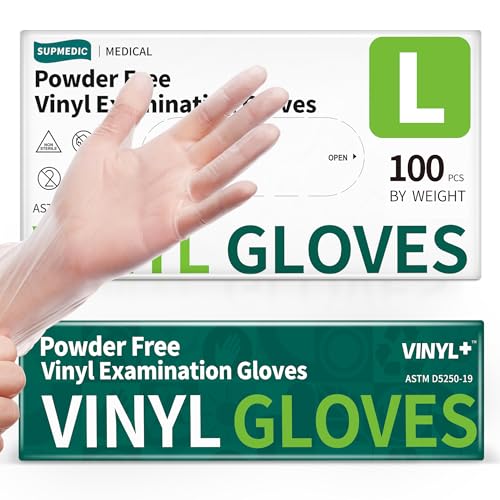
Supmedic is the large-size option in this group, with separate thickness figures for the fingers and palms: 0.12 mm and 0.08 mm. The clear, powder-free and latex-free gloves come 100 to a box and are presented for exam, cooking, cleaning and food-prep use. Choose them when large sizing and the thickness profile matter more than a synthetic vinyl/nitrile blend. The specifications identify these as vinyl rather than the blended synthetic material sought by some buyers, so they are a related alternative, not an exact match. Confirm the task is suitable for disposable vinyl gloves.
Bottom line: Pick these for a large glove size and the finger-and-palm thicknesses.
London Labs Clear Vinyl, Medium, 1,000

London Labs offers the largest count here: 1,000 medium gloves in a case, rather than the 100-count packs. The clear gloves are powder-free and latex-free, made from PVC and DOP vinyl, and have beaded cuffs. The maker describes them for health inspections, food handling, kitchen use, cleaning and salon work. This option suits buyers stocking a shared workspace who want clear vinyl, but it is not the synthetic vinyl/nitrile blend. A case of 1,000 also takes more storage space than a single box, so consider how quickly the supply will be used.
Bottom line: Choose this case if medium clear vinyl gloves and a 1,000-count supply fit your needs.
Basic Medical Clear Vinyl, Large, 1,000
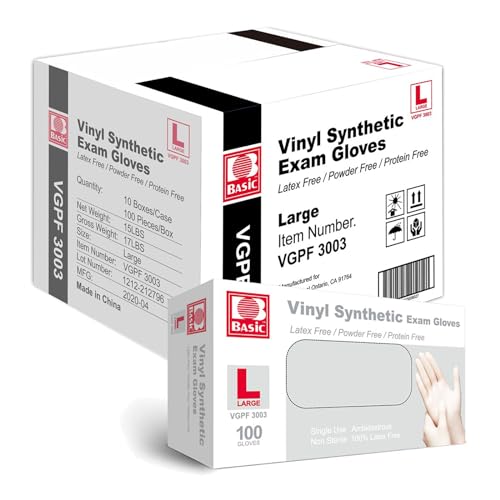
Basic Medical pairs large sizing with a 1,000-glove case, a combination not shared by the other choices. Each case contains ten boxes of 100, and the clear gloves are latex-free and powder-free. The maker gives finger thickness as 0.09 mm and palm thickness as 0.07 mm, making those measurements useful when comparing the product’s construction with the thicker Supmedic option. Choose it for larger hands and a bulk supply rather than a synthetic vinyl blend. The case format is less suitable if you need only a small box or have limited storage room.
Bottom line: Pick this case for large sizing, bulk quantity and the thickness measurements.
How to choose synthetic vinyl gloves
Choose by material first, then by fit, thickness and count. Synthetic vinyl can refer to a blend rather than plain PVC vinyl: the exact-match option here combines synthetic vinyl with nitrile polymers, while the other choices are identified as vinyl or PVC and DOP vinyl. Vinyl gloves generally fit more loosely and stretch less than nitrile, so a secure fit matters for tasks needing precise hand movement. For a single-person supply, 100 gloves is one box; a 1,000-count case is ten such boxes when packaged as described. For frequent changes or a shared kitchen, calculate expected glove use before opting for a full case.
| Need | Choose by |
|---|---|
| Synthetic blend | Vinyl mixed with nitrile polymers |
| Large size | Large labeled pack |
| Bulk supply | 1,000-count case |
Vinyl glove sizing and fit
Measure hand circumference around the palm at its widest point, excluding the thumb, and compare the result with the maker’s size chart when available. A glove that is too tight can split during donning, while a loose glove can reduce dexterity and catch on objects. The choices here include medium and large sizes, but those labels alone do not establish a universal hand measurement because sizing varies by maker and pattern. If your palm measurement falls near a size boundary, check the maker’s size chart before ordering. Do not choose a smaller size merely to get a closer fit if it strains at the fingers or cuff.
Vinyl glove thickness and task limits
Thickness numbers are useful for comparing construction, but they do not by themselves establish puncture resistance or suitability for a particular chemical. Two products here state separate finger and palm measurements, and their values differ; the synthetic blend option does not provide a comparable thickness figure. Vinyl disposable gloves are typically used for light-duty tasks such as food handling, cleaning and examinations, not as a substitute for chemical-resistant gloves or protection from sharp tools. For food work, use clean gloves and change them between raw and ready-to-eat tasks; gloves do not replace handwashing. Select protection based on the hazard, not clarity or thickness alone.
When to choose a case instead of a box
A 1,000-count case contains ten 100-count boxes in the Basic Medical package, while the other bulk option also states a 1,000-glove count. A case is practical when multiple workers use gloves regularly and there is dry, clean storage space; a 100-count box is easier to manage for occasional household tasks. Keep disposable gloves away from heat, direct sunlight and moisture, which can weaken materials over time. Do not reuse single-use gloves: discard them after contamination, tearing or switching between tasks. For food service or clinical work, follow the workplace’s required glove-change and hygiene procedures.
Frequently Asked Questions
Are synthetic vinyl gloves the same as nitrile gloves?
No. Synthetic vinyl may refer to a vinyl material blended with nitrile polymers, while nitrile gloves are made from nitrile rubber. Check the material description when the distinction affects fit or task suitability.
Can vinyl gloves be used for food preparation?
Vinyl gloves are used for food preparation, but gloves do not replace handwashing or prevent cross-contamination if reused. Change them between raw ingredients and ready-to-eat food, and follow applicable food-handling rules.
How many gloves are in a 1,000-count case?
A 1,000-count case contains 1,000 individual gloves, or 500 pairs. One supplied option divides that count into ten boxes of 100 gloves.
Do vinyl gloves protect against cleaning chemicals?
Do not assume ordinary disposable vinyl protects against cleaning chemicals. Check the chemical label and glove compatibility guidance; use a glove specifically rated for the chemical and exposure time.
How should disposable gloves fit on the hand?
A glove should cover the wrist without pulling tightly at the fingertips or palm. Measure palm circumference and consult the maker’s size chart, especially if your hand is between medium and large.