
Tsubaki Premium Repair Mask: 4 Options Compared

For a direct match, choose Tsubaki Premium Repair Mask 180 g if you want the named Tsubaki Premium Repair Mask in a five-tub pack; Tsubaki Premium EX Repair Hair Mask is the single-tub option with camellia oil and a no-wait rinse.
Choose TJ Signature Tsubaki Mask Bundle instead if you want two tubs bundled with a hair tie, while shoppers seeking a different brand or treatment should look elsewhere.
We earn a commission if you buy through links on this page. As an Amazon Associate I earn from qualifying purchases. Products are compared on manufacturer specifications, not hands-on testing.
- Best overall: Tsubaki Premium Repair Mask 180 g – The product name directly matches the search, and the pack includes five 180 g tubs.
- Best for quick routines: Tsubaki Premium EX Repair Hair Mask – The maker says it delivers conditioning benefits when rinsed out immediately.
- Best for a two-tub set: TJ Signature Tsubaki Mask Bundle – The bundle includes two 180 g tubs and a hair tie.
| Product | Best for | Pack size | Key ingredients | Rinse timing | Shop |
|---|---|---|---|---|---|
| Tsubaki Premium Repair Mask 180 g | multi-tub supply | 5 tubs, 180 g each | Hyaluronic acid, ceramides | — | Check Price on Amazon |
| Tsubaki Premium EX Repair Hair Mask | fast rinse routines | 1 tub, 180 g | Camellia oil, pearl protein, amino acids | Immediate rinse | Check Price on Amazon |
| TJ Signature Tsubaki Mask Bundle | two-tub bundle | 2 tubs, 180 g each | Red camellia oil, royal jelly, soy protein | Zero-wait technology | Check Price on Amazon |
| Tsubaki Premium Hair Mask 180 g | single-tub choice | 1 tub, 180 g | — | — | Check Price on Amazon |
Tsubaki Premium Repair Masks
Compare the matching Tsubaki masks by pack format, ingredients and rinse routine.
Tsubaki Premium Repair Mask 180 g
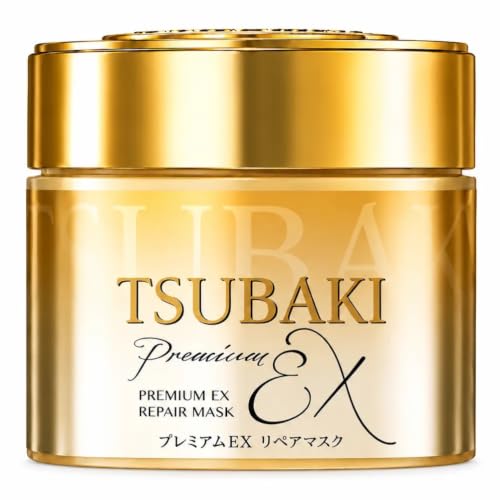
The five-tub pack sets this mask apart for buyers who want several units of the named repair treatment at once. Its feature description highlights hyaluronic acid and ceramides, and says the moisturizing formula is intended to leave hair soft, smooth and manageable. It is presented for all hair types, including color-treated, curly, fine and thick hair. The pack format is the main trade-off: choose this only if five tubs suit your storage and use needs; the single-tub option is a simpler fit for trying the formula.
Bottom line: Pick this if you want five tubs of the directly named repair mask.
Tsubaki Premium EX Repair Hair Mask
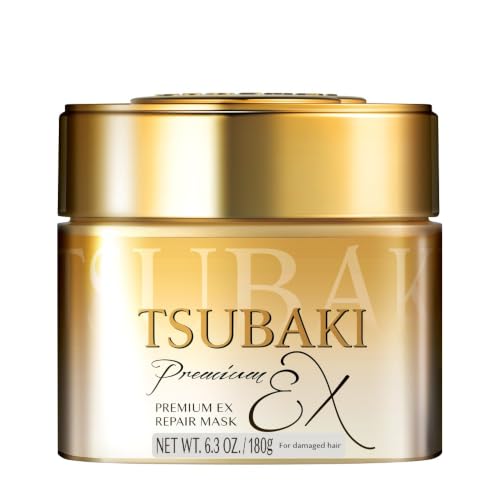
The single-tub format and immediate-rinse claim distinguish this mask from the multi-tub choices. Its ingredient blend includes camellia seed oil, pearl protein, amino acids, royal jelly extract and glycerin; the maker says it helps condition and moisturize damaged hair and enhance shine. The rich cream texture is intended for intensive care, while the no-wait feature suits routines where leaving a treatment on is inconvenient. This option is for buyers who want one tub rather than a bundle; its damaged-hair focus may be less relevant if that is not your concern.
Bottom line: Choose this for one tub and a rinse-as-soon-as-applied routine.
TJ Signature Tsubaki Mask Bundle

The bundle combines two 180 g tubs with a black hair tie, making its contents distinct from the standalone masks. It is positioned for dry, damaged hair and for buyers who want a bundled set rather than a single container. The extra accessory is part of the purchase, so this format may be unnecessary if you only want the mask itself or prefer a single tub.
Bottom line: Pick this if you want two tubs packaged with a hair tie.
Tsubaki Premium Hair Mask 180 g

This single 180 g tub is a straightforward Tsubaki premium hair mask option, distinct from the five-tub pack and the ingredient-specific EX treatment. The product name says it is designed to penetrate the hair and lock in nutrients for sustained salon-treatment effects. That positioning may suit someone seeking a single tub rather than several units. The specifications do not identify a formula or rinse routine, so verify that the tub matches the exact treatment version you want before ordering; buyers who prioritize specified ingredients can compare the other options here.
Bottom line: Choose this if a single Tsubaki premium mask tub is your priority.
How to choose a Tsubaki repair mask
Choose by pack format first, then match the treatment to your routine and hair concern. Hair masks are concentrated conditioners generally used on shampooed, wet hair; apply mainly from mid-lengths to ends, where older hair tends to be drier, rather than coating the scalp. For routine maintenance, a weekly mask is a reasonable starting point; very dry or chemically processed hair may need more frequent conditioning, while fine hair can feel weighed down by heavy application. Rinse thoroughly, since leftover conditioner can make roots feel coated.
What no-wait rinse claims mean
A no-wait claim means the maker presents the treatment as usable without a separate leave-on interval, not that every hair routine must skip contact time. For comparison, conventional rinse-out conditioners are commonly left on for about 1 to 3 minutes, while deeper masks often call for several minutes; the product’s own directions take priority. Tsubaki Premium EX Repair Hair Mask describes conditioning benefits on immediate rinse, and TJ Signature Tsubaki Mask Bundle calls its approach zero-wait technology. These are product-specific claims, not proof that a longer application always improves results. If your hair is fine or easily weighed down, begin with a small amount on the ends and rinse well; thicker or more damaged lengths may tolerate fuller coverage.
How to use a hair mask without buildup
Use a hair mask on clean, damp lengths and keep heavy product away from the scalp unless the directions say otherwise. Hair is more fragile when wet, so detangle gently with fingers or a wide-tooth comb instead of pulling through knots. A practical starting point is once weekly, with frequency adjusted by how dry the ends feel and whether the hair becomes limp or coated. Color-treated and chemically processed hair can benefit from conditioning, but a mask does not replace heat protection or repair split ends. When switching formulas, change one routine step at a time so you can tell whether the amount or frequency is leaving residue.
Hair mask decision guide
Pack size and rinse routine are useful tie-breakers when several masks fit the same broad purpose. Use this guide to narrow the choice before considering the ingredient emphasis.
| Need | Choose | Why |
|---|---|---|
| Several tubs in one pack | Tsubaki Premium Repair Mask 180 g | Five 180 g tubs |
| Single tub with ingredients | Tsubaki Premium EX Repair Hair Mask | One 180 g tub; camellia oil and conditioning ingredients |
| Two tubs plus accessory | TJ Signature Tsubaki Mask Bundle | Two 180 g tubs and a hair tie |
For fine hair or short hair, a single tub can reduce the chance of keeping more product than your routine needs. If your hair is long or dense and you use masks regularly, a larger pack may be more practical, provided you are comfortable with that formula.
Frequently Asked Questions
How often should I use a hair repair mask?
Start with once a week and adjust based on how your hair responds. Fine hair may feel weighed down by frequent masking, while dry or chemically processed lengths may benefit from more conditioning.
Should I put a hair mask on my scalp?
Usually, apply a rinse-out mask from mid-lengths to ends rather than at the roots. Scalp application can leave fine or oily roots feeling coated unless the product directions specifically call for it.
Can I use a hair mask after conditioner?
A mask commonly replaces conditioner for that wash rather than following it. Applying both can add excess conditioning, especially on fine hair; use the product directions if they specify a sequence.
How long should a rinse-out hair mask stay on?
Many conventional hair masks use a several-minute contact time, while Tsubaki Premium EX Repair Hair Mask says it can be rinsed immediately. Follow the directions for the specific tub, since formulas and application claims differ.
Does a hair mask repair split ends permanently?
No, conditioning can temporarily smooth the feel and appearance of damaged ends but cannot permanently join split hair fibers. A trim is the lasting way to remove split ends.