
Best 30 Qt Cooler: 4 Models Compared

The Coleman Chiller 30-Quart suits most people who want a straightforward carry cooler, with a wide-grip handle and a reinforced lid rated for 200 pounds. Choose a different model if you need wheels for longer hauls or a separate dry zone for food.
A 30-quart cooler has a nominal 7.5-gallon capacity, but the amount of room left for drinks depends on how much ice you pack.
We earn a commission if you buy through links on this page. As an Amazon Associate I earn from qualifying purchases. Products are compared on manufacturer specifications, not hands-on testing.
- Best overall: Coleman Chiller 30-Quart – A wide-grip bail handle, 25-can capacity with 15 pounds of ice, and a lid rated for 200 pounds.
- Best for rolling loads: Ninja FrostVault 30qt with Wheels – All-terrain wheels make it easier to move, and it fits 28 cans with ice.
- Best for separated food: Ninja FrostVault 30qt Hard Cooler – A pull-out FrostVault Dry Zone keeps food separate from the main cooler compartment.
| Product | Best for | Can capacity | Can capacity with ice | Weight | Shop |
|---|---|---|---|---|---|
| Coleman Chiller 30-Quart | Everyday carrying | 42 cans | 25 cans + 15 lb ice | 5.73 lb | Check Price on Amazon |
| Igloo Profile II 30 Qt | Simple stacking | 41 cans | — | — | Check Price on Amazon |
| Ninja FrostVault 30qt with Wheels | Rolling heavy loads | 48 cans | 28 cans + ice | 29.3 lb | Check Price on Amazon |
| Ninja FrostVault 30qt Hard Cooler | Separated food storage | 48 cans | 26 cans + ice | 20.41 lb | Check Price on Amazon |
Best 30 qt coolers
Compare how each 30-quart cooler handles carrying, ice-packed capacity and separate food storage.
Coleman Chiller 30-Quart

The Coleman Chiller balances everyday carrying with a lid that can double as a seat. It holds 25 standard 12-ounce cans with 15 pounds of ice, or up to 42 cans without ice. Coleman says its TempLock foam insulation keeps contents cold for up to 48 hours. The wide-grip bail handle gives you one central grip when moving the cooler, while the reinforced lid is rated to support up to 200 pounds. This is a practical choice for picnics, tailgates and short outings. Its 25-can ice-packed capacity may not suit a group prioritizing the most drinks with ice.
Bottom line: Choose it for straightforward carrying and a lid rated for occasional seating.
Igloo Profile II 30 Qt
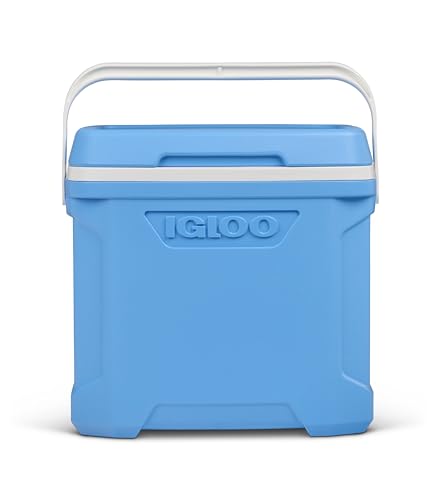
The Igloo Profile II combines a slotted lid with a raised base design, unlike the models that emphasize wheels or a separate food compartment. Its capacity is 41 cans, and it fits 2-liter bottles upright. Cool Riser Technology elevates the cooler body away from hot surfaces, while the easy-clean liner has integrated channels for draining melted ice. A swing-up bail handle keeps the carrying setup simple. The slotted lid can help with stacking and storage, but buyers who need a known ice-packed can count should compare that capacity before choosing.
Bottom line: Pick it for upright 2-liter bottles, drain channels and stackable storage.
Ninja FrostVault 30qt with Wheels

The Ninja FrostVault with wheels stands apart for rolling transport and a separate dry zone. It holds up to 48 cans without ice or 28 cans with ice, and its all-terrain wheels are described as puncture-resistant and all-weather capable. Ninja says FrostVault technology transfers cold into the dry zone to keep food cool, dry and separate at food-safe temperatures under 40°F for days; it also says the cooler holds ice for days. This setup suits outings where rolling is useful and food needs separation. At 29.3 pounds, the empty cooler itself is already a substantial carry if stairs or lifting are involved.
Bottom line: Choose it when wheels and an isolated food zone matter more than low empty weight.
Ninja FrostVault 30qt Hard Cooler

The Ninja FrostVault Hard Cooler adds a storage drawer for food access without opening the main lid. It holds up to 48 cans without ice or 26 cans with ice, and its integrated heavy-duty handles support carrying. Ninja says its FrostVault Dry Zone keeps food cool, dry and separate at food-safe temperatures under 40°F for days, and says the cooler holds ice for days. Up to 3 inches of insulation is specified. This design suits trips where keeping food away from melting ice is a priority. Unlike the wheeled option, it has no stated wheels, so moving it over distance means carrying it.
Bottom line: Pick it for separate food storage and drawer access without wheels.
How to choose a 30 qt cooler
Start with the packed capacity, not the quart number alone: ice takes up room that could otherwise hold cans or food. A common packing rule is about 2 parts ice to 1 part contents by volume for longer cooling, while a drink-focused load may use less ice. Pre-chill the cooler and its contents when possible, and keep the cooler shaded. For a short outing where drinks matter more than extended ice coverage, prioritize a can count with ice. For food that should not sit in meltwater, a separate dry compartment can be useful. Leave room to close the lid fully; overpacking can prevent a proper seal.
How much fits in a 30-quart cooler
A 30-quart capacity equals 7.5 gallons, but usable space varies with the cooler’s shape, insulation and the space ice occupies. Can counts without ice are not comparable to counts packed with ice, so use the ice-packed figure when planning a chilled load. A useful rule is to leave around one-third of the space for ice if you want a balanced drink-and-ice load, then adjust for trip length and how often the lid opens. Measure tall bottles and food containers before packing; upright 2-liter bottles need more height than cans. For a group trip, choose based on the required number of cold drinks with ice rather than the nominal quart capacity alone.
| Need | Choose by |
|---|---|
| More drinks packed with ice | Ice-packed can count |
| Food kept apart from ice | Separate dry compartment |
| Less carrying over distance | Wheels and loaded weight |
| Stacking or upright bottles | Lid design and interior height |
Keeping food safe in a cooler
Keep perishable food at 40°F or below; a cooler’s ice-retention claim does not guarantee that every item stays at a safe temperature. Use a thermometer in the cooler, pack food already chilled, and put raw meat in leakproof containers below ready-to-eat food. The general limit for perishable food left above 40°F is 2 hours, reduced to 1 hour when the outdoor temperature is above 90°F. Keep the lid closed as much as possible, since each opening lets warm air in. A dry compartment can separate food from meltwater, but it does not replace checking the food temperature.
Loading and caring for a cooler
Pre-chilling and shade help reduce the heat that ice must absorb; a hot trunk or direct sun can shorten useful cooling time. Load the cooler with cold contents, place ice around the load, and keep frequently used drinks near the top to limit rummaging. Drain meltwater only when needed for access or weight, because cold water can help surround remaining ice and chilled items. After a trip, wash the interior with mild soap and water, rinse it, and leave the lid open until fully dry to limit odors and mildew. Do not use a seated lid as a step or exceed its load rating.
Frequently Asked Questions
How many cans fit in a 30-quart cooler with ice?
Capacity depends on the cooler and how much ice is packed. Among these options, ice-packed can counts range from 25 to 28 cans, with the Coleman figure paired with 15 pounds of ice.
How long can perishable food stay in a cooler?
Keep perishable food at 40°F or colder. If food is above 40°F, the general limit is 2 hours, or 1 hour when the air temperature is above 90°F.
Should I drain water from a cooler?
Drain meltwater when you need to reduce weight or reach food, but cold water can help keep remaining items surrounded by cold. Keep the lid shut between uses to limit warm air entering.
How much ice should I put in a 30-quart cooler?
A common starting point for longer cooling is about 2 parts ice to 1 part contents by volume. Reduce the ice share when the priority is carrying more drinks for a short outing, and keep food cold before packing.
Can a cooler be stored in a hot car?
A hot car raises the heat load, so a cooler may lose useful cooling sooner than it would in shade. Keep the cooler out of direct sun and monitor perishable food with a thermometer.