
Mighty Patch Nose Strips: 5 Options Compared by Fit

Mighty Patch Nose Strip, 10 Count is the closest match for a Mighty Patch nose strip because it is a large hydrocolloid nose patch intended for overnight wear. Choose Mighty Patch Nose Patch and Pore Release if you want a two-step pore-care set, or a different nose patch if its count or format better suits your routine.
We earn a commission if you buy through links on this page. As an Amazon Associate I earn from qualifying purchases. Products are compared on manufacturer specifications, not hands-on testing.
- Best overall: Mighty Patch Nose Strip, 10 Count – A large hydrocolloid nose strip, with a 10-count pack.
- Best for two-step care: Mighty Patch Nose Patch and Pore Release – Pairs a nose patch with a pore-treatment product for a combined routine.
- Best for multiple patch sizes: TKTK XL Nose Strips and Patch Set – Includes nose strips, larger strips and acne dots in five sizes.
| Product | Best for | Format | Count | Patch material | Shop |
|---|---|---|---|---|---|
| Mighty Patch Nose Strip, 10 Count | Overnight nose coverage | Large nose strip | 10 | Hydrocolloid | Check Price on Amazon |
| Mighty Patch Nose Patch and Pore Release | Two-step pore care | Nose patch plus treatment | — | Hydrocolloid patch | Check Price on Amazon |
| TKTK XL Nose Strips and Patch Set | Multiple patch sizes | Nose strips, strips and dots | 112 total | Hydrocolloid | Check Price on Amazon |
| Peach Slices Nose Pore Patches, 7 Count | Small nose patch pack | Nose patches | 7 | Hydrocolloid | Check Price on Amazon |
| Mighty Patch Face XL, 5 Patches | Multiple face zones | Contoured face-zone set | 5 | Hydrocolloid | Check Price on Amazon |
Mighty Patch nose strips and alternatives
Compare the nose-focused patches and related formats by coverage, count and how each fits into a routine.
Mighty Patch Nose Strip, 10 Count

Mighty Patch Nose Strip, 10 Count is the direct nose strip option here, with a large hydrocolloid patch made for nose pores and pimple clusters. The pack contains 10 patches, and the maker says the patch can show improvements in 6 hours and is intended to be worn overnight. Hydrocolloid patches absorb fluid from blemishes and turn white as they do so; that change is not a measure of blackhead removal. This format suits someone who wants a single broad nose patch rather than a multi-piece face set. The limitation is its nose-focused coverage, which is less suited to treating several separate areas at once.
Bottom line: Choose it for a single, broad nose patch in a 10-count pack.
Mighty Patch Nose Patch and Pore Release

Mighty Patch Nose Patch and Pore Release differs from a standalone strip by combining a nose patch with Pore Release, a separate pore-treatment step. The maker says Pore Release is used on clean, dry skin up to three times weekly and that the nose patch absorbs oil and pore contents overnight. That pairing suits someone who wants both products in a nose-focused routine rather than patches alone. The limitation is that the product facts do not give a patch count, so compare packaging before choosing if the number of wears matters. The treatment step is optional to the nose patch format, not another hydrocolloid strip.
Bottom line: Pick it if you want a pore-treatment step alongside the nose patch.
TKTK XL Nose Strips and Patch Set

TKTK XL Nose Strips and Patch Set stands out for variety: its 112-piece set includes contoured 91 × 48 mm nose strips, larger strips and acne dots in three stated diameters. That range suits someone who wants to use different patch shapes across the nose and other blemish areas. The maker describes the nose patches as overnight-use patches that absorb excess oil and pus. Check the pack composition if nose strip quantity is the deciding factor.
Bottom line: Choose it for a mixed set of nose strips, larger strips and dots.
Peach Slices Nose Pore Patches, 7 Count
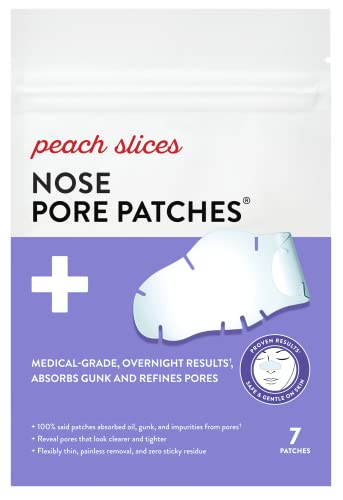
Peach Slices Nose Pore Patches, 7 Count is a nose-specific hydrocolloid patch pack with seven patches, making it a straightforward alternative when you want a small defined quantity. The maker describes the patches as thin and flexible and says they absorb oil and gunk during overnight wear; the product also identifies its material as medical-grade hydrocolloid. Nose patches cover a broader area than individual spot dots, but they are not equivalent to adhesive strips that physically pull surface debris away. This option suits someone seeking a nose-only patch format. Its pack contains fewer patches than Mighty Patch Nose Strip, 10 Count, so it may be less fitting when a larger count is the priority.
Bottom line: Choose it for a seven-count nose-only patch pack.
Mighty Patch Face XL, 5 Patches

Mighty Patch Face XL, 5 Patches differs from a nose strip by supplying five extra-large hydrocolloid patches shaped for the forehead, nose, chin and cheeks. The maker says the pieces can be combined as a full-face set or used individually on those zones, and describes overnight wear. That makes it a better fit for someone addressing a broader breakout area than for someone who wants several nose strips. The nose is one of its intended coverage areas, but the product is packaged as a face-zone set rather than a nose-only pack. The five-piece count refers to the whole set, not five nose strips.
Bottom line: Pick it for coverage across several face zones, including the nose.
How to choose a hydrocolloid nose patch
Choose by coverage and routine first: a contoured nose patch covers more area than a spot dot, while a treatment-and-patch set adds a separate step. Hydrocolloid absorbs fluid at the skin surface and forms a white gel as it takes up moisture; that visible change does not establish that a blackhead has been removed. Open comedones contain oxidized material in a pore, so a patch is not the same thing as a pore-clearing treatment. Apply patches to clean, fully dry skin so the adhesive can make contact. If you have sensitive or easily irritated skin, try a small area first and remove the patch gently rather than pulling it sharply. Avoid placing adhesive over broken or inflamed skin.
Nose patch sizing and coverage
Match the patch shape to the area you intend to cover: broad nose patches work for the nose surface, while small round dots are designed for isolated blemishes. A nose patch should lie flat across the targeted area without folds; wrinkles can lift edges and reduce contact. The options include a 91 × 48 mm contoured nose strip and a face-zone set shaped for the nose, but patch contours differ by product. Use a mirror to check that the patch does not overlap the nostrils or extend onto delicate areas where removal may pull. When the target is only one small spot, a dot avoids covering unaffected skin; when the target spans the nose, a broad patch is the more suitable shape.
Hydrocolloid patches versus pore strips
Hydrocolloid patches and traditional peel-off pore strips work differently: hydrocolloid absorbs moisture from a blemish, while adhesive pore strips lift some surface material when peeled away. A white patch after wear is absorbed fluid and gel, not proof that every pore has been cleared. Nose patches are generally used as spot-care products rather than substitutes for a regular cleansing routine. Avoid repeated adhesive removal if skin becomes sore or red, because friction can irritate the surface. For a nose-wide area, choose a contoured patch; for a single blemish, choose a dot. Neither format should be treated as a tool for squeezing or extracting deep plugs.
How to apply and remove nose patches
Apply a hydrocolloid nose patch to clean, dry skin and press the edges down so the patch lies smoothly. Moisturizer, oil and dampness can interfere with adhesion, so use the patch before applying leave-on skin products to that area. Leave it in place for the wear period indicated by the package; the Mighty Patch nose strip maker describes a 6- to 8-hour window. Remove by lifting an edge slowly rather than pulling quickly, especially around the nose crease. Stop using a patch if it causes significant irritation. Keep patches away from broken skin and eyes, and do not use a patch to cover a lesion that needs medical attention.
Frequently Asked Questions
Do hydrocolloid nose patches remove blackheads?
Hydrocolloid patches absorb moisture and fluid from blemishes, but they do not reliably remove every blackhead. A white patch after wear reflects absorbed material in the gel, not a count of cleared pores.
How long should a nose patch stay on?
Follow the wear time on the package; the Mighty Patch nose strip maker describes a 6- to 8-hour period. Remove the patch gently if the surrounding skin becomes uncomfortable or irritated.
Should I apply a nose patch before moisturizer?
Yes, apply it to clean, fully dry skin before moisturizer or facial oil reaches the covered area. Product residue and damp skin can prevent the adhesive from sticking securely.
Can I reuse a hydrocolloid nose patch?
No, treat hydrocolloid patches as single-use adhesive products. Once removed, the patch has collected moisture and may not adhere cleanly or securely for another wear.
Are nose patches suitable for sensitive skin?
Adhesives can irritate sensitive skin, so test a small area first and remove the patch slowly. Do not apply it to broken, already irritated, or inflamed skin.