
Occer 12×25 Compact Binoculars and Alternatives Compared

The Occer 12×25 is the named model here, and its 12x magnification and 25mm objective lens are the deciding specifications for a compact pair. Choose a different option if you want a wider view, a larger objective lens, or lower magnification that is easier to hold steady.
Among the alternatives, the 12×32 gives a larger objective lens at the same magnification, while the Nikon 8×25 trades reach for a steadier, wider-feeling view.
We earn a commission if you buy through links on this page. As an Amazon Associate I earn from qualifying purchases. Products are compared on manufacturer specifications, not hands-on testing.
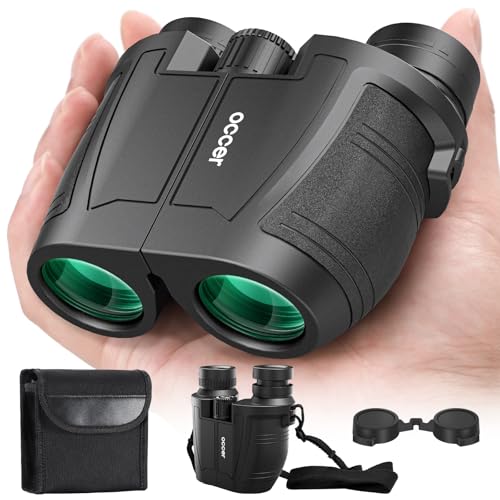
- Best overall: Occer 12×25 Compact Binoculars – The exact Occer 12×25 match combines 12x magnification, a 25mm objective lens and a 273-foot field of view at 1,000 yards.
- Best for a larger lens: Occer 12×32 Compact Binoculars – Its 32mm objective lens is larger than the 25mm lens on the named model, while retaining 12x magnification.
- Best for easier handheld viewing: Nikon Travelite EX 8×25 – Its 8x magnification is lower than the Occer options’ 12x and 15x, making small hand movements less apparent.
| Product | Best for | Magnification | Objective lens | Field of view | Shop |
|---|---|---|---|---|---|
| Occer 12×25 Compact Binoculars | Occer 12×25 match | 12x | 25 mm | 273 ft at 1,000 yd | Check Price on Amazon |
| Occer 12×32 Compact Binoculars | Larger objective lens | 12x | 32 mm | 288 ft at 1,000 yd | Check Price on Amazon |
| Occer 15×30 Compact Binoculars | Higher magnification | 15x | 30 mm | 368 ft at 1,000 yd | Check Price on Amazon |
| Nikon Travelite EX 8×25 | Lower magnification | 8x | 25 mm | 5.6° angle of view | Check Price on Amazon |
| Nikon Travelite VI 12×25 | Nikon 12x format | 12x | 25 mm | 4.2° angle of view | Check Price on Amazon |
Occer 12×25 compact binoculars and alternatives
Compare the models by magnification, objective-lens size and any field-of-view figure before deciding what suits your viewing distance and steadiness.
Occer 12×25 Compact Binoculars

The Occer 12×25 is the exact match for this search, with 12x magnification, a 25mm objective lens and a 273-foot field of view at 1,000 yards. Its features identify FMC broadband coating and a BAK4 prism, along with adjustable rubber eyecups intended to accommodate eyeglass wearers. Those specifications suit someone prioritizing more magnification in a compact format. The tradeoff is that 12x magnification makes hand movement more visible than it would through an 8x pair, so viewers who want an easier handheld view may prefer lower magnification.
Bottom line: Choose this if you want the named Occer 12×25 configuration and 12x magnification.
Occer 12×32 Compact Binoculars
The Occer 12×32 keeps the named model’s 12x magnification but increases the objective lens to 32mm. Its field of view is 288 feet at 1,000 yards, compared with 273 feet for the 12×25, and its features mention FMC and a BAK4 prism. That combination suits a buyer who wants to stay with 12x while comparing a larger front lens and a wider stated field. The larger lens does not remove the hand-shake effect of 12x magnification, so it is not the better fit for someone whose main priority is a steadier handheld image.
Bottom line: Choose this if keeping 12x magnification but moving to a 32mm objective lens matters most.
Occer 15×30 Compact Binoculars

The Occer 15×30 differs from the 12×25 by increasing both magnification and objective-lens size; its field of view is 368 feet at 1,000 yards. Its features mention a BAK4 prism, FMC optics and a 16mm eyepiece. This model suits a buyer who specifically wants 15x magnification for distant subjects. Higher magnification also makes small hand movements more noticeable, so the extra reach may frustrate viewers who need a stable, quick handheld view. Compare its field-of-view figure with the 12x models rather than assuming that a larger magnification number means a wider view.
Bottom line: Choose this if 15x magnification is more important than easier handheld steadiness.
Nikon Travelite EX 8×25

The Nikon Travelite EX 8×25 is the lower-magnification alternative, at 8x rather than the Occer 12×25’s 12x. Its 5.6-degree angle of view is a different way of expressing view width than the Occer’s feet-at-1,000-yards figure. The features include multilayer-coated optics, aspherical eyepiece lenses, a die-cast aluminum body and rubber armoring. It suits travel or outdoor viewing where a less magnified view is preferable. The tradeoff is reduced magnification for distant details compared with the 12x and 15x options.
Bottom line: Choose this if you favor 8x magnification and the 5.6-degree angle of view.
Nikon Travelite VI 12×25
The Nikon Travelite VI 12×25 matches the Occer 12×25’s magnification and objective-lens size, but its angle of view is 4.2 degrees. The features identify multilayer-coated optics and aspherical eyepiece lenses, plus a die-cast aluminum body and rubber armoring. It suits buyers comparing a Nikon 12×25 configuration with the Occer model’s 273-foot field-of-view figure. The angle figure and the Occer figure use different units, so compare them carefully rather than reading the numbers as if they were directly equivalent. Like other 12x choices here, it is less suited to viewers sensitive to hand shake.
Bottom line: Choose this if you want a Nikon 12×25 and are comfortable comparing its angle-of-view figure.
How to choose compact binocular magnification
For easier handheld viewing, start around 8x; 12x or 15x makes distant details appear larger but also magnifies hand movement. A simple decision rule is to choose 8x if you expect to scan moving subjects without support, and consider 12x or 15x when reach matters more and you can brace your arms or use a support. Magnification alone does not tell you how broad the view feels: compare field-of-view figures in matching units, or convert degrees to feet at 1,000 yards before deciding. The 25mm, 30mm and 32mm objective figures describe the front lens diameter, not the magnification. Higher magnification does not automatically mean a wider field.
What objective lens size changes
Objective-lens diameter affects the light-gathering potential and the physical size of a binocular, while magnification determines how enlarged the view appears. The exit pupil is objective diameter divided by magnification: 12×25 is about 2.1mm, 15×30 is 2mm, 12×32 is about 2.7mm, and 8×25 is about 3.1mm. A larger exit pupil can make eye placement more forgiving, but it does not guarantee a brighter image because optical transmission and viewing conditions also matter. For daylight travel, small objectives can keep a pair compact; for dim conditions, the 8×25 has the largest calculated exit pupil among these choices. Avoid treating lens diameter as a standalone brightness rating.
How to compare field of view
Field-of-view figures are comparable only when they use the same unit and distance basis. A figure stated in feet at 1,000 yards indicates the width of the scene across that distance; an angle of view gives the same basic idea in angular terms. For a rough conversion, one degree spans about 52.4 feet at 1,000 yards, so 5.6 degrees is roughly 293 feet and 4.2 degrees roughly 220 feet. This makes unit conversion useful when comparing the Nikon angle figures with the Occer feet figures, but treat it as an approximation. A broad view helps locate a moving subject; a narrow view can make scanning more deliberate.
| Viewing need | Useful spec to prioritize | Tradeoff |
|---|---|---|
| Steadier handheld scanning | Lower magnification, such as 8x | Less enlargement of distant details |
| More enlargement | 12x or 15x magnification | Hand movement is more apparent |
| Compare lens light potential | Exit pupil from lens diameter ÷ magnification | Does not alone determine image brightness |
Eyeglasses and binocular setup
Eyeglass wearers should look for adjustable eyecups and enough eye relief to see the full field without pressing the lenses against the eyepieces. The Occer 12×25 features describe eyecups that pull down for glasses and rise for use without glasses; fit can still vary with frame shape and lens spacing. Set the interpupillary distance by folding the barrels until the two circles merge into one, then adjust focus for your eyes. Many binoculars also have a diopter adjustment to compensate for differences between eyes; set it once while viewing a distant, detailed target. With any 12x or 15x pair, brace elbows against your body or a stable surface to reduce visible shake.
Frequently Asked Questions
Are 12x binoculars hard to hold steady?
They can be, because 12x magnification makes hand movement more visible than 8x. Brace your elbows or support the binoculars when viewing distant details, and choose 8x if effortless scanning matters more than magnification.
What does 12×25 mean on binoculars?
The 12x means the view appears 12 times closer than with the unaided eye, while 25 refers to a 25mm objective lens diameter. Dividing 25mm by 12 gives an exit pupil of about 2.1mm.
Is a 32mm lens better than a 25mm lens?
A 32mm objective lens has greater light-gathering potential than a 25mm lens at the same magnification, but the finished image also depends on optical transmission and lighting. For example, at 12x the 32mm lens gives an exit pupil of about 2.7mm versus about 2.1mm for 25mm.
How do I compare binocular field of view numbers?
Compare figures using the same unit and distance, or convert degrees to feet at 1,000 yards. One degree is roughly 52.4 feet at that distance, so an angle figure can be estimated against a feet-per-1,000-yards figure.
Can I use compact binoculars with eyeglasses?
Yes, if the eyecup and eye relief let you see the full field while wearing your glasses. Pull-down eyecups are commonly used for this setup; adjust the binocular barrels until the view forms one circle.