
Canident Tooth Cleaner for Dogs: 5 Options Compared

For a Canident dog dental product, choose Canident Seaweed Dental Supplement if you want a scoop-measured seaweed powder; it is a supplement, not a brush or powered cleaner. Choose another type if you want direct tooth cleaning, such as wipes, a chew toy or an ultrasonic device.
Daily brushing with a dog-specific toothbrush and toothpaste remains the most direct home-care method; supplements and cleaning tools are not interchangeable.
We earn a commission if you buy through links on this page. As an Amazon Associate I earn from qualifying purchases. Products are compared on manufacturer specifications, not hands-on testing.
- Best overall: Canident Seaweed Dental Supplement – Canident powder is scoop-measured by dog size and is designed for dogs of all sizes.
- Best for wipes: Paw Science Dental Finger Wipes – Finger wipes are a no-rinse option for cleaning teeth without a toothbrush.
- Best for powered cleaning: Dog Teeth Cleaning Kit with Light – An ultrasonic cleaner uses three modes and activates on tooth contact, according to its maker.
| Product | Best for | Format | Pet fit | Cleaning approach | Shop |
|---|---|---|---|---|---|
| Canident Seaweed Dental Supplement | Powder routine | Powder supplement | Dogs of all sizes | Scoop-measured | Check Price on Amazon |
| Paw Science Dental Finger Wipes | Wipe cleaning | Finger wipes | Dogs and cats | No-rinse cleaning | Check Price on Amazon |
| Dog Teeth Cleaning Kit with Light | Ultrasonic cleaning | Ultrasonic tool | Dogs | Three modes; light | Check Price on Amazon |
| Bblira Ultrasonic Plaque Remover | Adjustable modes | Ultrasonic tool | Dogs and cats | Five speed modes; LED | Check Price on Amazon |
| SXEWXWO Bite and Brush Dental Toy | Chew-and-brush | Chew toy and brushing aid | Dogs | Textured surfaces | Check Price on Amazon |
Canident Tooth Cleaner for Dogs and Alternatives
These products use different approaches to pet oral care, so match the format to your routine and your dog’s tolerance.
Canident Seaweed Dental Supplement

Unlike a brush or tool, Canident is a scoop-measured seaweed powder for dogs. The maker says it is made from Irish seaweeds harvested from Atlantic waters and contains no artificial additives or fillers. Its dosage guide gives 0.5–1 scoop for small dogs, 1–2 for medium dogs and 2–3 for large dogs. This format may suit an owner who wants to add a measured powder to a dog’s routine. It is not a direct tooth-cleaning tool, so choose a brush or wipe when physical cleaning is the goal.
Bottom line: Choose this if you want a dog-size-based powder routine rather than a cleaning tool.
Paw Science Dental Finger Wipes
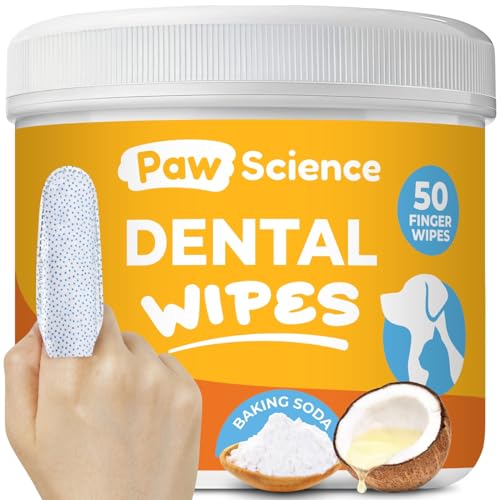
These finger wipes offer a no-rinse alternative to a toothbrush and toothpaste, unlike the powder and powered cleaners here. The maker says the wipes are hypoallergenic and pH balanced for pets’ oral cavities, and describes the ingredients as vet-formulated. The wipes are intended for cats and dogs, including puppies and kittens, and are presented for use across small and large breeds. They may suit pets that accept gentle handling better than a brush. A wipe does not provide the same brushing action as a toothbrush, so owners seeking that routine should choose a brush instead.
Bottom line: Choose these if a no-rinse wipe fits your pet’s handling routine.
Dog Teeth Cleaning Kit with Light
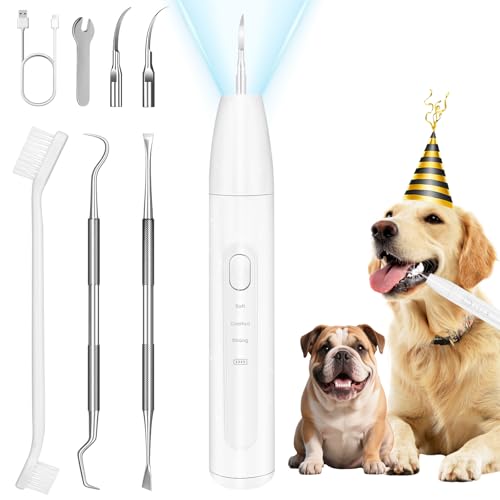
This rechargeable-style powered category stands apart from the wipes and powder: the kit is an ultrasonic tooth cleaner with a light and three modes. Its maker says the tool activates when it contacts teeth and stops near the gums, and describes it as low-noise. The white device measures 7.09 inches long and 1.1 inches wide and high. It may appeal to an owner looking for an electric tool rather than a manual routine. Its powered operation makes careful handling important; consult a veterinarian before attempting at-home scaling, especially if a dog has painful or inflamed gums.
Bottom line: Choose this if you specifically want a three-mode ultrasonic device.
Bblira Ultrasonic Plaque Remover

Compared with the three-mode device, this ultrasonic cleaner offers five intensity levels and an LED light, according to its maker. The maker says its settings range from soft to super and that a one-button control adjusts intensity. It is intended for dogs and cats, giving multi-pet households a different fit than a dog-only product. This may suit an owner who wants multiple settings and illumination in a powered device. The feature set does not make it a substitute for professional dental care; do not use a home scaler to treat suspected dental disease or pain.
Bottom line: Choose this if adjustable intensity and a light are priorities.
SXEWXWO Bite and Brush Dental Toy

This dog product combines a chew toy with a manual brushing aid, unlike the topical wipes or powered ultrasonic tools. The maker says its soft, flexible rubber design holds the mouth open and uses textured surfaces to loosen plaque and tartar buildup. Its dimensions are 3.94 inches long, 1.57 inches wide and 1.57 inches high. The combined format may interest owners seeking a chew-centered routine. A toy is not a replacement for brushing every tooth, and any chew item should be removed if it becomes damaged or presents a choking risk.
Bottom line: Choose this if your dog accepts a chew-based dental aid.
How to choose a Canident dog dental product
Choose by whether you want a supplement, direct cleaning or a chew-based aid: those formats serve different roles. A dog has 42 adult teeth, and brushing with a dog-specific toothbrush and toothpaste is the direct home-care method recommended by veterinary dental organizations. Aim for daily brushing; even several sessions a week are more useful than relying on a chew alone. Powders are measured by dog size, wipes are applied directly, and powered tools require controlled handling. If a dog resists mouth handling, start with brief sessions and reward calm behavior rather than forcing the mouth open. A persistent bad odor, bleeding or difficulty eating warrants a veterinary exam rather than a stronger home-cleaning method.
How dog tooth cleaning methods differ
Brushing physically cleans tooth surfaces, while supplements and chew products follow different routines and should not be treated as equivalent. Veterinary Oral Health Council (VOHC) acceptance is based on evidence that a product meets defined plaque or tartar reduction standards; check the current accepted-products list when selecting a dental diet, treat or additive. The options here are powder, wipes, a toy and powered tools, so the key distinction is how each is used, not an assumed level of effectiveness. Avoid hard objects such as bones, antlers and hooves: they can fracture teeth. The table summarizes the practical format differences.
| Format | How it is used | Key fit |
|---|---|---|
| Powder | Measure by dog size | Supplement routine |
| Finger wipe | Rub along accessible teeth | No-rinse application |
| Chew toy | Chewing and manual aid | Chew-oriented routine |
| Ultrasonic tool | Powered tooth contact | Careful, controlled use |
Safe at-home tooth cleaning for dogs
Use a soft-bristled pet toothbrush and dog toothpaste for routine brushing; human toothpaste can contain ingredients, including xylitol, that are unsafe for dogs. Start by letting the dog taste the pet toothpaste, then brush a few outer tooth surfaces for a short session before gradually extending the routine. Do not scrape below the gumline or force an ultrasonic scaler against teeth: professional scaling is performed by veterinary teams with appropriate assessment and, typically, anesthesia. A cracked tooth, facial swelling, bleeding gums or trouble chewing calls for veterinary care, not a home tool. With under a minute available, clean a small section calmly rather than prolonging a stressful session.
When dogs need professional dental care
Professional dental cleaning is needed when plaque and hardened tartar accumulate below the gumline, where home brushing cannot safely reach. A veterinary oral exam can identify periodontal disease, loose teeth and painful lesions; dogs may hide oral pain even when appetite appears normal. Anesthesia allows a veterinary team to examine and clean all tooth surfaces, including below the gumline, and take dental radiographs when indicated. Daily brushing reduces new plaque, but it cannot reverse established periodontal damage. Ask a veterinarian about an exam if gums bleed, breath changes persist, a dog drops food, chews on one side or resists having its mouth touched.
Frequently Asked Questions
How often should I brush my dog’s teeth?
Daily brushing is the goal because plaque forms continuously and can harden into tartar. Use dog toothpaste and a soft pet toothbrush; even a few teeth per short session can help build tolerance.
Can I use human toothpaste on my dog?
No; use toothpaste made for dogs. Human formulas can contain xylitol, which is toxic to dogs, and dogs generally swallow toothpaste rather than spit it out.
Do dog dental powders replace tooth brushing?
No, a powder is a supplement format rather than mechanical brushing. For direct cleaning, brush with a dog toothbrush and toothpaste; ask a veterinarian whether a supplement fits your dog’s care plan.
When does a dog need professional teeth cleaning?
A veterinary exam is appropriate for persistent bad breath, bleeding gums, loose teeth or chewing difficulty. Hardened tartar below the gumline cannot be safely removed with routine home brushing.
Are bones safe for cleaning a dog’s teeth?
Hard bones can fracture a dog’s teeth, so they are not a safe substitute for brushing. Choose a dental product that does not become a choking hazard and stop use if it is damaged.