
Best Motorcycle Helmets With Mirror Visors Compared

TCMT Full-Face Helmet, Large is the best fit for most riders seeking a motorcycle helmet with a mirror visor because it is a full-face helmet with an anti-scratch mirror shield. Choose Orthrus Full-Face Helmet, Large instead if you want separate tinted and clear visors; HAX Mirror Visor and PSLER K1 Silver Mirror Visor are shields, not complete helmets.
A mirror visor is reflective and can reduce visibility in dim conditions, so reserve it for daylight and use a clear shield when light is low. Check local rules for visor tint and reflectivity before riding.
We earn a commission if you buy through links on this page. As an Amazon Associate I earn from qualifying purchases. Products are compared on manufacturer specifications, not hands-on testing.
- Best overall: TCMT Full-Face Helmet, Large – A full-face helmet with an anti-scratch mirror shield.
- Best for day and night: Orthrus Full-Face Helmet, Large – Includes separate tinted and clear visors for changing light.
- Best for HAX owners: HAX Mirror Visor – A mirror replacement visor for compatible HAX helmet models.
- Best for AGV K-series owners: PSLER K1 Silver Mirror Visor – A silver mirror shield designed for specified AGV helmet models.
| Product | Best for | Item type | Visor | Fit | Shop |
|---|---|---|---|---|---|
| TCMT Full-Face Helmet, Large | Mirror visor helmet | Full-face helmet | Anti-scratch mirror shield | Large | Check Price on Amazon |
| Orthrus Full-Face Helmet, Large | Day-night versatility | Full-face helmet | Tinted and clear visors | Large | Check Price on Amazon |
| HAX Mirror Visor | Compatible HAX helmets | Replacement visor | Mirror finish | HAX Amatista series | Check Price on Amazon |
| PSLER K1 Silver Mirror Visor | AGV K-series helmets | Replacement visor | Silver mirror tint | AGV K1, K1S, K3SV, K5, K5S | Check Price on Amazon |
Motorcycle Helmets With Mirror Visors
Compare complete helmets with replacement shields, and match any visor to its compatible helmet model.
TCMT Full-Face Helmet, Large

TCMT Full-Face Helmet, Large is the only complete helmet here that includes a mirror shield, making it the closest match for riders who want the reflective look without sourcing a separate visor. It has an ABS shell, multiple vents, and a removable liner; the maker says it meets DOT safety standards. The anti-scratch mirror shield is the deciding feature, while the large size suits riders who measure for that fit. A reflective shield is a poor choice for night riding, so riders who regularly ride in low light should favor a clear visor option instead.
Bottom line: Choose this if you want a full-face helmet that comes with a mirror shield.
Orthrus Full-Face Helmet, Large
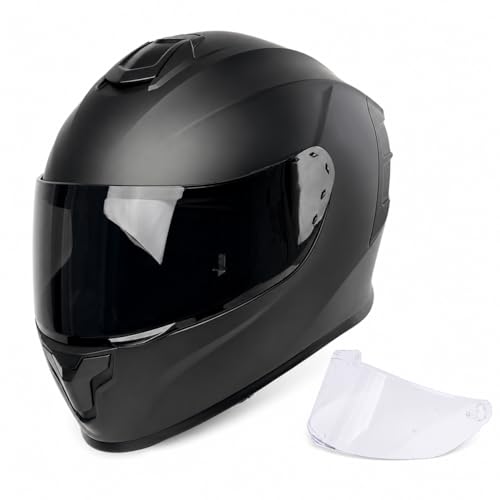
Orthrus Full-Face Helmet, Large stands apart by including two visors rather than a mirror shield: a tinted one for daylight and a clear one for night or low-light riding. Its ABS shell, EPS liner, and multiple front, top, and rear vents make it a complete full-face option for commuting or street riding. The maker says it meets DOT and FMVSS-218 standards. This is a sensible alternative if switching to a clear visor matters more than a mirror finish, but it does not satisfy the mirror-visor request out of the box.
Bottom line: Pick this if a separate clear visor is more useful than a mirror finish.
HAX Mirror Visor

HAX Mirror Visor is a replacement mirror visor rather than a helmet, so it suits riders who already own a compatible HAX full-face helmet. Its compatibility calls out the Amatista Series; the product name also references the Obsidian Series, so confirm your exact helmet model before ordering. The shield is described as providing 98% UV protection and as DOT approved. Unlike a complete helmet, this purchase does not provide head protection on its own, and it will not fit unrelated helmet models.
Bottom line: Choose this only if you have a compatible HAX helmet and need its mirror visor replaced.
PSLER K1 Silver Mirror Visor

PSLER K1 Silver Mirror Visor is a silver mirror replacement shield for the specified AGV K1, K1S, K3SV, K5, and K5S helmets, not a complete helmet. The polycarbonate visor has a mirror finish, and the maker describes it as shatterproof, impact-resistant, and UV400. Its compatibility list is the key buying constraint: helmet shields are model-specific, and a similar-looking mounting system is not proof of fit. The product is marked for daytime use only, so riders needing a night or low-light shield should choose a clear visor instead.
Bottom line: Pick this if your helmet is one of the AGV K-series models and you ride in daylight.
How to Choose a Motorcycle Helmet With a Mirror Visor
Choose a complete helmet if you need head protection, and a replacement visor only if you already own its compatible helmet. A mirror coating is reflective; tinted or mirrored shields reduce the light reaching your eyes, so they are generally for bright daytime riding, not darkness. Keep a clear visor available for night or low-light conditions. For helmet safety, look for the DOT mark and a snug fit: the helmet should not shift freely when fastened, but should not create painful pressure points. Measure your head around its widest point and use the helmet maker’s size chart; shell sizes and interior shapes differ across models. Do not assume a visor marked for one helmet series fits another.
Helmet or Replacement Visor
A complete helmet and a shield solve different problems, so first decide whether you need the protective shell or only a compatible replacement. Motorcycle helmets sold for US road use are subject to FMVSS No. 218; DOT marking is the manufacturer’s certification that the helmet meets that federal standard. A replacement visor does not make an incompatible helmet fit correctly or provide head protection by itself. Use the helmet model and series, not just brand or appearance, to check shield fit. The table separates complete helmets from replacement visors and shows their visor arrangements or fit targets.
| Option | Item type | Visor | Fit |
|---|---|---|---|
| TCMT Full-Face Helmet, Large | Full-face helmet | Anti-scratch mirror | Large |
| Orthrus Full-Face Helmet, Large | Full-face helmet | Tinted and clear | Large |
| HAX Mirror Visor | Replacement visor | Mirror | HAX Amatista series |
| PSLER K1 Silver Mirror Visor | Replacement visor | Silver mirror | AGV K1, K1S, K3SV, K5, K5S |
When to Use a Mirror or Tinted Visor
Use a mirrored or tinted shield in bright daylight, and switch to clear optics when light fades. A darker shield can make hazards harder to see at dusk, in tunnels, or in heavy shade; carrying a clear visor is a practical choice if a ride may continue after sunset. Visor tint and reflective coatings may be restricted by local rules, so check your jurisdiction before riding with a mirror finish. Never assume a visor’s UV claim means it is suitable for night riding: UV protection and visible-light transmission are different properties. Keep the shield clean and replace it if a scratch or distortion obstructs the rider’s view.
How to Check Helmet and Visor Fit
Match a replacement shield to the exact helmet model or series before buying, because visor pivots and locking tabs are not universal. A secure shield should move through its intended positions and latch without forcing the mechanism. For a helmet, measure your head circumference and consult the maker’s chart; between sizes, fit and head shape matter more than choosing a larger size for comfort. With the helmet fastened, it should remain stable when you gently rotate it, while the cheek pads feel snug rather than loose. Replace a damaged shell or shield rather than relying on a mirror coating to hide cracks, deep scratches, or poor visibility.
Frequently Asked Questions
Can I ride at night with a mirror motorcycle visor?
A clear visor is the safer visibility choice at night or in low light. Mirror and tinted shields reduce incoming visible light, and a daytime-only visor should not be used after dark.
Does a mirror visor fit any full-face helmet?
No, visor mounts and shapes are model-specific. Match the exact helmet series and model before replacing a shield; brand alone is not enough to confirm fit.
How should a motorcycle helmet fit around my head?
A properly sized helmet feels evenly snug and does not shift freely when fastened. Measure your head circumference and compare it with the maker’s size chart, since interior shapes vary.
What does a DOT mark on a motorcycle helmet mean?
DOT marking indicates the manufacturer certifies the helmet to the US FMVSS No. 218 standard. Check that the mark is present on a road helmet and make sure the helmet fits securely.
When should I replace a scratched motorcycle visor?
Replace a visor when scratches or distortion interfere with your clear view, especially in direct light or at night. Clean shields with materials intended for helmet visors to avoid adding fine scratches.