
Car Radio Signal Booster Options Compared by Fit

The Bingfu car radio signal booster is the straightforward pick if your stereo has a matching DIN antenna connection and you want a 12V-powered inline amplifier. Choose a different option if you need an included replacement antenna or want a booster with a 25 dB gain claim.
These devices amplify radio signals entering a vehicle’s antenna connection; they cannot repair a damaged antenna or guarantee reception where broadcast signals are weak.
We earn a commission if you buy through links on this page. As an Amazon Associate I earn from qualifying purchases. Products are compared on manufacturer specifications, not hands-on testing.
- Best overall: Bingfu Universal FM Antenna Booster – Its switched 12V power supply and DIN plug make it a simple inline option when the vehicle connection matches.
- Best for a stated gain: 12V 25 dB Car Antenna Booster – The product name gives a 25 dB signal-amplifier claim.
- Best for installation accessories: TTLCFP 12V Car Antenna Booster – The package includes double-sided tape, a quick connector and two cable clamps.
- Best for a hidden antenna: 12V Booster with Hidden Electric Antenna – The package includes a separate electric antenna that can replace a factory antenna.
| Product | Best for | Antenna setup | Shop |
|---|---|---|---|
| Bingfu Universal FM Antenna Booster | DIN plug setups | Inline booster | Check Price on Amazon |
| 12V 25 dB Car Antenna Booster | Gain claim | Inline booster | Check Price on Amazon |
| TTLCFP 12V Car Antenna Booster | Install accessories | Inline booster | Check Price on Amazon |
| 12V Booster with Hidden Electric Antenna | Antenna replacement | Booster plus antenna | Check Price on Amazon |
Car Radio Signal Boosters
Compare the power, antenna arrangement and installation extras to find a booster that fits your vehicle’s setup.
Bingfu Universal FM Antenna Booster

The Bingfu stands out for its DIN plug connector and switched 12V power-supply cable. Its copper signal wire is designed to resist interference, and the maker says the amplifier enhances the radio signal and reduces noise. This is the most direct fit for a vehicle whose stereo antenna connection matches the DIN plug and whose installation can use switched power.
The package is a booster rather than a replacement antenna, so it is not the right choice if the factory antenna itself needs replacing. Confirm the antenna connector before ordering.
Bottom line: Pick this if your stereo uses a matching DIN antenna connection.
12V 25 dB Car Antenna Booster

The 25 dB gain claim sets this booster apart from the other options. The maker also says copper conductors improve reception clarity and a built-in metal shield reduces electrical interference and background noise. Its ABS shell and capped fuse holder are intended for daily vehicle use, and its 12V design suits vehicles with a compatible power and antenna connection.
The 21-inch length means buyers should plan where the unit and wiring will fit before installation. The gain figure is a maker claim, not a guarantee of stronger reception in every location.
Bottom line: Choose this when the 25 dB gain claim is a deciding factor.
TTLCFP 12V Car Antenna Booster

The TTLCFP package includes more installation accessories than the other standalone boosters: double-sided tape, a quick connector and two cable clamps. Its shielded metal housing is intended to block outside interference, while the maker says the amplifier improves signal sensitivity and reduces background noise. It is a practical match for someone who wants those mounting and connection accessories in the package.
The included pieces do not establish that the booster fits every vehicle connector or antenna system. Check the vehicle’s connector and power arrangement before selecting this unit.
Bottom line: Pick this if the included tape, connector and clamps suit your installation.
12V Booster with Hidden Electric Antenna
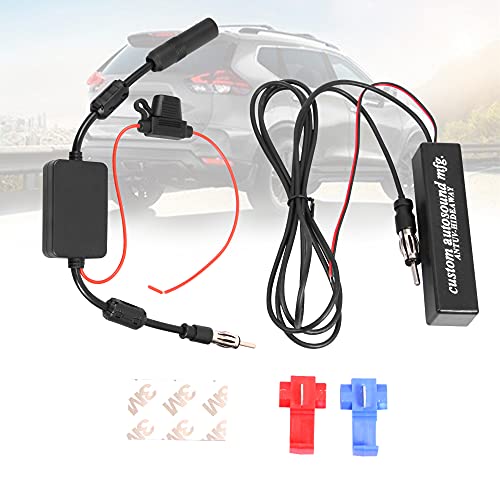
This package differs by including a separate electric antenna as well as the booster. The antenna can replace a failed factory antenna or serve a custom installation where an exposed factory-style antenna is unwanted; the maker says the 12V booster enhances AM/FM signal and reduces noise. The two parts can work together, but the product notes that some vehicles may not be compatible.
Because this is more than an inline amplifier, it makes the most sense when an antenna replacement is also needed. Follow the installation video and verify vehicle compatibility before ordering.
Bottom line: Choose this when you need both amplification and a replacement antenna.
How to Choose a Car Radio Signal Booster
Start with the antenna connection and power source, not a gain number. An inline booster sits between the vehicle antenna and the radio, so the antenna plug must match the booster and the booster’s output must match the radio input. Powered units also need the correct vehicle voltage; these options are designed for 12V systems.
Use this decision guide to narrow the setup:
| Your need | Setup to consider |
|---|---|
| Keep the existing antenna | Inline booster |
| Want the included mounting and wire accessories | Booster kit with tape, connector and clamps |
| Replace a failed or unwanted exposed antenna | Booster package with separate electric antenna |
A signal amplifier can raise a weak incoming signal, but it cannot create a broadcast signal where coverage is absent or fix a damaged antenna or cable.
Check Antenna and Power Fit Before Installation
Measure the available mounting space and trace the antenna cable before installing a booster. The 21-inch unit needs a route and mounting area that can accommodate its length; leave room for bends rather than sharply kinking the cable. The Bingfu uses a DIN plug, so compare that connector with the vehicle’s antenna lead and stereo input before choosing it.
Powered boosters need a 12V supply; connect switched power rather than leaving an accessory powered continuously, which can drain the vehicle battery when parked. Keep wiring away from moving pedals, sharp metal edges and hot engine components. Do not force a connector that does not fit.
What a Radio Booster Can and Cannot Do
A car antenna booster amplifies the signal received by an antenna before that signal reaches the radio. It may help when a working antenna receives a weak signal, but added amplification cannot recover a station that is outside usable broadcast coverage. It can also amplify interference along with the desired signal.
Check the antenna, cable and connectors first if reception suddenly becomes poor; corrosion, a loose plug or a broken antenna can be the actual fault. FM and AM reception also respond differently to obstacles and distance, so results can change between city streets, buildings and open roads. A booster is not a substitute for a sound antenna system.
Installation Mistakes to Avoid
The main installation mistake is choosing a booster before confirming connector and voltage fit. Match the antenna connections at both ends, verify a 12V supply, and route the cable so it is not pinched or pulled tight. Where the unit has a fuse holder, keep it accessible for inspection rather than burying it behind trim.
Do not assume a hidden electric antenna is the same component as the amplifier: the package with a replacement antenna includes two separate items, and buyers may not need both. If using that package, plan where the antenna will sit and confirm it suits the vehicle. After installation, compare reception with the booster powered and unpowered; a worse result can signal interference or a connection problem.
Frequently Asked Questions
Will a car radio signal booster fix a broken antenna?
No; a booster amplifies the signal reaching it and does not repair a damaged antenna or cable. Inspect the antenna and its connections first if reception has suddenly dropped.
Does a car antenna booster need 12V power?
These four options are designed for 12V systems. A powered booster needs a suitable vehicle supply, and switched power avoids leaving it energized while the vehicle is parked.
Can a signal booster improve reception in every location?
No; a booster cannot create a usable broadcast signal where coverage is absent. Buildings, terrain and distance from the transmitter can still limit reception.
How do I know whether a booster connector will fit?
Compare the booster’s antenna plug with the vehicle antenna lead and radio input before installation. The Bingfu option uses a DIN plug, so a different connector requires a different fit.
Should a booster go before or after the car radio?
An antenna booster belongs inline between the antenna and the radio input, so it amplifies the received signal before it reaches the receiver. Check that both ends match the vehicle connections.