
Multipurpose Wire Miracle Cleaning Cloths Compared

For a multipurpose wire miracle cleaning cloth with a triple-layer design and 7.87-inch square size, Wangjinpeng 3-Layer Wire Dishcloths is the closest match for most kitchen routines. Choose another option if you want a dual-layer cloth, a smaller cloth or a different pack count.
Wire dishcloths use an open mesh surface for scrubbing and rinsing; check delicate or coated cookware on a hidden spot first.
We earn a commission if you buy through links on this page. As an Amazon Associate I earn from qualifying purchases. Products are compared on manufacturer specifications, not hands-on testing.
- Best overall: Wangjinpeng 3-Layer Wire Dishcloths – A three-layer design and 7.87-inch square size suit general kitchen cleaning.
- Best for a longer shape: Forggon 3-Layer Wire Dishcloths – The 7.08-by-8.86-inch cloth is the longest option in this group.
- Best for a smaller pack: XANGNIER Wire Dishcloths, 8-Pack – The 8-piece pack has fewer cloths than the 12-piece options.
| Product | Best for | Size | Layers | Pack count | Shop |
|---|---|---|---|---|---|
| Wangjinpeng 3-Layer Wire Dishcloths | Everyday kitchen use | 7.87 × 7.87 in | 3 | 12 | Check Price on Amazon |
| Forggon 3-Layer Wire Dishcloths | Longer cloth shape | 7.08 × 8.86 in | 3 | 12 | Check Price on Amazon |
| XANGNIER Wire Dishcloths, 8-Pack | Smaller pack size | 7.5 × 7.5 in | — | 8 | Check Price on Amazon |
| WYDZKJ Dual-Layer Wire Dishcloths | Dual-layer construction | 7.8 × 7.8 in | 2 | 12 | Check Price on Amazon |
| Navona Triple-Layer Wire Dishcloths | Absorbent middle layer | 6.7 × 6.7 in | 3 | 12 | Check Price on Amazon |
Multipurpose Wire Miracle Cleaning Cloths
Compare the cloth dimensions, construction and pack size to match your kitchen cleaning preferences.
Wangjinpeng 3-Layer Wire Dishcloths

Wangjinpeng 3-Layer Wire Dishcloths combines a 12-piece pack with a 7.87-inch square cloth and three-layer mesh construction. The maker says the cloths are designed for wet or dry use on dishes, cookware, sinks and stove tops, with an open mesh that rinses and dries quickly. The square format suits buyers who want a familiar hand-sized cloth for a range of kitchen tasks. The maker advises testing delicate or coated items on a small hidden area first, so this option is less suitable for anyone who wants to scrub such surfaces without a preliminary check.
Bottom line: Choose this if you want a 12-pack of square, triple-layer cloths for varied kitchen tasks.
Forggon 3-Layer Wire Dishcloths

Forggon 3-Layer Wire Dishcloths has the longest dimension in this group: 8.86 inches, paired with a 7.08-inch width. Its 12-piece pack and three-layer build make it a fit for buyers who prefer a rectangular cloth over a square one. The maker says its chemical-fiber material and precision stitching are intended to provide scrubbing while avoiding surface damage. That claim should not be treated as a guarantee for every finish; buyers cleaning coated or delicate cookware should test a hidden spot first. Pick another option if you specifically want a square cloth.
Bottom line: Choose this if you prefer a longer rectangular cloth and want a 12-piece set.
XANGNIER Wire Dishcloths, 8-Pack

XANGNIER Wire Dishcloths, 8-Pack is the only 8-piece pack here, making it the natural choice for buyers who want fewer cloths at once. Each cloth measures 7.5 inches square. The maker says the cloths can be used wet or dry and are reusable, absorbent and fast-drying for tasks such as cleaning dishes, sinks, counters and stove tops. The construction layer count is not established by the specifications, so shoppers comparing cloth thickness or layer design should favor an option with a layer count. Its smaller pack is also less suited to anyone seeking a dozen cloths.
Bottom line: Choose this if an 8-piece pack and 7.5-inch square cloth fit your needs.
WYDZKJ Dual-Layer Wire Dishcloths
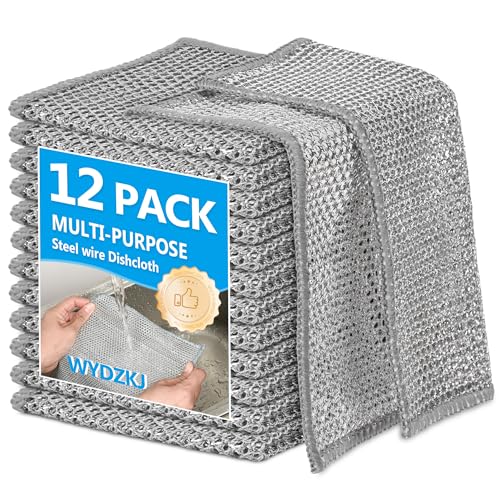
Unlike the triple-layer choices, WYDZKJ Dual-Layer Wire Dishcloths uses a dual-layer construction and comes in a 12-pack. The cloth size is 7.8 inches square, close to the 7.87-inch square formats while remaining a little smaller. The maker says the open silver mesh drains quickly after rinsing and is intended for cookware and other kitchen cleaning. This choice is for buyers who specifically want two layers rather than three; it is not the match for someone prioritizing the extra layer count found in several alternatives. Its described use also extends to oven and bath cleaning.
Bottom line: Choose this if you want a 12-pack of dual-layer cloths for kitchen and household cleaning.
Navona Triple-Layer Wire Dishcloths

Navona Triple-Layer Wire Dishcloths is the smallest cloth in this comparison at 6.7 inches square, and its triple-layer construction includes an absorbent cotton-filled middle layer. The maker says the design is intended to lift food residue and dirt while remaining soft on cookware. That smaller footprint may suit buyers who want a compact cloth for dishes or tight areas, but it offers less coverage per pass than the larger square options. The maker’s non-scratch claim should not replace a spot test on delicate or coated surfaces. Choose a larger format if broad coverage matters more than compact handling.
Bottom line: Choose this if a compact triple-layer cloth with an absorbent middle is your priority.
How to choose wire cleaning cloths
Start with cloth size and construction, because these determine coverage and handling. In this group, cloths range from 6.7 inches square to 7.08 by 8.86 inches; a larger face covers more area per pass, while a smaller one is easier to maneuver in tight spaces. Layer count also differs: the options include two- and three-layer designs, plus one without a count. Compare like with like rather than assuming more layers automatically clean better. If your routine includes coated cookware, test a hidden spot before scrubbing, since wire-style mesh can be a poor match for finishes you cannot risk marking. A practical decision rule: choose a cloth at least 7.8 inches across when broad dish and counter coverage matters more than compact handling.
Wire mesh cloths compared with sponges and scrubbers
Wire mesh cloths offer a flexible cloth format, while sponges and rigid scrubbers have different shapes and handling. Open-weave cloths can let water pass through during rinsing; a dense sponge holds water within its body, and a rigid scrubber concentrates pressure on a smaller area. Those differences affect how easily each tool reaches curved cookware or corners, but no tool should be assumed safe for every finish. For coated pans and delicate surfaces, use a surface-appropriate tool and avoid aggressive pressure. This comparison’s wire cloths range from 6.7 to 8.86 inches along their longest dimension, so choose by both cleaning surface and hand control. Don’t use a wire cloth as a substitute for a purpose-built abrasive pad when the surface manufacturer prohibits mesh or scrubbing.
Using and rinsing multipurpose wire cloths
Use the cloth wet with dish soap for routine dishwashing, and rinse it after each cleaning task so loosened food and grease do not remain caught in the mesh. Several makers describe their cloths for wet or dry use, but dry scrubbing can move grit across a surface; wipe away loose particles first when finish protection matters. Rinse under running water until visible residue clears, then leave the cloth open to air-dry rather than folded in a damp pile. Open mesh may dry more readily than a thick sponge, but drying speed depends on airflow and how thoroughly the cloth is rinsed. Keep separate cloths for food-contact cleanup and bathroom or oven jobs to avoid carrying grease or residue between uses.
Care and surface-safety mistakes
Test an inconspicuous area before using any wire mesh cloth on a delicate or coated finish. A small spot test can reveal whether the surface changes before you scrub a whole pan, glass panel or appliance. Avoid pressing harder to compensate for a cloth that is not lifting residue; soaking stuck-on food with warm soapy water first can reduce the force needed. Rinse after use and air-dry fully, since trapped food and lingering moisture make any reusable cleaning tool harder to keep clean. Replace a cloth if its mesh or stitching separates, or if it retains residue after rinsing. Keep cleaning cloths away from children and pets when unattended, and do not leave any cleaning tool where it can contaminate food.
Frequently Asked Questions
Can wire dishcloths be used on nonstick pans?
Only use one on a nonstick pan after checking the pan maker’s care guidance and testing a hidden area. A scratch-free claim does not guarantee compatibility with every coating, so stop if the spot changes.
Should wire cleaning cloths be used wet or dry?
Many cloths in this group are described for wet or dry use, and wet use with dish soap suits ordinary dishwashing. For dry use, remove loose grit first so particles are less likely to drag across a finish.
How do I keep a wire dishcloth sanitary?
Rinse away visible food and grease after each task, then let the cloth air-dry fully between uses. Keep separate cloths for kitchen and bathroom cleaning to reduce cross-contamination.
What cloth size works for everyday dishes?
A cloth around 7.8 inches square offers a middle ground between broad coverage and easy handling in this comparison. Choose a smaller format when tight spaces matter more, or a longer rectangle if you prefer extra reach.
When should I replace a reusable wire cloth?
Replace it when mesh or stitching separates, or when residue remains after thorough rinsing. Inspect seams periodically, especially if the cloth is used frequently.