
Pole Sander for Deck Projects: 3 Options Compared

For deck sanding with a 5-inch random orbital sander, choose Sanding Solutions SAND+AID 5-Inch Adapter because it attaches that sander to an extension pole and is explicitly intended for decks and floors. Choose Orbital Sander Extension Pole Adapter if your orbital sander needs an adjustable clamp; choose Warner Plastic Pole Sander Head only for a basic pole sander head, since it is not described as a deck-specific tool.
We earn a commission if you buy through links on this page. As an Amazon Associate I earn from qualifying purchases. Products are compared on manufacturer specifications, not hands-on testing.
- Best overall: Sanding Solutions SAND+AID 5-Inch Adapter – Connects a 5-inch random orbital sander to a threaded extension pole for deck and floor sanding.
- Best for adjustable fit: Orbital Sander Extension Pole Adapter – Uses an adjustable steel clamp to fit a range of orbital sanders without permanent modification.
- Best for basic sanding: Warner Plastic Pole Sander Head – A lightweight plastic pole sander head for buyers who need a head rather than an orbital sander adapter.
| Product | Best for | Sander compatibility | Pole connection | Construction | Shop |
|---|---|---|---|---|---|
| Sanding Solutions SAND+AID 5-Inch Adapter | 5-inch orbital use | 5-inch random orbital | Threaded pole receptacle | Vibration-resistant hardware | Check Price on Amazon |
| Orbital Sander Extension Pole Adapter | Adjustable clamp fit | Orbital sanders; adjustable clamp | Adapter clamp | PETG and steel clamp | Check Price on Amazon |
| Warner Plastic Pole Sander Head | Basic pole head | Manual pole-sander head | Female threaded | Plastic | Check Price on Amazon |
Pole Sander for Deck Options
Match the tool to your sanding setup: the deck-oriented choices attach an orbital sander, while the basic head is a different type of pole sander.
Sanding Solutions SAND+AID 5-Inch Adapter

Unlike a manual sanding head, this attachment connects a 5-inch corded random orbital sander to an extension pole for deck or floor work. The maker says its rubber bushings, tubing, and vibration-resistant hardware are intended to reduce vibration and fatigue. It suits someone who already owns a compatible sander and wants to work while standing. The main limitation is compatibility: it is designed for 5-inch random orbital sanders, not a universal hand-sanding head, and the pole is separate.
Bottom line: Pick this if your deck project calls for a 5-inch random orbital sander on a threaded pole.
Orbital Sander Extension Pole Adapter

Where Sanding Solutions SAND+AID 5-Inch Adapter requires a 5-inch random orbital sander and threaded pole receptacle, this adapter uses an adjustable steel clamp intended to accommodate a wider range of orbital sanders. Its maker says it installs without drilling or cutting and includes an extra backup bracket. The PETG construction makes it a distinct option for deck and fence sanding while standing. Fit is the deciding limitation: check that the clamp suits the sander body before beginning, since an adjustable clamp does not establish compatibility with every model.
Bottom line: Choose this when your orbital sander does not match a fixed 5-inch attachment arrangement.
Warner Plastic Pole Sander Head
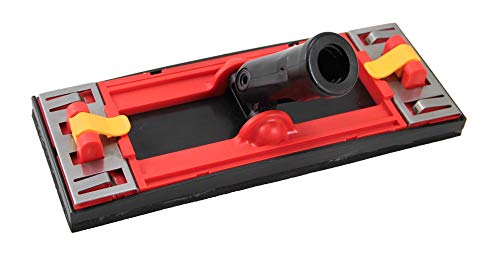
This is a lightweight plastic pole sander head, not an adapter for a powered orbital sander like Sanding Solutions SAND+AID 5-Inch Adapter or Orbital Sander Extension Pole Adapter. Its female-threaded connection makes it a choice for buyers seeking a basic sanding head that connects to a compatible pole. The product name identifies it as a head only, so it is a partial fit for deck sanding rather than a complete powered setup. Check that your pole’s threaded end mates with the head before ordering.
Bottom line: Pick this for a manual pole sander setup when the pole connection matches.
Choosing a Pole Sander for Deck Boards
Choose between a manual pole head and an orbital sander adapter based on the sanding action you need. A manual head holds abrasive directly; an adapter transfers a powered sander to a pole, so compatibility with both the sander and pole connection matters. For a raised or uneven board, a powered sander can be harder to keep flat than hand sanding, so use light pressure and make controlled passes. Start with the least aggressive grit that removes the coating or roughness; coarse abrasives remove material faster but can leave scratches that require finer sanding. Wear eye protection and a dust mask, and collect dust rather than blowing it into the air.
Checking Pole and Sander Fit
Check the pole connection and sander body before choosing an attachment. A female-threaded head needs a pole with a matching male thread, while a clamp-style adapter must close securely around the sander without covering its controls or obstructing the sanding pad. A 5-inch orbital adapter is a specific fit, not a promise of universal compatibility. For a deck with narrow board gaps or edges, use a hand sanding block or other suitable tool where a large powered pad cannot reach; forcing the pad into gaps can damage edges. Test the assembly at ground level first and stop if the connection slips or wobbles.
Choosing Sandpaper Grit for Deck Work
Use the least aggressive grit that does the job: finer paper removes less wood but also takes longer to remove a coating or deep weathering. For many deck sanding tasks, a practical starting point is 60–80 grit for rough or coating-removal work, followed by 80–100 grit to refine the surface; the right sequence depends on wood condition and the finish planned. Avoid sanding a smooth deck too finely if the intended finish needs surface texture to adhere. Replace clogged or torn paper promptly, since worn abrasive can burnish rather than cut and may leave an inconsistent surface. Keep the sander moving to reduce dips and swirl marks.
Deck Sanding Safety and Common Mistakes
Wear safety glasses and a properly fitted particulate respirator when sanding wood, and keep other people clear of airborne dust. Use hearing protection with powered orbital sanders, and route cords away from the sanding path. A pole adapter reduces kneeling or bending but does not make a powered tool safe to use from a ladder; keep both feet on a stable surface and use a longer pole or reposition instead. Avoid pressing down hard: added pressure can stall the pad, increase vibration, or create uneven sanding. Before sanding older painted or coated wood, determine whether the coating may contain lead and use appropriate precautions if it might.
Frequently Asked Questions
Can I use a pole sander on deck boards?
Yes, but the attachment must suit the sanding method. A manual pole head sands by hand, while an orbital adapter requires a compatible powered sander and secure pole connection.
What grit should I use to sand a wood deck?
For many rough deck surfaces, 60–80 grit is a reasonable starting range, with 80–100 grit often used to refine the surface. Choose based on how much material must be removed and the finish planned.
Can an orbital sander pole adapter fit any sander?
No; attachment styles differ. A 5-inch model requires a matching 5-inch random orbital sander, while a clamp model still needs a secure fit around the specific sander body.
How do I reduce dust when sanding a deck?
Wear eye protection and a particulate respirator, and collect dust rather than blowing it around. With a powered sander, use its dust collection when available and keep bystanders away from the work area.
Should I use a pole sander from a ladder?
Avoid using a powered pole sander setup from a ladder because tool movement can affect balance. Work from stable ground and reposition or use a suitable longer pole to reach the area.