
Farm X Bakuchiol Serum: 4 Alternatives Compared

Farm X bakuchiol serum is not among these options, so choose an alternative by formula: a mix-in concentrate, a botanical oil, or a ready-to-layer serum. Bakuchiol is a plant-derived skincare ingredient often used as a retinol alternative.
Choose CELDYQUE 3% Bakuchiol Concentrate only if you want a concentrated product to blend with moisturizer; pick another option if you prefer a ready-to-apply serum or oil.
We earn a commission if you buy through links on this page. As an Amazon Associate I earn from qualifying purchases. Products are compared on manufacturer specifications, not hands-on testing.
- Best overall: CELDYQUE 3% Bakuchiol Concentrate – A 3% concentrate with an explicit instruction to mix a few drops into moisturizer.
- Best for oil format: Hearthical Bakuchiol and Sea Buckthorn Oil – A 99% bakuchiol oil blend with a 2–3-drop application direction.
- Best for layering: HERBIVORE Bakuchiol Serum – A fast-absorbing serum with two forms of bakuchiol, designed to layer under moisturizer.
| Product | Best for | Format | Bakuchiol concentration | Shop |
|---|---|---|---|---|
| CELDYQUE 3% Bakuchiol Concentrate | Mix-in concentrate | Concentrate | 3% (30,000 ppm) | Check Price on Amazon |
| Hearthical Bakuchiol and Sea Buckthorn Oil | Oil-based routine | Botanical oil serum | 99% pure bakuchiol oil | Check Price on Amazon |
| HERBIVORE Bakuchiol Serum | Nighttime layering | Serum | — | Check Price on Amazon |
| Bio Retinol Alternative Bakuchiol Serum | USA-made formula | Facial serum | — | Check Price on Amazon |
Bakuchiol Serums and Oils
These alternatives differ in concentration, texture and whether they are meant to be blended into another product.
CELDYQUE 3% Bakuchiol Concentrate

Unlike a ready-to-apply serum, this 3% concentrate is meant to be blended into moisturizer or lotion. The maker directs users to mix a few drops before application, rather than apply the concentrate by itself. The 1-fl-oz bottle suits someone who wants to add bakuchiol to an existing cream routine. The tradeoff is the extra mixing step, which may be inconvenient if you want a serum that can be applied directly. Keep the amount consistent with the label direction and avoid improvising a stronger mixture.
Bottom line: Choose this if you want a mix-in concentrate and are comfortable blending it with moisturizer.
Hearthical Bakuchiol and Sea Buckthorn Oil

This option stands apart as an oil-based blend rather than a conventional lightweight serum: it combines bakuchiol with botanical oils, including sea buckthorn and jojoba. The maker recommends warming 2–3 drops between the palms and pressing them onto clean skin. A 1-fl-oz bottle makes sense for someone who already uses facial oils and wants a small, measured application. The oil texture is the limitation for anyone who prefers a water-light finish or wants a formula specifically described as fast-absorbing.
Bottom line: Pick this if you prefer an oil texture and want a drop-based application.
HERBIVORE Bakuchiol Serum

Unlike the oil-based choices, this is a fast-absorbing serum formulated with two forms of bakuchiol. The maker positions it for nightly routines and says its texture layers under moisturizer, making it a fit for someone who wants a serum step rather than a mix-in or face oil. The bottle holds 1 fl oz.
Bottom line: Choose this for a fast-absorbing serum step in a nighttime routine.
Bio Retinol Alternative Bakuchiol Serum
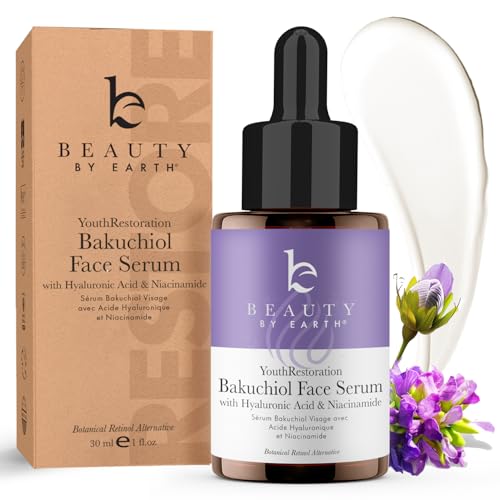
This 1-fl-oz facial serum is distinguished by its USA-made positioning and claims of natural and organic ingredients. The maker presents it as a plant-based retinol alternative and says it is suitable for sensitive skin. It fits someone who values those stated formula attributes and wants a standard serum format.
Bottom line: Pick this if USA-made positioning and natural or organic ingredients are priorities.
How to Choose a Bakuchiol Serum
Choose by format first: a concentrate is mixed into another product, while a serum or oil is applied as its own routine step. Concentration is a useful second filter, but percentages are comparable only when products report them on the same basis; ppm can be converted by dividing by 10,000, so 30,000 ppm equals 3%. For a percentage, CELDYQUE 3% Bakuchiol Concentrate gives a concentration, while Hearthical Bakuchiol and Sea Buckthorn Oil describes its oil as 99% pure bakuchiol oil. A percentage does not tell you how your skin will respond. If you have reactive skin, patch test a small area before regular use and stop if irritation develops. Pick a fast-layering serum if you dislike facial oils; choose an oil format only if that texture fits your routine.
Serum, Concentrate, and Oil Formats
Format determines how bakuchiol fits into a routine: a serum is a stand-alone layer, a concentrate is blended into another product, and an oil is generally the richer-feeling option. CELDYQUE 3% Bakuchiol Concentrate explicitly calls for mixing a few drops with cream or lotion, whereas Hearthical Bakuchiol and Sea Buckthorn Oil gives a direct oil application method. HERBIVORE Bakuchiol Serum is described as fast-absorbing and suitable beneath moisturizer. For ordinary layering, apply lighter, water-based products before heavier creams or oils; a mixed-in concentrate is the exception because it goes into the moisturizer. Keep the order simple and avoid introducing several new actives at once, which makes it harder to identify the source of irritation. Product texture and the maker’s application directions should decide between formats.
| Routine preference | Format to consider |
|---|---|
| Want to blend into cream | Concentrate |
| Prefer a quick-layering step | Serum |
| Prefer an oil texture | Oil serum |
How to Add Bakuchiol to a Routine
Start with one new bakuchiol product and use a small patch test before applying it across the face. A common patch-test approach is to apply a small amount to an inconspicuous area once daily for several days; discontinue if irritation appears. Apply a stand-alone serum to clean skin before moisturizer unless its directions say otherwise, and keep a mix-in concentrate blended into the cream as directed. For an oil, a few drops are usually enough to spread over the face, but use the product’s specific directions when supplied. In daytime routines, broad-spectrum SPF 30 or higher is standard sun protection; do not treat a cosmetic serum as sun protection. Sensitive skin can still react to plant-derived ingredients.
Bakuchiol Concentration and Label Claims
Concentration figures help only when the label makes clear what percentage refers to: pure bakuchiol, a blend, or a diluted extract. For a straightforward conversion, 1% equals 10,000 ppm, so a 3% figure equals 30,000 ppm. Hearthical Bakuchiol and Sea Buckthorn Oil describes a 99% pure bakuchiol oil, a different formulation context from a 3% concentrate, so those numbers should not be treated as interchangeable measures of finished-product strength. Marketing terms such as “retinol alternative” describe positioning, not a guarantee of the same ingredients or results as a retinoid. Compare the formula and directions, and avoid assuming a higher percentage is automatically the better choice for your skin.
Frequently Asked Questions
Can bakuchiol serum be used every day?
Many facial serums are intended for regular use, but introduce a new formula gradually, such as every other night for the first week. Follow the individual product’s directions and reduce use or stop if irritation occurs.
Can bakuchiol and retinol be used together?
They can appear in the same routine, but adding both at once may make irritation harder to pinpoint. Introduce one new active at a time and give your skin several days to respond before adding another.
Should bakuchiol serum go before moisturizer?
A stand-alone serum generally goes on clean skin before moisturizer, while a concentrate meant to be mixed belongs in the moisturizer. Heavier face oils are usually applied after lighter layers.
Does bakuchiol make skin sensitive to sunlight?
Bakuchiol is not a sunscreen, so use broad-spectrum SPF 30 or higher during the day regardless of the serum. Sun protection is especially important when a routine includes other active ingredients that can irritate skin.
How do I convert bakuchiol ppm to percent?
Divide ppm by 10,000 to convert to percent: 30,000 ppm equals 3%. Check whether a figure applies to pure bakuchiol or a finished blend before comparing two formulas.