
Propane Conversion Kits for Generators Compared by Fit

For a propane conversion kit for a generator, start with the generator’s exact model and engine displacement; HIPA 338–460cc Tri-Fuel Kit covers several 338–460cc engines and generator families, while other kits target smaller engines or specific models. Choose a different kit when its compatibility list does not include your generator.
These kits adapt gasoline generators to use propane, and some also support natural gas. A fuel conversion does not change where or how safely a generator can be operated.
We earn a commission if you buy through links on this page. As an Amazon Associate I earn from qualifying purchases. Products are compared on manufacturer specifications, not hands-on testing.
- Best overall: HIPA 338–460cc Tri-Fuel Kit – Its compatibility list spans multiple 338–460cc engines and several generator brands.
- Best for smaller engines: YAMAKATO 163–224cc Tri-Fuel Kit – It targets 163–224cc engines and lists numerous compatible generator models.
- Best for Honda EU2200i: Hutch Mountain Honda EU2200i Kit – It is designed specifically for the Honda EU2200i.
- Best for Predator 3200/4000W: Cirecsiy Predator 3200/4000W Kit – Its fit is limited to those two Predator generator sizes.
| Product | Best for | Generator or engine fit | Kit type | Shop |
|---|---|---|---|---|
| HIPA 338–460cc Tri-Fuel Kit | Broad engine fit | 338–460cc engines; select models | Carburetor replacement | Check Price on Amazon |
| YAMAKATO 163–224cc Tri-Fuel Kit | Smaller engines | 163–224cc engines; select models | Carburetor replacement | Check Price on Amazon |
| Hutch Mountain Honda EU2200i Kit | Honda EU2200i | Honda EU2200i | Dual-fuel conversion kit | Check Price on Amazon |
| Cirecsiy Predator 3200/4000W Kit | Predator 3200/4000W | Predator 3200W or 4000W | Adapter and regulator kit | Check Price on Amazon |
| Grenergy Honda EU2200i Tri-Fuel Kit | EU2200i fuel choice | Honda EU2200i | Bolt-on tri-fuel kit | Check Price on Amazon |
Propane conversion kits for generators
Match the kit’s generator or engine fit before comparing supported fuels and kit design.
HIPA 338–460cc Tri-Fuel Kit

The broadest engine range here belongs to this HIPA kit: it lists Honda GX340/GX390 engines and compatible clones, along with selected Champion, Predator, Generac, and Ford generators. The kit supports gasoline, propane, and natural gas and uses a three-position rotary switch with an off setting, plus a manual choke. Its fit includes 338–460cc engines, but compatibility depends on the generator model and carburetor setup, not displacement alone. Confirm your exact generator model and engine before choosing it, especially if your unit is outside the named examples.
Bottom line: Choose this when your generator matches one of its engine or model families.
YAMAKATO 163–224cc Tri-Fuel Kit

This YAMAKATO kit targets a smaller engine class than the other broadly compatible carburetor kit, with fit listed for Honda GX160/GX200 clones and 163–224cc engines. Named generator families include selected Generac, Ai Power, Ironton, and Champion models. It supports gasoline, propane, and natural gas, and the kit includes non-asbestos mounting gaskets. That narrower displacement range makes model verification especially important: a similar-looking 200cc-class generator is not automatically compatible. Check the generator model and engine family against the named fit before selecting this kit.
Bottom line: Choose this for a generator with a 163–224cc engine.
Hutch Mountain Honda EU2200i Kit

Unlike the carburetor-replacement options, this Hutch Mountain kit is made for the Honda EU2200i specifically. Its features describe propane and natural-gas compatibility while the name also identifies gasoline, propane, and natural gas; the kit uses OEM-style components and includes a photo-based instruction manual. The maker says basic tools are sufficient and that most owners can complete setup in under an hour. Its key limitation is the model-specific fit: do not assume it works with another Honda inverter generator, even if that generator has a similar appearance or output rating.
Bottom line: Choose this only when your generator is a Honda EU2200i.
Cirecsiy Predator 3200/4000W Kit

This Cirecsiy kit is the most tightly defined by generator output: it is intended for Predator 3200W or 4000W portable generators. It is described as a tri-fuel conversion with a carburetor adapter, regulator, hose, clamps, and fittings. That included hardware differentiates it from replacement-carburetor kits, but the fit does not cover every Predator generator. Verify the exact generator model before purchase, since wattage alone may not identify a matching carburetor or connection arrangement.
Bottom line: Choose this for a Predator 3200W or 4000W generator that matches its fit.
Grenergy Honda EU2200i Tri-Fuel Kit
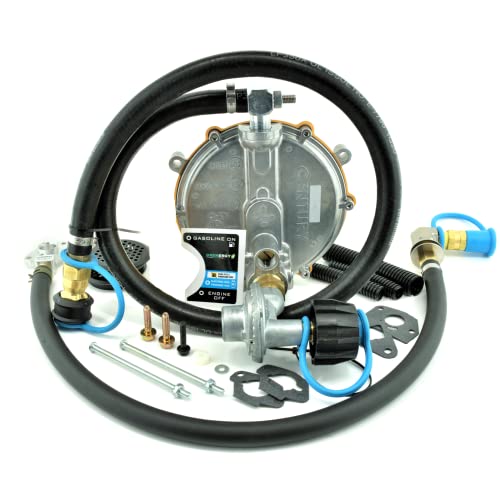
Grenergy also targets the Honda EU2200i, but emphasizes a bolt-on tri-fuel approach with no factory-carburetor modification. The maker says the kit comes preset to run on propane and supports switching among gasoline, propane, and natural gas. It is therefore a close alternative to the other EU2200i-specific option, with the distinction being its no-modification installation design. The model-specific scope remains the main constraint: check that your generator is an EU2200i rather than another inverter model before selecting it.
Bottom line: Choose this when you have an EU2200i and want the no-modification design.
How to choose a propane conversion kit for a generator
Choose by exact generator model first, then confirm engine displacement and carburetor compatibility. A kit intended for a 200cc-class engine is not interchangeable with one for a 420cc engine, and a shared output rating does not guarantee the same carburetor or fuel connections. Check whether the kit is a replacement carburetor or an adapter-style system, since those describe different installation approaches. Also distinguish dual-fuel from tri-fuel: dual-fuel usually means gasoline plus one alternate fuel, while tri-fuel adds both propane and natural gas. If your model is not named, verify the carburetor and connection fit before ordering rather than relying on displacement alone.
Generator fuel types and conversion differences
Propane conversion kits generally meter vapor fuel into an engine through a regulator and carburetor adapter or replacement carburetor. A gasoline-and-propane setup has two fuel choices; adding natural gas makes it tri-fuel, as reflected in several options here. The available fuel may affect generator output and runtime, so do not assume gasoline ratings carry over unchanged to propane or natural gas. Propane is stored as a pressurized liquid in its cylinder and supplied as vapor to typical portable-generator conversion systems. Use the fuel mode and connections intended by the kit, and do not improvise fittings or combine fuel sources.
Safe placement and fuel handling for converted generators
Run a portable generator outdoors at least 20 feet from the home, with exhaust directed away from doors, windows, and vents; carbon monoxide can build up indoors and cause death. Keep a working battery-operated carbon monoxide alarm inside the home, especially near sleeping areas. Propane cylinders should remain upright and outdoors, away from heat and ignition sources; check hose connections for leaks using an approved leak-detection method, never a flame. If using gasoline too, shut the generator down and let it cool before refueling, because spilled gasoline can ignite on hot engine parts. Never run a generator in a garage, even with the door open.
Common fit and setup mistakes
The most common selection mistake is treating engine displacement or wattage as a complete compatibility check. Generator makers may use different carburetors and linkages within similar engine sizes, so confirm the exact model and the kit’s fit. A second mistake is assuming an included hose or regulator suits every cylinder and installation; use the specified connection arrangement and inspect hoses for damage before each run. Keep the generator level and dry, and protect it from rain without enclosing it or blocking ventilation. For reliable starts, cold-start behavior can depend on the choke and ambient temperature; use the kit’s intended choke procedure instead of changing adjustments at random.
Frequently Asked Questions
Can a generator run on propane and gasoline?
Yes, a dual-fuel conversion is intended to let a compatible generator use gasoline and propane. Switch fuel modes only as designed for the kit, and never feed two fuels at once.
How far should a generator sit from a house?
Place a portable generator at least 20 feet from the home, with exhaust pointed away from doors, windows, and vents. Carbon monoxide is odorless, so indoor alarms are an essential backup.
Does propane reduce generator power output?
Propane operation can produce less output than gasoline on some generator-engine combinations. Check the generator maker’s fuel-specific rating before sizing a generator for a load.
Can any 420cc generator use the same conversion kit?
No; displacement alone does not establish carburetor, linkage, or fuel-connection fit. Verify the exact generator model and engine family against the kit’s compatibility range.
Should I drain gasoline before storing a converted generator?
Propane does not leave gasoline in the carburetor, but gasoline can still remain in the fuel system after gasoline operation. For storage longer than about a month, use the generator maker’s storage procedure and fuel stabilizer guidance.