
Best Stand Up Fishing Harnesses: 4 Models Compared

Gaffer Adjustable Belt & Shoulder Harness suits most anglers who want a belt-and-shoulder harness with a 38–42-inch waist range and an ABS gimbal pin. A stand-up fishing harness pairs a waist belt or support with a connection for the rod or reel to help brace during a fight.
Choose Stand-up Offshore Big Game Harness if metal reel clips are your priority, Sosation Adjustable Fishing Belt Set for its adjustable belt and ABS support, or Loomcraft Belt & Shoulder Harness Set for a chest-mounted locking buckle; confirm that the fit works for your waist before choosing a one-size option.
We earn a commission if you buy through links on this page. As an Amazon Associate I earn from qualifying purchases. Products are compared on manufacturer specifications, not hands-on testing.
- Best overall: Gaffer Adjustable Belt & Shoulder Harness – Combines an adjustable waist belt, shoulder straps and an ABS gimbal pin, with a 38–42-inch waist range.
- Best for reel clips: Stand-up Offshore Big Game Harness – Uses metal reel clips and comes in one size.
- Best for adjustable support: Sosation Adjustable Fishing Belt Set – Pairs an adjustable shoulder strap with an ABS universal-joint support.
- Best for a locking connection: Loomcraft Belt & Shoulder Harness Set – Has a chest D-ring with a rod-locking buckle.
| Product | Best for | Support design | Waist fit | Rod connection | Shop |
|---|---|---|---|---|---|
| Gaffer Adjustable Belt & Shoulder Harness | 38–42-inch waists | Belt and shoulder straps | 38–42 in | ABS gimbal pin | Check Price on Amazon |
| Stand-up Offshore Big Game Harness | Metal reel clips | Stand-up harness | One size | Metal reel clips | Check Price on Amazon |
| Sosation Adjustable Fishing Belt Set | Adjustable belt support | Belt and shoulder strap | One size | ABS universal joint | Check Price on Amazon |
| Loomcraft Belt & Shoulder Harness Set | Locking rod connection | Belt and dual-shoulder straps | — | Chest D-ring buckle | Check Price on Amazon |
Stand Up Fishing Harnesses Compared
Compare the support layout and rod connection first, then make sure the harness can be adjusted to fit you.
Gaffer Adjustable Belt & Shoulder Harness

For anglers seeking a waist range, this belt-and-shoulder harness is sized for 38–42-inch waists and includes adjustable drop straps and stainless D-rings. The waist belt has EVA foam, the shoulder straps are neoprene-padded, and an ABS gimbal pin provides the rod support point. The maker says the setup transfers fighting load toward the core. It is aimed at heavy saltwater setups with conventional reels, so it may not suit anglers outside the waist range or those using a different style of tackle.
Bottom line: Choose it if your waist falls within 38–42 inches and you want belt, shoulder and gimbal support.
Stand-up Offshore Big Game Harness

Metal reel clips set this stand-up harness apart from belt-and-shoulder combinations that use a gimbal pin or chest buckle. The product is presented for offshore big-game fishing and comes in one size, with a blue-and-white colorway. The metal clips are the key feature to weigh if your rod-and-reel setup uses clip connections. Because the fit is one size and no adjustment range is given, anglers who need a specific waist fit should confirm compatibility before choosing it; the feature set does not establish a belt or shoulder-strap layout.
Bottom line: Pick it if metal reel clips matter more than a specified belt or shoulder configuration.
Sosation Adjustable Fishing Belt Set

Sosation Adjustable Fishing Belt Set combines an adjustable waist belt and shoulder strap with an ABS universal-joint support, giving it a different support point from the gimbal pin on Gaffer Adjustable Belt & Shoulder Harness. The product also identifies EVA foam padding, reinforced nylon webbing and corrosion-resistant hardware. The maker describes it as suitable for stand-up and inshore fishing as well as saltwater use. Its one-size fit is less specific than a waist range, so anglers who need a measured fit should confirm that the belt adjusts to their waist before relying on the set.
Bottom line: Choose it if an adjustable belt and shoulder strap with universal-joint support match your setup.
Loomcraft Belt & Shoulder Harness Set
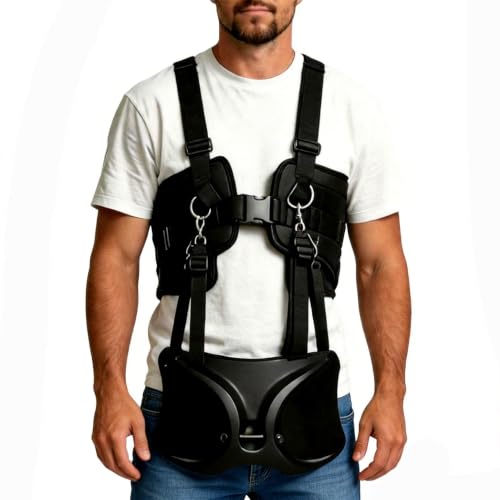
Loomcraft Belt & Shoulder Harness Set stands out for a chest-mounted metal D-ring and rod-locking buckle, rather than the gimbal pin or reel clips used by other options. It pairs that connection with a padded waist belt and wide dual-shoulder straps. The maker says the shoulder-and-back harness distributes the load during big-fish fights. Consider it when the locking connection is the deciding feature.
Bottom line: Pick it if a chest-mounted locking buckle is your priority and the fit checks out.
How to Choose a Stand Up Fishing Harness
Choose a stand-up harness by matching its support layout to your rod connection and the way you brace. Belt-and-shoulder systems pair a waist support with straps over the upper body; a rod holder, gimbal or clip then connects the tackle to the harness. A reel-clip design is not interchangeable with a gimbal pin, so check which connection your rod setup accepts before choosing. For longer fights, a belt that sits securely around the waist and shoulder straps that can be adjusted without restricting arm movement are useful fit checks. If a product gives a measured waist range, use it as a decision rule: choose it only if your waist falls within that range. One-size claims alone do not confirm a particular fit.
Harness Connections and Support Types
Harness connections differ in where they support the rod: a gimbal pin supports the rod butt, while reel clips attach at the reel, and a locking buckle can secure a rod connection at the chest. The connection must match the gear you intend to use; a harness that cannot connect to your rod or reel will not serve its main purpose. Belt-and-shoulder designs add more contact points than a belt alone, while the exact strap layout differs by model. Use this comparison to narrow the setup before checking fit.
| Connection or layout | What to match |
|---|---|
| Gimbal pin | Rod butt designed to seat against a gimbal |
| Reel clips | Reel with compatible clip points |
| Chest locking buckle | Rod connection compatible with the buckle |
| Belt and shoulder straps | Waist fit and strap adjustability |
Getting the Fit Right
A stand-up harness should sit securely at the waist, with shoulder straps adjusted so they support rather than pull awkwardly. Measure your waist where the belt will sit, not over bulky clothing, and compare that number with a range; a 38–42-inch range is a useful match only for waists within those limits. One-size products need a separate fit check because that label does not tell you the adjustment span. Before fishing, connect the rod while the gear is unloaded and check that the belt does not slip and straps do not obstruct movement. Confirm that the rod holder or clip engages properly and that the connection is compatible with your tackle.
Using a Harness During a Fight
A harness helps transfer the rod’s pull into body support, but it does not eliminate the need to control the rod and reel. Set the belt and shoulder straps before a fish is on, then verify the rod connection is seated and secure. Keep the rod aligned with the harness connection rather than twisting against it; side loading can make a connection harder to control. Never treat a rod leash or buckle as a substitute for checking its engagement, and inspect metal hardware, webbing and plastic support parts for damage before use. A loose fit or mismatched rod connection can compromise control, so stop and correct either problem before continuing.
Frequently Asked Questions
How should a stand-up fishing harness fit?
A harness should sit securely at the waist, with shoulder straps adjusted to support without restricting arm movement. Measure where the belt will sit and compare your waist measurement with any range; one-size sizing alone does not confirm fit.
What is the difference between a gimbal and reel clips?
A gimbal pin supports the rod butt, while reel clips attach at compatible points on the reel. Match the harness connection to your rod-and-reel setup before fishing.
Can I use a stand-up harness for inshore fishing?
Some harnesses are intended for inshore use as well as stand-up fishing, but the connection and fit still need to suit your tackle. Check that the rod holder or clips mate with your setup before use.
How do I check a harness before a fishing trip?
Before fishing, inspect straps, buckles, clips and plastic support parts for visible damage, then connect the rod while unloaded. Confirm the connection is seated and the waist belt stays in place without restricting movement.
Do stand-up fishing harnesses fit over clothing?
Fit depends on the belt’s adjustment range and how much clothing is underneath. Measure at the place the belt will sit with your usual fishing layers, and choose a range that includes that measurement.