
Laser Strippers for Wood: Models and Alternatives

For a laser stripper for wood, WTTTOOLS LPC-300 300W Laser Cleaner is the more compact 300-watt pulsed option, while LYXC APC-300 IoT 300W Laser Cleaner adds IoT phone control; compare them by the controls and size you need. If you want a handheld infrared tool or a chemical or mechanical method instead, choose one of the alternatives.
Laser cleaners direct pulsed light at a surface to remove coatings; infrared strippers warm coatings for scraping, while gels soften them chemically and milling tools cut them away.
We earn a commission if you buy through links on this page. As an Amazon Associate I earn from qualifying purchases. Products are compared on manufacturer specifications, not hands-on testing.
- Best overall: WTTTOOLS LPC-300 300W Laser Cleaner – Its 300-watt pulsed operation and compact 57.3-pound body suit buyers who want the wood-cleaning laser without remote controls.
- Best for phone control: LYXC APC-300 IoT 300W Laser Cleaner – Its IoT feature supports smartphone control and parameter adjustment.
- Best for handheld stripping: Spengar Infrared Paint Stripper – The 3.7-pound infrared tool warms paint and varnish for lifting with a scraper.
| Product | Best for | Laser power / type | Scan width | Weight | Shop |
|---|---|---|---|---|---|
| WTTTOOLS LPC-300 300W Laser Cleaner | Compact laser cleaning | 300 W pulsed | 0–100 mm | 57.3 lb | Check Price on Amazon |
| LYXC APC-300 IoT 300W Laser Cleaner | Remote adjustment | 300 W pulsed | 0–100 mm | 114.6 lb | Check Price on Amazon |
| Spengar Infrared Paint Stripper | Handheld infrared work | Infrared heating | — | 3.7 lb | Check Price on Amazon |
| Max Strip Paint & Varnish Stripper Gel | Chemical coating removal | Water-based gel | — | 32 fl oz | Check Price on Amazon |
| Metabo HPT LF 850 S Paint Remover | Controlled surface milling | Carbide blade | — | 7 lb | Check Price on Amazon |
Laser Strippers for Wood and Alternatives
Compare laser cleaning with infrared, chemical and mechanical ways to remove coatings from wood.
WTTTOOLS LPC-300 300W Laser Cleaner

For a smaller machine footprint, WTTTOOLS LPC-300 300W Laser Cleaner measures 24 × 17.3 × 12.8 inches and weighs 57.3 pounds, less than the 114.6-pound figure given for LYXC APC-300 IoT 300W Laser Cleaner. It uses pulsed operation, air cooling and a 0–100 mm scan width, with 110–220 V input. The maker describes it as designed for wood cleaning and rust removal. Its Class 1 classification and 0.39 mW output do not replace safe work practices: 1070 nm laser radiation is near-infrared and invisible, so use only under the maker’s safety procedures. The limitation is its size and mass; buyers needing phone control should consider LYXC APC-300 IoT 300W Laser Cleaner.
Bottom line: Choose this if a compact pulsed laser and no phone-control feature fit your setup.
LYXC APC-300 IoT 300W Laser Cleaner

Phone-based control distinguishes LYXC APC-300 IoT 300W Laser Cleaner from WTTTOOLS LPC-300 300W Laser Cleaner: its IoT system is described as allowing remote control, parameter adjustment and technical diagnosis. The 300-watt air-cooled pulsed unit has a 0–100 mm scan width, 10–500 ns pulse width, 1–3000 kHz modulation frequency and a 5-meter cable. The maker describes it as intended for wood and mold cleaning, including paint, stains and graffiti. At 114.6 pounds, it is substantially heavier than WTTTOOLS LPC-300 300W Laser Cleaner, so plan for its placement and movement before choosing it. The laser specifications do not establish that every coating or wood species is suitable; confirm compatibility with the maker before work.
Bottom line: Choose this if remote parameter adjustment matters and you can accommodate its weight.
Spengar Infrared Paint Stripper

Unlike pulsed laser cleaners, Spengar Infrared Paint Stripper heats paint and varnish with a ceramic plate so the softened coating can be lifted with a scraper. It is a handheld, 120-volt corded tool with a 10-foot cord and collapsible handle, weighing about 3.7 pounds. The maker lists wood siding, doors, trim and furniture as suitable surfaces. It removes paint, varnish and polyurethane, but not stain that has penetrated the wood grain. Its heating method also means it is not a laser stripper; choose it only if a warm-and-scrape process suits the job. Keep heat away from combustible materials and follow the tool’s safety directions.
Bottom line: Choose this for a lightweight infrared tool when you are prepared to scrape softened coatings.
Max Strip Paint & Varnish Stripper Gel
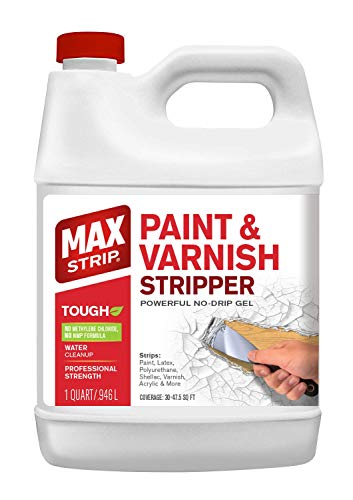
For a chemical rather than machine-based approach, Max Strip Paint & Varnish Stripper Gel is a 32-fluid-ounce water-based gel intended for wood, metal and brick. The maker says it can remove paint, varnish, stain, lacquer and polyurethane, with timing that varies by coating; the directions call for checking every 15 minutes and scraping when ready. It contains no methylene chloride or NMP, but that does not mean it is risk-free: protect skin and eyes, ventilate the work area, and follow the product label. It is not intended for factory-finished or baked-on coatings. Unlike the laser options, the gel requires application and scraping, so it may not suit a job where that process is undesirable.
Bottom line: Choose this when a water-based gel and manual scraping suit the coating and work area.
Metabo HPT LF 850 S Paint Remover

Metabo HPT LF 850 S Paint Remover removes coatings mechanically rather than with light or heat: its carbide blade mills paint and varnish from wood, and the four-sided reversible blade provides four cutting edges. A variable milling-depth adjustment lets the user set material removal, while lateral blades can reach untreated wood and notches. It weighs 7 pounds and is described for stairs, doors and windows. Milling physically removes some wood along with the coating, so it is a different choice from a laser cleaner and calls for careful depth control, especially on thin trim. Dust extraction is included as a feature, but use appropriate dust protection and follow the tool’s operating directions.
Bottom line: Choose this for mechanical coating removal when adjustable milling depth is useful.
How to Choose a Laser Stripper for Wood
Choose a laser cleaner by comparing its pulse controls, scan width, cooling method and the surface work you need to do. The two laser options here are both 300-watt pulsed machines with a 0–100 mm scan width; LYXC APC-300 IoT 300W Laser Cleaner adds remote phone adjustment, while WTTTOOLS LPC-300 300W Laser Cleaner weighs less. A wider scan can cover more area per pass, but it does not by itself establish removal speed or suitability for a particular coating. Wood species, coating layers and surface geometry can change the result. Start with a small test area approved by the manufacturer, and confirm coating compatibility before treating valuable or thin wood. If manual scraping is acceptable, an infrared tool or gel may be a simpler method than a laser system.
Laser Safety and Wood Preparation
Near-infrared laser radiation around 1070 nm is invisible, so the beam cannot be judged by looking for visible brightness. A Class 1 label applies to the product as classified, not to every possible setup, maintenance task or altered enclosure. Use the manufacturer’s required enclosure, interlocks, protective equipment and operating procedure; never point a laser toward people or reflective surfaces. Remove combustible debris from the work area and keep a suitable fire extinguisher accessible because wood and coatings can be heated during removal. Before use, identify the coating and wood condition, secure the workpiece, and test a discreet area. Do not assume a scan-width or power figure guarantees a safe result on every surface.
Laser, Infrared, Gel and Milling Compared
Choose the removal method by the action you want: pulsed light, warmed coating, softened coating or physical cutting. Infrared tools heat paint so a scraper can lift it; they do not remove stain that has soaked into the grain. Gel strippers need dwell time and scraping, while milling tools remove coating mechanically and can also cut into the wood. These distinctions matter more than broad claims about speed, since coating type and substrate condition affect the job. Use this table as a starting point, then check that the chosen method is compatible with your specific surface.
| Method | Removal action | Key trade-off |
|---|---|---|
| Pulsed laser | Light-based cleaning | Specialized equipment and laser safety |
| Infrared | Warms coating for scraping | Requires manual lifting; not for penetrating stain |
| Gel | Softens coating chemically | Dwell time and scraping |
| Milling tool | Mechanically cuts coating | Can remove wood with coating |
Common Wood-Stripping Mistakes
Skipping a test patch is a common mistake because coatings and wood surfaces can react differently to heat, chemicals or cutting. Test in an inconspicuous place and check for discoloration, raised grain or unwanted material removal before proceeding. Another mistake is treating stain like a surface coating: stain penetrates wood, and the infrared tool here does not remove it. Do not use a gel on factory-finished or baked-on coatings when the maker excludes those surfaces. With a milling tool, begin with a shallow depth and avoid edges or thin trim until you understand how much material the tool removes. Keep children and bystanders out of the work area, especially around powered equipment and heated or laser processes.
Frequently Asked Questions
Can a laser cleaner remove stain from wood?
The two laser cleaners are described as suitable for wood cleaning, and one says it can clean stains, but neither guarantees results for every wood or stain. Test a discreet area and confirm the specific coating is compatible before treating the full surface.
Why does a laser cleaner use pulsed operation?
Pulsed operation delivers energy in repeated pulses rather than a continuous beam. The products here list pulse features, but those specifications alone do not establish how a particular coating will respond.
Is near-infrared laser radiation visible?
No; radiation near 1070 nm is outside the visible range. Never rely on seeing the beam to assess exposure, and use the machine only with the manufacturer’s required safety measures.
Can infrared paint removers strip wood stain?
The infrared tool described here does not remove stain that has penetrated the grain. It warms surface coatings such as paint and varnish so they can be lifted with a scraper.
How often should I check stripper gel while it works?
The gel maker directs users to check every 15 minutes because the time varies with the coating. Scrape only when the coating is ready, and follow the label’s handling and cleanup directions.
Does a milling paint remover preserve the wood surface?
A milling tool cuts coating mechanically and may remove some wood with it. Use a shallow depth first and take extra care on thin trim, edges and other areas where little material can be spared.