
Delta Shopmaster 10 Table Saw: Models Compared

For a Delta Shopmaster 10 table saw, Delta 36-6023 10-Inch Table Saw is the direct match, with a 10-inch blade and 32.5-inch rip capacity. Choose a different model if you need a folding stand, a more compact saw, or a portable wheeled stand.
Table saws cut stock along a flat table using a circular blade that protrudes through its surface; rip capacity describes how far the fence can guide a cut from the blade.
We earn a commission if you buy through links on this page. As an Amazon Associate I earn from qualifying purchases. Products are compared on manufacturer specifications, not hands-on testing.
- Best overall: Delta 36-6023 10-Inch Table Saw – The direct Delta match combines a 10-inch blade with 32.5 inches of rip capacity.
- Best for folding storage: SKIL TS6307-00 10-Inch Table Saw – The integrated stand folds for transport and storage.
- Best for compact storage: DEWALT DWE7485 8-1/4-Inch Table Saw – The 8.25-inch saw has a 24.5-inch rip capacity and compact format.
- Best for wheeled transport: Bosch GTS15-10 10-Inch Table Saw – The 10-inch saw comes with a wheeled stand and 32-1/8-inch rip capacity.
| Product | Best for | Rip capacity | Blade diameter | Weight | Shop |
|---|---|---|---|---|---|
| Delta 36-6023 10-Inch Table Saw | Large stock ripping | 32.5 in. | 10 in. | 77 lb. | Check Price on Amazon |
| SKIL TS6307-00 10-Inch Table Saw | Folding storage | — | 10 in. | 51.15 lb. | Check Price on Amazon |
| DEWALT DWE7485 8-1/4-Inch Table Saw | Compact transport | 24.5 in. | 8.25 in. | 54 lb. | Check Price on Amazon |
| Bosch GTS15-10 10-Inch Table Saw | Wheeled transport | 32-1/8 in. | 10 in. | 102.95 lb. | Check Price on Amazon |
Delta Shopmaster 10 Table Saw and Alternatives
Compare the direct Delta match with other portable table saws by capacity, blade size and setup needs.
Delta 36-6023 10-Inch Table Saw
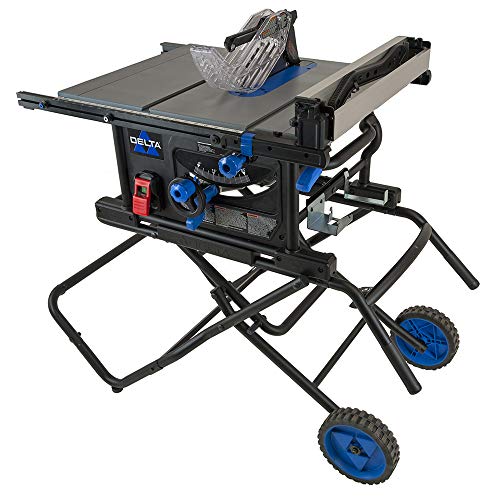
Delta 36-6023 10-Inch Table Saw is the direct Delta Shopmaster 10 table saw match here, with a 32.5-inch rip capacity for wider stock. It has a 15-amp motor, rack-and-pinion fence rails and a 13/16-by-8-inch stacked dado capacity. Delta says the motor handles treated lumber and hardwoods. At 77 pounds, it is heavier than the SKIL and DEWALT options in this group, which matters if frequent carrying is a priority. The five-year warranty may also suit buyers who value a longer stated coverage period.
Bottom line: Pick this for the direct Delta match and its 32.5-inch rip capacity.
SKIL TS6307-00 10-Inch Table Saw
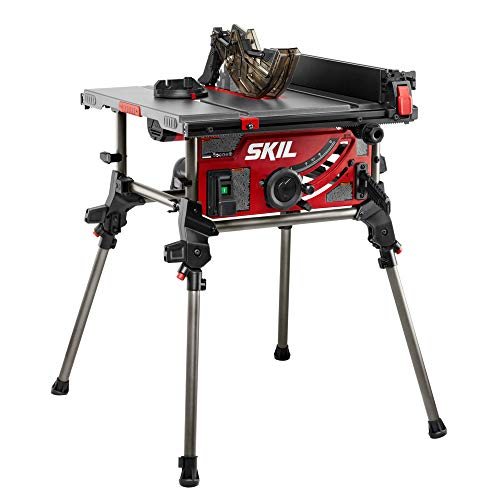
SKIL TS6307-00 10-Inch Table Saw stands apart with an integrated folding stand, making it the portable setup in this group that explicitly folds for storage. The 10-inch saw has rack-and-pinion fence rails, blade-alignment micro-adjustment, a dust-port elbow and a 4-by-4 cutting capacity at 90 degrees. SKIL says its bevel range runs from 2 to 47 degrees with stops at 0 and 45 degrees. Its weight is 51.15 pounds, but the maker does not establish its rip capacity, so buyers planning wide panel cuts should confirm that measurement before choosing it.
Bottom line: Choose this if folding storage and a 4-by-4 capacity matter most.
DEWALT DWE7485 8-1/4-Inch Table Saw

DEWALT DWE7485 8-1/4-Inch Table Saw is the compact alternative, with an 8.25-inch blade rather than the 10-inch blade on the Delta and most other saws here. Its 24.5-inch rip capacity is intended for ripping 4-by-8 plywood or OSB sheets, and telescoping rack-and-pinion rails adjust the fence. The saw includes a metal roll-cage base, on-board storage and a power-loss reset that prevents restart after a power interruption when left on. The smaller blade and lower rip capacity may be limiting for buyers who need the Delta’s larger cutting format.
Bottom line: Choose this for a compact saw with sheet-goods capacity.
Bosch GTS15-10 10-Inch Table Saw

Bosch GTS15-10 10-Inch Table Saw pairs a 10-inch blade and 32-1/8-inch rip capacity with a wheeled stand, making its transport setup distinct from the other options. Bosch lists a 15-amp motor, 3,800-rpm speed, rack-and-pinion fence, soft-start circuitry and a Smart Guard System with a riving knife and anti-kickback pawls. The maker says its blade brake stops the blade in approximately three seconds. At 102.95 pounds, the full stated weight is greater than the other saws here, so the wheels matter more than carrying it by hand.
Bottom line: Choose this if a wheeled stand and broad rip capacity are priorities.
How to choose a table saw for your work
Choose by the widest stock you expect to rip, then consider blade size and how often the saw must move. Rip capacity measures the distance from the blade to the fence, not the maximum length of a board. A 24-inch capacity can handle a 4-foot-wide panel when the panel is turned to make a narrower rip; the full sheet still needs stable support. Ten-inch blades are common on jobsite saws, while compact models may use smaller blades. For repeated 4-by-8 sheet work, prioritize a suitable rip capacity and outfeed support; for occasional small cuts, portability and storage may weigh more heavily.
Table saws are high-risk tools because the exposed blade can cause severe injury and the workpiece can kick back. Keep the riving knife and blade guard in place when the cut allows, stand out of the direct kickback path, and never reach over a moving blade.
Rip capacity, blade size and sheet support
Rip capacity helps determine whether a saw can guide a wide board or sheet along its fence, while blade diameter affects the depth the saw can cut. A 10-inch blade does not mean the saw can rip 10 inches of width; these measurements describe different things. Before cutting a large sheet, plan support on the infeed and outfeed sides so the panel stays level rather than tipping as the cut progresses. A helper or purpose-built support may be needed for unwieldy sheet goods. For frequent cuts wider than the fence capacity, use a suitable alternative setup rather than assuming the saw can safely guide the full width.
Use the chart as a quick distinction between the common measures.
| Measure | What it tells you | Buying implication |
|---|---|---|
| Rip capacity | Blade-to-fence distance | Compare against the widest guided rip you need |
| Blade diameter | Blade size | Compare cut-depth needs and compatible blades |
| Weight and stand | Transport setup | Consider lifting, folding or rolling the saw |
Fence setup and accurate cuts
A table saw fence guides a workpiece parallel to the blade, so alignment matters for consistent cuts and safer feeding. Rack-and-pinion systems move the fence using geared rails; micro-adjustment can help correct blade alignment, but those features do not replace checking alignment. Before use, verify that the fence locks securely and stays parallel to the blade, and make a test cut on scrap. Keep hands clear of the blade path and use a push stick for narrow stock rather than placing fingers near the teeth. Never force a workpiece that binds or pinches during a cut.
Blade guards, riving knives and anti-kickback pawls address different parts of the hazard: the guard limits access to the blade, while a riving knife helps keep the kerf open behind it. Keep safety equipment installed and use compatible accessories for the intended cut.
Moving and storing a jobsite table saw
Choose a stand around the way the saw will travel: folding legs reduce setup footprint, while wheels reduce the need to carry the saw itself. Weight alone does not describe how easy a saw is to move; handle placement, stand design, stairs and uneven ground also matter. A saw that weighs more than 100 pounds can still roll on a wheeled stand, but lifting it into a vehicle remains a separate task. Confirm that the stand locks securely before setting up, and park the saw on a stable, level surface before cutting. Store blades and accessories so they cannot shift or contact the blade.
For sheet goods, storage is only part of the planning: allow enough clear floor space to support both the incoming panel and the cut piece without crowding the operator.
Frequently Asked Questions
What does table saw rip capacity measure?
Rip capacity is the distance from the blade to the fence, which sets the maximum width the fence can guide in a rip cut. It does not describe the maximum length of board a saw can cut.
Can a 10-inch table saw cut a 4-by-4?
Blade diameter alone does not establish a saw’s cut capacity. Check the model’s specified depth and stock capacity; one model here explicitly states 4-by-4 cutting at 90 degrees.
Why does a table saw need a riving knife?
A riving knife sits behind the blade and helps keep the kerf from closing on the blade, reducing a common cause of binding and kickback. Keep it installed and aligned for cuts where it is compatible.
How much space does a table saw need?
Allow clear space on both the infeed and outfeed sides so long stock or sheet goods stay supported through the cut. For 4-by-8 panels, plan support for the full sheet and the separated piece rather than relying on the tabletop alone.
When should I use a push stick on a table saw?
Use a push stick when feeding narrow stock that would bring your hand close to the blade. Keep the workpiece against the fence and table, and never reach over or behind a moving blade.