
Camera for RC Car: FPV Options Compared by Fit

For a camera for an RC car, Veeniix V997 FPV Camera is the named standalone option, with Wi-Fi live viewing and a 45-degree adjustable camera; check that its mounting system fits your car before ordering. Choose 1:64 Mini FPV RC Car instead if you want a compact complete car with an LCD screen remote, or 1:18 FPV RC Car for a larger 1:18 vehicle.
We earn a commission if you buy through links on this page. As an Amazon Associate I earn from qualifying purchases. Products are compared on manufacturer specifications, not hands-on testing.
- Best overall: Veeniix V997 FPV Camera – Standalone FPV accessory offers Wi-Fi video and a 45-degree adjustable view.
- Best for compact play: 1:64 Mini FPV RC Car – The 1:64 car includes a magnetic camera and LCD-screen remote.
- Best for larger scale: 1:18 FPV RC Car – A complete 1:18 RC car includes a fixed camera and screen controller.
| Product | Best for | Camera view | Live viewing | Scale or fit | Shop |
|---|---|---|---|---|---|
| Veeniix V997 FPV Camera | Standalone FPV | 720p; 45° adjustable | Wi-Fi app | For V997 RC car | Check Price on Amazon |
| 1:64 Mini FPV RC Car | Compact screen FPV | 45° adjustable; detachable | LCD remote; app | 1:64 car | Check Price on Amazon |
| 1:18 FPV RC Car | Complete car setup | Fixed camera | HD-screen controller | 1:18 car | Check Price on Amazon |
| AKK KC04 FPV System | Quadcopter FPV | 700TVL; 120° lens | 5.8 GHz transmitter | For quadcopters | Check Price on Amazon |
Camera for RC Car Options
Compare standalone camera gear with complete RC cars that include onboard video.
Veeniix V997 FPV Camera

Unlike the complete camera-equipped cars, this is a camera accessory intended for the Veeniix V997. It captures 720p video, sends live footage over Wi-Fi to a phone app, and adjusts through a 45-degree angle; the maker also claims up to 150 minutes of recording. Its three mounting options give V997 owners ways to position the camera. The key limitation is compatibility: the product is presented as an accessory for the V997, so buyers with another RC car should confirm the mounting fit before ordering.
Bottom line: Pick this if you own a Veeniix V997 and want phone-based FPV.
1:64 Mini FPV RC Car

Unlike a standalone camera, this option is a complete 1:64 RC car with a detachable magnetic camera. The maker says the camera provides real-time video and supports photo and video recording; control is available through the integrated LCD-screen remote or a phone app. At about 3.70 × 2.28 × 2.48 inches, it is suited to small indoor routes and portable play. It is not an accessory for an existing RC car, so choose it only if replacing or adding another vehicle works for your setup.
Bottom line: Choose this for a pocket-size car with screen-based FPV.
1:18 FPV RC Car
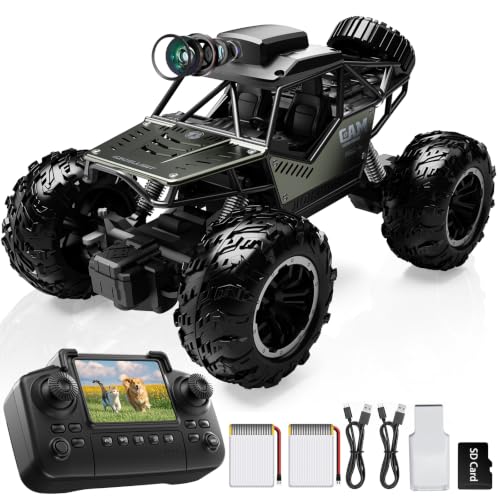
Unlike an add-on camera, this is a complete 1:18 off-road RC truck with a fixed camera and an HD-screen controller. The maker says the controller displays real-time FPV without a smartphone or app, and an SD card is included for local photo and video previews. Two batteries are described as providing up to 40 minutes of running time. The camera is fixed rather than adjustable, and the running time applies to the car, not the camera’s recording duration.
Bottom line: Pick this if you want a larger complete RC car with a built-in screen.
AKK KC04 FPV System
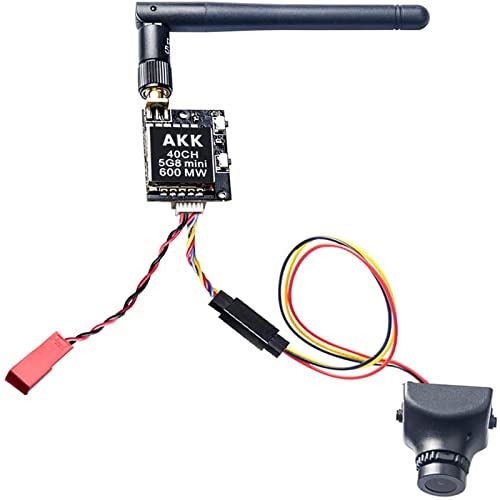
Unlike RC-car-specific options, this FPV system is described for racing quadcopters and is not presented as a car camera. It combines a 700TVL camera with a 2.8mm lens and a 5.8GHz, 600mW transmitter; the system uses NTSC, with push buttons for changing channel and frequency. Consider it only if your RC-car project can accept a quadcopter-oriented FPV setup and matching video equipment. Its target is quadcopters, so it is a poor fit for a buyer seeking a simple camera add-on for a car.
Bottom line: Consider it only for an RC build designed around compatible FPV gear.
How to choose a camera for an RC car
Start by deciding whether you need a camera accessory or a complete car: accessories depend on a compatible mount, while complete cars include the camera and vehicle together. Live FPV means viewing the drive as it happens, but the display can be a phone app, a dedicated screen controller, or separate FPV equipment. Phone-based systems require the app and a compatible phone; an integrated screen avoids that dependency. For indoor routes, a compact 1:64 car is easier to fit through narrow spaces than a 1:18 vehicle. If keeping your current car matters, prioritize a mount match over a complete camera-equipped toy.
| Need | Choice | What to check |
|---|---|---|
| Camera for an existing car | Standalone accessory | Vehicle and mount compatibility |
| Small complete FPV car | 1:64 scale | Route width and remote display |
| Complete larger vehicle | 1:18 scale | Space to drive and store it |
| Custom video system | FPV transmitter and camera | Video format and compatible receiver |
RC car camera mounts and fit
Mount compatibility decides whether an add-on camera can work on an existing RC car. A camera made for one vehicle should not be assumed to fit another: body shape, mounting points, camera clearance, and wiring or power connections can differ. Before buying, compare the car’s mounting locations with the accessory’s attachment options and check whether the camera can see past the body shell. Adjustable angles help aim the view, but they do not solve a mismatched mount. A complete camera-equipped car avoids that installation question, although it cannot add FPV to the vehicle you already own.
Live FPV displays and video systems
FPV systems send a driver’s view to a display, but the display and transmission method determine what else the setup needs. A phone-app camera relies on a phone and its app; a screen remote puts the display on the controller. A 5.8GHz transmitter setup instead needs a compatible receiver and display, and a matching video format such as NTSC. Do not assume that a Wi-Fi camera pairs with a 5.8GHz FPV receiver: those are different transmission approaches. Buyers assembling a custom setup should verify transmitter, receiver, and display compatibility as a set before installation.
RC car camera safety and driving setup
Keep an FPV car within direct sight while driving, especially near people, pets, traffic, stairs, or obstacles; a camera view is not a substitute for awareness of the vehicle’s surroundings. Small cars can be difficult to see at a distance, and video delay or a lost signal can make steering less predictable. Use a clear, bounded route and stop the car before retrieving it or handling the camera. For children, supervise operation and keep small removable camera parts and batteries away from younger children. Avoid driving on public roads or anywhere a moving RC car could enter traffic.
Frequently Asked Questions
Can I put any camera on an RC car?
No; a camera must fit the car’s mount and have a workable power and viewing setup. Compare mounting points and camera clearance before ordering an accessory.
Is Wi-Fi FPV the same as 5.8GHz FPV?
No; Wi-Fi app cameras and 5.8GHz transmitter systems use different transmission setups. A 5.8GHz system needs a compatible receiver and display, while a Wi-Fi camera uses its app-based viewing approach.
What does 1:64 scale mean for an RC car?
A 1:64 model is one sixty-fourth the size of its full-size reference vehicle. Scale alone does not give exact dimensions, so check the car’s measurements against the route and storage space.
Can an RC car camera record video too?
Some camera systems support recording as well as live viewing, but recording time and storage depend on the specific camera and setup. Confirm that recording is supported if saving clips is important.
Should children drive an FPV RC car using only the screen?
No; keep the vehicle in direct sight and supervise children, since a screen view does not show every hazard around the car. Use an open, bounded area away from roads, pets, and people.