
Mod Podge Clear Acrylic Sealer: Gloss, Matte and Glue

For a clear, glossy spray finish, choose Mod Podge Gloss Acrylic Sealer Spray; choose Mod Podge 1469 Matte Acrylic Sealer if you want a matte finish instead. Both are 12-ounce Mod Podge acrylic sealers, while Mod Podge Gloss Sealer, Glue & Finish is a 16-ounce glue, sealer, and finish for decoupage—not a spray acrylic sealer.
Pick the finish based on the look you want, and choose the all-in-one glue only when you also need an adhesive for paper or fabric projects.
We earn a commission if you buy through links on this page. As an Amazon Associate I earn from qualifying purchases. Products are compared on manufacturer specifications, not hands-on testing.
- Best overall: Mod Podge Gloss Acrylic Sealer Spray – A 12-ounce acrylic sealer spray with a glossy clear finish.
- Best for matte finish: Mod Podge 1469 Matte Acrylic Sealer – A 12-ounce acrylic sealer spray that dries to a matte clear finish.
- Best for decoupage: Mod Podge Gloss Sealer, Glue & Finish – A 16-ounce glue, sealer, and finish for paper, fabric, and other craft surfaces.
| Product | Best for | Format | Finish | Size | Shop |
|---|---|---|---|---|---|
| Mod Podge Gloss Acrylic Sealer Spray | Gloss spray finish | Spray sealer | Gloss | 12 oz | Check Price on Amazon |
| Mod Podge 1469 Matte Acrylic Sealer | Matte spray finish | Spray sealer | Matte | 12 oz | Check Price on Amazon |
| Mod Podge Gloss Sealer, Glue & Finish | Decoupage adhesive | Brush-on glue/sealer | Gloss | 16 oz | Check Price on Amazon |
Mod Podge clear acrylic sealer options
Compare the spray sealers by sheen, and distinguish them from the brush-on glue and finish.
Mod Podge Gloss Acrylic Sealer Spray
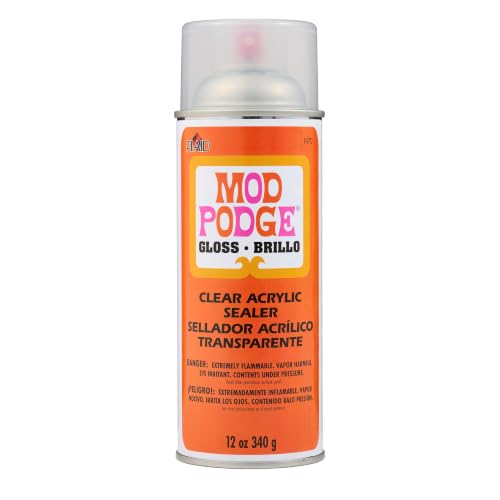
Mod Podge Gloss Acrylic Sealer Spray is the gloss option among these acrylic sealer sprays, with a clear glossy finish when dry. The 12-ounce aerosol is intended for craft projects on surfaces including wood, metal, canvas, and terra cotta. Its maker says the formula is quick-drying, non-yellowing, and no-run. The product advises wearing a fitted NIOSH/MSHA-approved respirator during and after application, along with safety eyewear; its warning also identifies a California Proposition 65 chemical hazard. This is the better match when a reflective finish matters, but choose the matte spray if you want less sheen.
Bottom line: Choose this for a glossy clear spray finish on craft projects.
Mod Podge 1469 Matte Acrylic Sealer
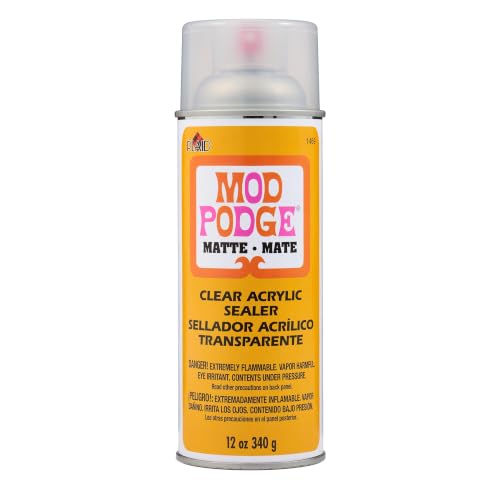
Mod Podge 1469 Matte Acrylic Sealer gives the spray-sealer choice a matte rather than glossy appearance, while retaining a clear finish when dry. The 12-ounce aerosol is meant for craft projects on wood, metal, canvas, terra cotta, and other surfaces. Its maker describes it as quick-drying, non-yellowing, and no-run. The product also recommends wiping the nozzle with soap and water between uses to help keep it from clogging. Choose it when minimizing shine is more important than a glossy look; the maker does not include the respirator guidance included with the gloss spray.
Bottom line: Choose this when you want a clear matte spray finish.
Mod Podge Gloss Sealer, Glue & Finish

Unlike the aerosol sealers, Mod Podge Gloss Sealer, Glue & Finish combines glue, sealer, and finish in a 16-ounce bottle for decoupage and related crafts. Its glossy clear finish is intended for materials such as wood, paper, canvas, tin, and terra cotta. The maker says it dries quickly and can be cleaned up with soap and water. This format suits projects where adhering paper or fabric is part of the job, rather than simply spraying a finished object with acrylic sealer. It is not a direct substitute for the two spray sealers, so choose an aerosol if spray application is essential.
Bottom line: Choose this for decoupage that needs glue as well as a glossy finish.
How to choose a clear craft sealer
Choose by finish first: glossy surfaces reflect more light, while matte surfaces reduce the visible sheen. A clear finish describes color, not sheen, so a clear product can still dry gloss or matte. Also distinguish a finishing sealer from a decoupage medium: glue-and-finish products adhere materials such as paper, while a spray sealer is applied as a finishing coat. If your project involves both bonding and protecting, decide whether you need a glue layer, a topcoat, or both; those jobs are not interchangeable. For the options here, the spray formats are 12 ounces and the all-in-one glue is 16 ounces, but container size alone does not indicate the coverage a project will require.
Gloss versus matte on craft projects
Gloss and matte describe how a finish reflects light, not whether the coating is clear. Gloss can make a surface look shiny; matte gives a less reflective appearance. A useful decision rule is to match the finish to the visual effect of the project: choose gloss when shine is wanted, and matte when reducing shine is the priority. On mixed-material crafts, consider the appearance of the whole piece rather than only the paper or wood being sealed. A clear coating can change how a surface looks even when it does not add color. Test the chosen finish on an inconspicuous area or a spare piece of the same material before coating a finished project.
Spray sealer application and safety
Aerosol sealers create airborne mist, so use them with good ventilation and protect eyes and breathing as directed by the product. The gloss spray specifically advises a fitted NIOSH/MSHA-approved respirator during and after application, as well as safety eyewear; take that warning seriously and keep other people and pets away from the spray area. Build a protective finish with controlled, light passes rather than soaking one spot, since heavy application can produce uneven coverage or runs. Keep the nozzle clean between uses: the spray products advise wiping it with soap and water. Follow the can’s own directions for application distance, recoat timing, and cure time, since those can vary by formula.
Match the sealer to the project material
Craft sealers can be used on varied materials, but surface preparation still matters: dust, oils, and loose debris can interfere with an even coat. Let paint, glue, or other underlying layers dry fully before sealing, and try the full process on a scrap if the surface is valuable or unfamiliar. A spray format can reach irregular shapes without brushing over delicate details, while a brush-on glue-and-finish is suited to projects that require adhering paper as well as finishing it. No single format is ideal for every task. Confirm that the sealer is compatible with the specific materials and any existing coating before applying it across the whole project.
Frequently Asked Questions
Can Mod Podge clear acrylic sealer be used on paper crafts?
The two 12-ounce sprays are described for multiple craft surfaces, including canvas, wood, metal, and terra cotta. For paper decoupage that needs adhesive as well as a finish, the 16-ounce glue-and-finish is the more direct fit.
What is the difference between gloss and matte sealer?
Gloss reflects more light and looks shiny, while matte has less surface sheen. Both finishes can be clear when dry, so choose based on the appearance you want.
How should I protect myself when using acrylic sealer spray?
Aerosol mist should be used with good ventilation and eye protection. The gloss spray specifically advises a fitted NIOSH/MSHA-approved respirator during and after application; follow the product’s safety directions.
Can I use the glue and finish instead of spray sealer?
Use the glue-and-finish when the project needs an adhesive layer for decoupage materials such as paper or fabric. Choose a spray sealer when you specifically want an aerosol finishing coat rather than an all-in-one glue.
How do I prevent a spray sealer nozzle from clogging?
Wipe the nozzle with soap and water between uses, as advised for the spray products. Clean the nozzle before storing the can so residue is less likely to block the opening.