
Best Yoga Mat for Knee Pain: 5 Cushioned Picks

For most people seeking a yoga mat for knee pain, the CAP mat is the clearest fit because it combines a 1/2-inch full-length surface with a separate knee pad. Choose a thicker add-on cushion instead if you already have a mat and need padding mainly for kneeling poses.
We earn a commission if you buy through links on this page. As an Amazon Associate I earn from qualifying purchases. Products are compared on manufacturer specifications, not hands-on testing.
- Best overall: CAP NBR Mat with Knee Pad – It pairs a 71-by-24-inch full mat with an included knee pad.
- Best for extra-thick padding: Kinesis 1-Inch Knee Pad – Its 1-inch cushion offers the greatest thickness among these picks.
- Best for multiple practice areas: DEAYOU Three-Pad Set – The three 24-by-10-inch pads can be placed where needed.
| Product | Best for | Type | Thickness | Dimensions | Shop |
|---|---|---|---|---|---|
| CAP NBR Mat with Knee Pad | Full-body cushioning | Full mat + pad | 0.47 in | 71 × 24 in | Check Price on Amazon |
| Kinesis 1-Inch Knee Pad | Thick kneeling support | Knee pad | 1 in | 24 × 12.2 in | Check Price on Amazon |
| MRO Yoga Knee Pad | Joint-area padding | Knee pad | 0.6 in | 24 × 10.6 in | Check Price on Amazon |
| Kinesis 0.6-Inch Knee Pad | Compact mat accessory | Knee pad | 0.6 in | 24 × 12.2 in | Check Price on Amazon |
| DEAYOU Three-Pad Set | Multiple cushion spots | 3 knee pads | 0.6 in | 24 × 10 in each | Check Price on Amazon |
Yoga mats and knee pads for knee pain
The main distinction is whether you need cushioning across the whole practice area or only beneath joints during floor poses.
CAP NBR Mat with Knee Pad

Unlike the standalone cushions, this set provides a full exercise mat as well as targeted knee padding. The NBR foam mat measures 71 by 24 inches and is 0.47 inch thick; it is latex-free and includes a knee pad and strap. That combination suits home practices with standing, seated, and kneeling movements on one floor surface. The thinner full mat may be less cushioning than a dedicated thick pad beneath a sensitive joint, so use the add-on pad for kneeling rather than expecting the whole mat to match its thickness.
Bottom line: Choose this set if you need a complete mat plus extra padding for kneeling.
Kinesis 1-Inch Knee Pad

The 1-inch thickness makes this the thickest single cushion here, while its 24-by-12.2-inch footprint remains a targeted pad rather than a full mat. Its NBR foam is described as resistant to sweat and liquids, and a breathable mesh bag is included for travel and storage. It fits someone who already owns a mat and wants extra depth under knees in kneeling poses. The limited surface area will not replace a yoga mat for transitions or poses that move across the floor.
Bottom line: Pick this when maximum cushion depth for kneeling matters more than full-mat coverage.
MRO Yoga Knee Pad
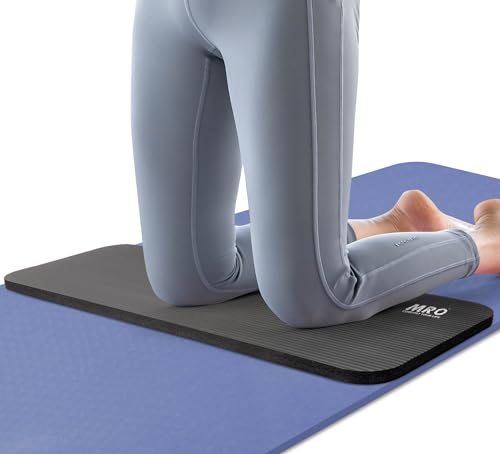
The MRO cushion has a 24-by-10.6-inch footprint, slightly narrower than the other single pads in this group. Its 0.6-inch closed-cell NBR foam is described as non-absorbent to sweat and liquids, and the product features specify PVC- and latex-free construction. That makes it a practical add-on for someone who wants a compact pad for knees, wrists, or elbows during floor exercises. Its thickness is below the 1-inch option, so those wanting the deepest cushioning should compare that alternative instead.
Bottom line: Choose this for a compact, multi-joint cushion to pair with a mat.
Kinesis 0.6-Inch Knee Pad

This Kinesis pad is wider than the MRO cushion at 12.2 inches, while retaining a 24-inch length and 0.6-inch thickness. The NBR foam is described as non-slip and resistant to sweat and liquids, and its surface can be wiped clean. It is sized for a small area beneath the knees, elbows, or wrists when you want more cushion than a mat provides at one point. The product does not include a yoga mat, so it suits buyers who already have a full practice surface.
Bottom line: Pick this as a wider targeted cushion to use alongside your existing mat.
DEAYOU Three-Pad Set

The DEAYOU set supplies three separate 24-by-10-inch pads, making it distinct from the single-cushion choices. Each pad is 0.6 inch thick and has a ridged surface; the three colors are black, blue, and purple. Multiple pads can be positioned beneath knees, wrists, or forearms, or used as a mat extender. The set is a better match for people who want several small cushioning surfaces than for anyone seeking a single full-length yoga mat.
Bottom line: Choose the set if you want several pads for different floor-work positions.
How to choose a yoga mat for knee pain
Start by deciding whether you need a full practice surface or a pad only under kneeling joints. Standard yoga mats are commonly around 1/8 inch thick; thicker mats often add cushioning but can make standing balance less stable. A 1/2-inch mat gives more floor separation, while a separate knee pad lets you add cushioning only in low poses. If your discomfort is limited to kneeling and you already own a mat, choose an add-on; if you need cushioning throughout floor work, choose a full mat with targeted padding.
Surface grip matters as much as foam depth: a very soft or slippery surface can make transitions and balance work harder. Check that the mat lies flat and that the pad does not shift during movement. For standing poses, remove or reposition a separate cushion rather than balancing on an uneven stack.
Full mats and knee pads compared
A full mat covers movement across the floor, while a knee pad concentrates cushioning over a smaller area. The choice depends on where the extra padding is needed and whether you already own a mat.
| Need | Better match | Tradeoff |
|---|---|---|
| Surface for a whole practice | Full mat with pad | Less targeted thickness across the mat |
| Extra padding under knees | Single knee cushion | Does not cover transitions |
| Padding in several spots | Multi-pad set | More pieces to reposition |
Yoga mats are commonly 24 inches wide, so a 10- to 12.2-inch cushion covers only part of the surface. Center it beneath the joint that contacts the floor, and reposition it before moving into poses that require a stable, level base.
Thickness, fit, and balance
Mat thickness is a tradeoff: more foam can cushion hard floors, but a soft, tall surface may feel less stable underfoot. These targeted pads range from 0.6 to 1 inch thick, which is substantially deeper than a standard thin yoga mat. For standing or balance poses, use the flat mat alone; reserve the raised cushion for kneeling or seated work. A simple decision rule is to add a knee pad if the mat surface feels too firm during kneeling but remains suitable for standing poses.
Measure the area you want to cushion before choosing a pad. A 24-inch length fits beneath a kneeling position, while the width determines how much side-to-side repositioning is needed. Avoid stacking loose pads, since layers can shift during transitions.
Care and safe use of foam pads
Foam pads should be kept clean and fully dry before storage; moisture trapped in a rolled mat or bag can encourage odor and material deterioration. Wipe NBR surfaces after sweaty sessions, then air-dry them rather than putting them away damp. Closed-cell foam resists liquid absorption better than open-cell foam, but surface sweat still needs cleaning.
Inspect a mat and pad for tears, compressed spots, or slick areas before each practice. Replace or stop using a cushion if damage makes it unstable. A knee pad cushions the floor contact but does not diagnose or treat knee pain; stop movements that cause pain and seek clinical advice for persistent or worsening symptoms.
Frequently Asked Questions
How thick should a yoga mat be for sore knees?
A standard yoga mat is commonly about 1/8 inch thick, while thicker options add more cushioning but may feel less steady in standing poses. For targeted kneeling comfort, an add-on pad can provide 0.6 to 1 inch of foam without making the entire surface uneven.
Can I use a knee pad with any yoga mat?
A separate knee cushion can generally sit on top of a mat, but check that it stays in place during transitions. Pads around 10 to 12 inches wide cover only part of a typical 24-inch mat, so reposition them as poses change.
Will a thicker mat make balance poses harder?
A thicker, softer mat can feel less stable in standing balance poses because the foot compresses into the surface. Use the flat mat alone for balance work and reserve an extra knee cushion for kneeling positions.
How do I clean an NBR yoga mat or knee pad?
Wipe the surface after sweaty practice and let the foam dry fully before storage. Avoid storing a damp pad rolled inside a closed bag, since trapped moisture can contribute to odor or deterioration.
When should I stop practicing with knee pain?
Stop a pose if it causes sharp or increasing pain, and do not rely on a cushion to treat an injury. Persistent or worsening pain warrants advice from a qualified healthcare professional.