
Moofit Heart Rate Monitor: Strap and Armband Options

For most buyers seeking a Moofit heart rate monitor, the HR8 chest strap is the direct pick if you want Bluetooth 5.0 and ANT+ connectivity; choose the armband if you prefer an optical sensor worn on your arm. The GEOID, POWR LABS, and Polar models are alternatives, not Moofit products.
Chest straps detect electrical signals from the heart, while optical armbands estimate pulse from light at the skin; comfort, fit, and the receiving app or device can decide between them.
We earn a commission if you buy through links on this page. As an Amazon Associate I earn from qualifying purchases. Products are compared on manufacturer specifications, not hands-on testing.
- Best overall: Moofit HR8 Chest Strap – The HR8 combines a 25-to-52-inch adjustable strap with Bluetooth 5.0 and ANT+.
- Best for arm wear: Moofit HW401 Armband – The HW401 is an optical armband with Bluetooth and ANT+ support.
- Best for long battery life: POWR LABS Bluetooth ANT+ Chest Strap – POWR LABS claims more than 400 hours from its replaceable battery.
| Product | Best for | Wear style | Connectivity | Shop |
|---|---|---|---|---|
| Moofit HR8 Chest Strap | Dual-protocol chest wear | Chest strap, 25–52 in | Bluetooth 5.0, ANT+ | Check Price on Amazon |
| Moofit HW401 Armband | Optical arm wear | Optical armband | Bluetooth, ANT+ | Check Price on Amazon |
| GEOID HS500 Chest Strap | Long battery runtime | Chest strap | ANT+, Bluetooth | Check Price on Amazon |
| POWR LABS Bluetooth ANT+ Chest Strap | Extended battery use | Chest strap, 24–61 in | Bluetooth 4.0, ANT+ | Check Price on Amazon |
| Polar H9 Heart Rate Sensor | Broad size range | Chest strap | ANT+, Bluetooth | Check Price on Amazon |
Moofit Heart Rate Monitor and Alternatives
Compare chest straps and optical armbands by fit, connection type, and the way each sensor is worn.
Moofit HR8 Chest Strap

The HR8 is the Moofit chest strap option, with Bluetooth 5.0 and ANT+ for pairing with supported apps, watches, and gym equipment. Its adjustable strap fits 25 to 52 inches, making torso fit a key check before choosing it. The maker claims accuracy up to ±1 bpm; treat that as a maker claim rather than a guarantee across every activity or pairing. The IP67 rating suits sweaty sessions, but this is still a chest-worn sensor rather than an arm-worn optical band. Choose it if your device accepts one of its protocols and you want a strap-based monitor.
Bottom line: Choose this if you want a Moofit chest strap with Bluetooth 5.0 and ANT+.
Moofit HW401 Armband

The HW401 differs from the HR8 by reading pulse optically from an armband rather than using a chest strap. It supports Bluetooth and ANT+, and a flashing LED indicates heart rate and connection status. The maker claims accuracy up to ±1 bpm; optical readings can be more sensitive to placement and movement than a properly fitted chest strap, so position the band snugly and follow its wear guidance. Its IP67 rating is useful for sweaty workouts. Pick this model if you dislike wearing a strap across your chest and your app or equipment supports its wireless connection.
Bottom line: Pick this for optical sensing on your arm instead of a chest strap.
GEOID HS500 Chest Strap

The GEOID HS500 is a chest strap alternative, with ANT+ and Bluetooth plus a maker-claimed 800-hour battery runtime. Its LED flashes to indicate readiness after the sensor is worn, then turns off after 10 flashes, so it does not provide a continuous visual readout. The IP67 rating is suited to workouts where sweat or splashes are a concern. It suits buyers prioritizing a long claimed runtime.
Bottom line: Choose this if its claimed 800-hour runtime matters more than Moofit branding.
POWR LABS Bluetooth ANT+ Chest Strap
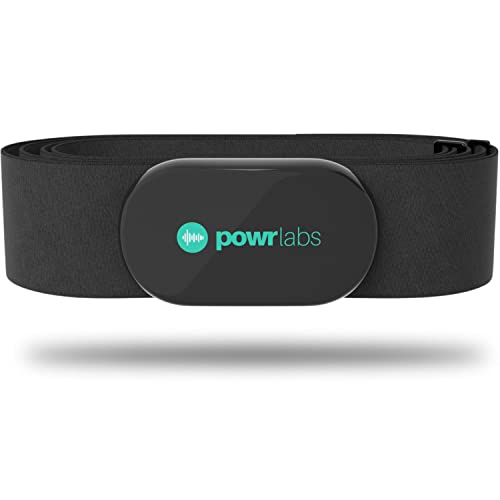
The POWR LABS strap stands apart with a claimed battery life of more than 400 hours and a replaceable battery, rather than a rechargeable design. Its specifications give two different fit ranges: the name says 26 to 38 inches, while the features say 24 to 61 inches, so confirm the fit range before ordering. It supports Bluetooth 4.0 and ANT+ and is rated IPX67 for water and sweat resistance. Choose it as a non-Moofit alternative if you want a chest strap and long intervals between battery changes.
Bottom line: Pick this if a replaceable battery and extended runtime are priorities.
Polar H9 Heart Rate Sensor
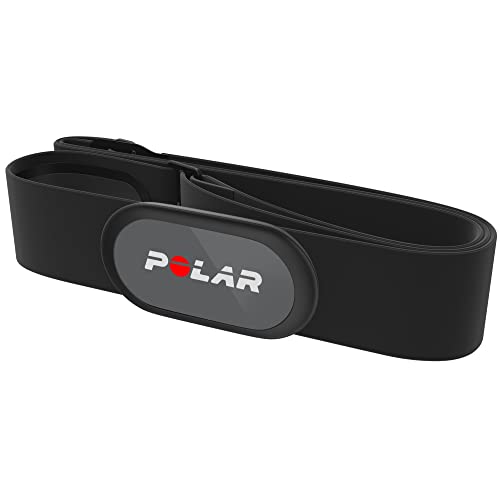
The Polar H9 is a chest strap alternative with two size options: XS–S fits 20 to 26 inches, while M–XXL fits 26 to 36 inches. It supports ANT+ and Bluetooth and is described as compatible with heart rate-monitor equipment. The overlapping 26-inch boundary means buyers near that measurement should check which size option suits the strap they intend to use. Its fields call it waterproof but provide no IP rating, so do not assume it shares the IP67 rating of the Moofit models. Consider it if Polar’s sizing options fit your torso and setup.
Bottom line: Choose this if one of its two chest strap size ranges fits you.
How to choose a Moofit heart rate monitor
Choose by wear style first: chest straps read electrical activity at the torso, while optical armbands use light to estimate pulse near the skin. For sessions with frequent arm movement, a snug chest strap is generally less prone to optical motion artifacts; for comfort preference, an armband avoids a band around the chest. Next, confirm that the receiving app or device accepts Bluetooth or ANT+, since a sensor cannot send data over a protocol the receiver lacks. Bluetooth is common in phones, while ANT+ is common in sports devices; some receivers support both. If one app must connect to multiple sensors at once, check its pairing limits before selecting any monitor.
How to size a heart rate monitor strap
Measure around the torso where the strap will sit, usually just below the chest, and compare that measurement with the product’s actual fit range. A strap should be snug enough to maintain contact during movement without restricting breathing; loose contact can interrupt readings. The HR8 range is 25 to 52 inches, while the Polar H9 choices cover 20 to 26 inches and 26 to 36 inches. Do not choose by package length alone: strap length and wearable fit are not necessarily the same measurement.
Chest straps and optical armbands compared
Chest straps and optical armbands use different sensing methods, so the best format depends on fit, motion, and how you prefer to wear a sensor. Chest straps detect the heart’s electrical signal; optical bands measure changes in light absorption at the skin. Optical sensors need close skin contact and can be affected by movement, placement, or ambient light. A chest strap also needs good electrode contact; some designs require dampening the contact area before exercise. The table summarizes the practical distinction, not a promise of identical readings in every activity.
| Type | How it senses | Fit decision |
|---|---|---|
| Chest strap | Electrical signal at the torso | Measure the torso where worn |
| Optical armband | Light-based pulse sensing at the arm | Wear snugly against skin |
Pairing and care for a heart rate monitor
Pair the sensor from the receiving app or device’s heart rate sensor menu, and confirm the device supports the sensor’s transmission protocol. The POWR LABS product specifically says to wear the strap before pairing; in general, chest straps may need body contact to wake or transmit. After a workout, rinse off sweat and dry the sensor and strap as their care guidance allows; salt residue can affect electrode contact over time. Waterproof ratings are not interchangeable: IP67 and IPX67 name different rating formats, and neither should be treated as permission to ignore the product’s care instructions. Replace or recharge a battery according to the sensor’s design.
Frequently Asked Questions
How tight should a heart rate chest strap fit?
A chest strap should stay in contact with the skin during movement without making breathing uncomfortable. Measure at the torso where the strap sits and choose a range that includes that measurement.
Do Bluetooth and ANT+ heart rate monitors work together?
Only when the sensor and receiving device share a supported protocol. Check the receiver’s sensor settings before buying; a Bluetooth-only receiver cannot pair over ANT+.
Why does a chest strap lose its heart rate reading?
Poor skin contact is a common cause, especially when a strap is loose or its electrodes are dry. Refit it snugly and dampen the electrode contact area if its care guidance calls for that.
Are optical heart rate armbands accurate during exercise?
Optical armbands estimate pulse from light at the skin, and movement or loose placement can disrupt readings. Wear the band snugly and consider a chest strap for workouts with substantial arm movement.
Can I swim with an IP67 heart rate monitor?
An IP67 rating does not mean a sensor is intended for every swimming use. Check the device’s specific water-use guidance before submerging it, since the rating alone does not confirm swim tracking or continuous underwater transmission.