
Nature’s Guest Cervical Support Pillow: Fit Compared

Nature’s Guest Adjustable Cervical Neck Roll is the closest match because its adjustable fill and 17-inch bolster shape let you change the support level. Choose a contoured pillow instead if you want a broad surface to cradle your head rather than a narrow neck roll.
A cervical support pillow is shaped to support the neck while you sleep; fit depends on keeping your head aligned with your spine, not simply choosing the tallest contour.
We earn a commission if you buy through links on this page. As an Amazon Associate I earn from qualifying purchases. Products are compared on manufacturer specifications, not hands-on testing.
- Best overall: Nature’s Guest Adjustable Neck Roll – Adjustable fill and a 17-inch neck roll shape make it the most direct match.
- Best for broad contour: Ultra Pain Relief Cooling Contour Pillow – Its queen-size hollow concave design provides a broader head-cradling surface.
- Best for side and back sleeping: Bedsure OLoop Cervical Pillow – It has a queen-size contour with separate softer and firmer sides.
| Product | Best for | Pillow style | Dimensions | Fill or material | Shop |
|---|---|---|---|---|---|
| Nature’s Guest Adjustable Neck Roll | Adjustable neck roll | Bolster roll | 17 × 4.5 in. | Hypoallergenic microfiber fill | Check Price on Amazon |
| Ultra Pain Relief Cooling Contour Pillow | Hollow contour | Hollow contour | Queen size | Memory foam | Check Price on Amazon |
| Cozyhealth 2-in-1 Neck Pillow | Compact contour | Concave neck roll | 19.7 × 7.1 in. | Memory foam | Check Price on Amazon |
| Bedsure OLoop Cervical Pillow | Two firmness sides | Zoned contour | 26.8 × 15.6 in. | Memory foam | Check Price on Amazon |
Nature’s Guest Cervical Support Pillow Options
Compare the adjustable bolster with contoured alternatives by shape, size, and support features.
Nature’s Guest Adjustable Neck Roll

Unlike the broad contour alternatives, this Nature’s Guest pillow is a narrow, adjustable neck roll. Its 17 × 4.5-inch form can be positioned along the neck, and the microfiber fill can be removed or added to change its feel. The maker says the roll offers different support positions when turned to its wide or high side. It suits someone seeking a small bolster rather than a full head pillow. The narrow shape is a limitation for sleepers who want one pillow surface under both head and neck.
Bottom line: Choose this if you want a compact neck roll with adjustable fill.
Ultra Pain Relief Cooling Contour Pillow
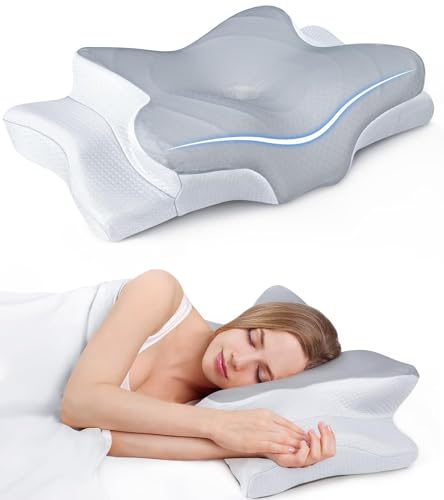
Unlike the roll-style option, this queen-size pillow uses a broad hollow concave surface with a 15-degree tilt and six contour zones. The maker says the hollow area cradles the head while the contours support neck alignment. Its memory-foam bed-pillow format suits shoppers looking for an integrated head-and-neck surface rather than a separate bolster. Queen size alone does not establish a sleeper’s needed loft.
Bottom line: Choose this if a broad, hollow contour is your preferred shape.
Cozyhealth 2-in-1 Neck Pillow

This Cozyhealth pillow combines a neck roll with a concave pillow shape, making it a middle ground between the narrow Nature’s Guest bolster and a broad bed pillow. It measures 19.7 × 7.1 inches and uses memory foam. The maker says its curved form fills the neck gap and aligns the head, neck, shoulders, and back. Its compact footprint may appeal to someone who wants a shaped neck-support surface without a queen-size pillow. The specifications give no removable-fill feature, so it will not offer the same adjustment method as an adjustable roll.
Bottom line: Choose this if you want a compact, shaped pillow that combines a roll and cradle.
Bedsure OLoop Cervical Pillow

The Bedsure OLoop is the broadest measured option here at 26.8 × 15.6 inches, with a contoured surface rather than a bolster. Its double-sided design has one softer side and one firmer side, and the maker says the OLoop structure and support bars provide stable support. The product is aimed at side and back sleepers, so it suits someone choosing between two surface feels in a full pillow format. The size is smaller than a typical queen pillow footprint, so check the fit against your pillowcase before choosing.
Bottom line: Choose this if you want a full contour pillow with two firmness sides.
How to choose a cervical support pillow
Choose by sleeping position and head alignment before choosing a named contour. On your side, the pillow needs to fill the space between shoulder and head without tilting the head toward the mattress or ceiling; on your back, it should support the neck without pushing the chin toward the chest. Neck rolls support a narrower area, while contoured bed pillows cradle more of the head. If you already use a pillow comfortably, compare the new shape and height with that setup rather than assuming a deeper contour is better. A measurable decision rule: if a roll cannot support the neck without your head tipping sideways when you lie in your usual position, choose a broader pillow shape.
Neck roll and contour pillow shapes
A neck roll is a cylindrical or shaped bolster placed under the neck; a contour pillow has a wider surface with a central head area and raised neck region. Rolls are easier to position in a specific spot, while broad pillows keep head and neck support together. Pillow dimensions describe the footprint, not loft: a longer pillow can still be low, and a wide pillow can still be too high for a particular sleeper. Use the comparison below to match shape to the kind of support surface you want, then confirm that the pillow’s height works in your sleeping position.
Use the shape first, then check dimensions and fill adjustment.
| Need | Shape to consider | Fit cue |
|---|---|---|
| Narrow neck support | Bolster roll | Head stays level in usual position |
| Head and neck on one surface | Broad contour | Neck is supported without chin tilt |
| Combined roll and cradle | Compact concave shape | Footprint fits available pillow space |
How to check pillow size and loft
Measure the current pillowcase and note whether the pillow covers just the neck or the head and neck together. Standard bed pillows are commonly about 20 × 26 inches for standard size and 20 × 30 inches for queen size, though cervical shapes may use different dimensions. A case that is too small can compress a pillow or bunch its cover; a loose case can allow shifting. Loft is the height under load, not the pillow’s length or width. When a product gives only a footprint, use the lying position and alignment test rather than inferring loft from the size label.
Using cervical pillows safely
A cervical pillow changes support and positioning; it is not a treatment for a medical condition. Neck comfort depends on the pillow, mattress, sleeping position, and individual anatomy, so stop using a shape that causes new or worsening discomfort. Persistent neck pain, numbness, weakness, or pain after an injury warrants medical advice rather than repeated pillow changes. Keep adjustable-fill pillows evenly filled and avoid overstuffing a narrow roll until it forces the neck into an uncomfortable angle. A pillow should not make breathing or swallowing feel restricted; if it does, remove it and seek appropriate care.
Frequently Asked Questions
How should a cervical pillow fit my neck?
A cervical pillow should support the neck while keeping the head aligned with the spine. When lying on your side, the head should not tip toward the mattress or ceiling; on your back, the pillow should not push the chin toward the chest.
Can I use a neck roll all night?
A neck roll can be used as a sleep support if its shape keeps your head and neck comfortable in your usual position. If your head tips sideways or the roll creates new discomfort, try a broader pillow shape instead.
Does a higher cervical pillow provide more support?
A higher pillow is not automatically better because excess height can tilt the head and neck. Compare the pillow’s height in your actual sleeping position and favor neutral alignment over a deeper contour.
How often should I replace a cervical pillow?
Replace a pillow when its fill stays compressed, its shape no longer supports your neck, or the cover and fill cannot be kept clean. Foam and fiber can lose loft at different rates, so check the pillow’s condition rather than relying on a universal replacement date.
Can a cervical pillow relieve neck pain?
A cervical pillow may change how the neck is supported during sleep, but it cannot be relied on to treat pain. Seek medical advice for persistent pain, numbness, weakness, or symptoms following an injury.