
Delta 4 Belt 6 Disc Sander: Fit and Alternatives

The Delta 4 belt 6 disc sander item here is an instruction and parts manual, while WEN 4 x 36 in. Belt / 6 in. Disc Sander 6502T is a complete 4-by-36-inch belt and 6-inch disc benchtop sander with a tilting belt. Choose WEN 4 x 36 in. Belt / 6 in. Disc Sander 6502T if you need the machine; choose an abrasive set only if you already have compatible equipment.
We earn a commission if you buy through links on this page. As an Amazon Associate I earn from qualifying purchases. Products are compared on manufacturer specifications, not hands-on testing.
- Best overall: WEN 4 x 36 in. Belt / 6 in. Disc Sander 6502T – Combines a 4-by-36-inch belt, 6-inch disc, tilting belt and 4.3-amp motor.
- Best for speed control: Woodskil Variable-Speed Belt Disc Sander – Adjusts belt speed from 1,060 to 2,110 FPM and disc speed from 2,000 to 4,000 RPM.
- Best for abrasive variety: POTUINOM 28-Piece Belts and Discs Set – Includes 10 belts and 18 self-adhesive discs across several grits.
| Product | Best for | Belt size | Disc size | Abrasive quantity | Shop |
|---|---|---|---|---|---|
| WEN 4 x 36 in. Belt / 6 in. Disc Sander 6502T | Complete sanding machine | 4 x 36 in. | 6 in. | — | Check Price on Amazon |
| Woodskil Variable-Speed Belt Disc Sander | Adjustable sanding speed | 4 x 36 in. | 6 in. | — | Check Price on Amazon |
| POTUINOM 28-Piece Belts and Discs Set | Broad grit selection | 4 x 36 in. | 6 in. | 28 pieces | Check Price on Amazon |
| 4 x 36 in. Belts and 6 in. Adhesive Discs | Matching grit assortment | 4 x 36 in. | 6 in. | 14 pieces | Check Price on Amazon |
| DELTA 31-460 Instructions and Parts Manual | Model documentation | — | — | — | Check Price on Amazon |
Delta 4 Belt 6 Disc Sander Options
Compare the complete sander, related abrasive sets and the Delta manual by what you need for your setup.
WEN 4 x 36 in. Belt / 6 in. Disc Sander 6502T
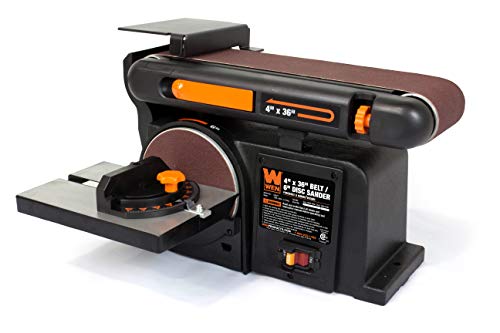
WEN 4 x 36 in. Belt / 6 in. Disc Sander 6502T is a complete benchtop belt-and-disc sander, rather than a replacement abrasive set or manual. Its belt tilts from 0 to 90 degrees, and the cast iron base is intended to limit vibration. A tension-release lever helps with changing grits. This is the fit for a buyer who needs a machine with both sanding surfaces and a tilting belt. The motor is rated at 4.3 amps and runs up to 3,600 RPM; choose another model if variable speed is essential, since this model’s features do not describe adjustable speed.
Bottom line: Choose this if you need the complete machine and a belt that tilts.
Woodskil Variable-Speed Belt Disc Sander

Woodskil Variable-Speed Belt Disc Sander separates itself with adjustable speeds for both sanding surfaces: 1,060 to 2,110 feet per minute at the belt and 2,000 to 4,000 RPM at the disc. The 3-amp motor drives a 4-by-36-inch belt and a 6-inch disc, and the belt can be positioned horizontally or vertically. It suits a workshop where speed adjustment and belt orientation matter more than the cast-iron base noted for WEN 4 x 36 in. Belt / 6 in. Disc Sander 6502T. The 6-inch disc and 4-by-36-inch belt match the requested format, but this is a Woodskil machine rather than a Delta model.
Bottom line: Choose this for adjustable belt and disc speeds.
POTUINOM 28-Piece Belts and Discs Set
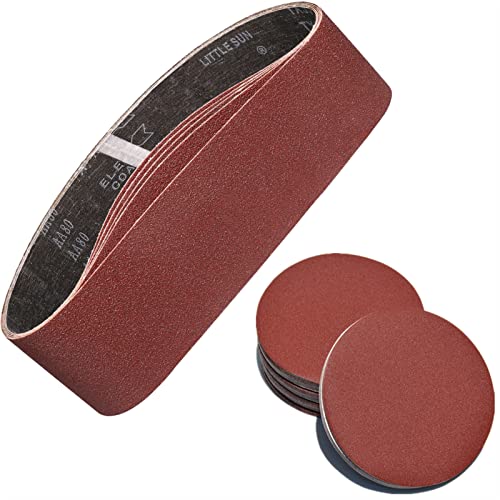
POTUINOM 28-Piece Belts and Discs Set is a consumables set, not a sander: it includes 10 belts and 18 self-adhesive, no-hole discs. The belt assortment spans 60, 80, 120, 240 and 320 grit, while the disc grits include 80, 100, 120, 180, 240 and 400. That range suits a user who wants multiple abrasive stages and already owns a compatible machine. The package’s 6-inch discs are self-stick, so confirm your sander’s disc attachment system before ordering; they will not substitute for a machine or its manual.
Bottom line: Choose this if you need an assorted abrasive supply.
4 x 36 in. Belts and 6 in. Adhesive Discs

4 x 36 in. Belts and 6 in. Adhesive Discs pairs 10 aluminum-oxide belts with four adhesive-backed discs, offering a smaller disc selection than POTUINOM 28-Piece Belts and Discs Set. The belts come in 80, 120, 150, 240 and 400 grit, with two of each; the discs are 80, 120, 180 and 400 grit. This suits a buyer who wants a compact range of grits for a compatible 4-by-36-inch belt and 6-inch disc sander. It is only sandpaper, not the requested Delta machine, so check that your disc accepts adhesive-backed abrasives before choosing this set.
Bottom line: Choose this for an aluminum-oxide abrasive assortment.
DELTA 31-460 Instructions and Parts Manual

DELTA 31-460 Instructions and Parts Manual is an instructions and parts manual for the DELTA 31-460, not the sander itself or a set of abrasives. Its fit is narrow: it is relevant when the specific 31-460 model is the machine you need documentation for. It does not provide replacement belts, discs or a benchtop machine. The model number is the key check before choosing it, since documentation for a different model may not match your equipment. For a complete 4-by-36-inch belt and 6-inch disc sander, WEN 4 x 36 in. Belt / 6 in. Disc Sander 6502T is the machine option in this group.
Bottom line: Choose this only when you need documentation for the 31-460.
How to Choose a 4-by-36-Inch Belt and 6-Inch Disc Sander
For a complete machine, compare speed control, belt position and base construction before abrasive assortments. A 4-by-36-inch belt and 6-inch disc define the working format, but speed control changes how much adjustment you have across materials and stages. WEN 4 x 36 in. Belt / 6 in. Disc Sander 6502T lists a 4.3-amp motor, a belt that tilts from 0 to 90 degrees and a cast iron base; Woodskil Variable-Speed Belt Disc Sander gives belt and disc speed ranges plus horizontal or vertical belt use. Choose Woodskil Variable-Speed Belt Disc Sander when adjustable speed is the deciding need; choose WEN 4 x 36 in. Belt / 6 in. Disc Sander 6502T when a tilting belt and cast iron base fit the job. If you already own the machine, compare abrasive count, grit range and disc attachment rather than buying another sander.
Matching Sanding Belts and Discs to Your Machine
Match the belt dimensions and disc diameter first: a 4-by-36-inch belt and 6-inch disc are the fit represented by the two abrasive sets here. A disc’s attachment matters as much as its diameter; adhesive-backed and self-stick discs need a compatible disc face. Grit number indicates relative coarseness, with lower numbers generally removing material faster and higher numbers leaving a finer finish. Use a coarse-to-fine progression rather than jumping directly from heavy stock removal to a finishing grit. The belt assortment in 4 x 36 in. Belts and 6 in. Adhesive Discs includes 80 through 400 grit, while POTUINOM 28-Piece Belts and Discs Set adds 60 grit and has a separate disc assortment. Do not assume the belt and disc sets have identical grit steps.
Belts, Discs and Manuals Serve Different Needs
A benchtop sander is the machine; abrasive belts and adhesive discs are consumables, while a parts manual supports identification and maintenance. These categories are not interchangeable: a set of abrasives cannot replace a motorized sander, and a manual does not include sanding media. Use the table to identify which type matches the task before comparing features.
| Need | Type to choose | Key check |
|---|---|---|
| Sand with both surfaces | Benchtop belt/disc sander | 4 x 36 in. belt and 6 in. disc |
| Replace worn abrasives | Belt and disc set | Dimensions, grit, attachment |
| Identify machine parts | Model-specific manual | Exact model number |
For a dust-producing sanding operation, connect dust collection when the machine supports it and wear eye protection and a properly fitted respirator; fine wood dust should not be treated as harmless.
Using a Benchtop Sander Safely
Keep fingers clear of the belt-disc junction and use a work rest to support small pieces; a small part can catch or be pulled into a moving abrasive. Hold stock firmly and avoid forcing it into the abrasive, since excess pressure increases heat and can damage the work or media. Disconnect power before changing belts or discs, and wait for the abrasive to stop before adjustments. Keep loose sleeves, jewelry and hair away from moving parts, and wear eye protection. Secure the sander to a stable bench when practical; vibration and shifting can make controlled sanding harder. Follow the machine maker’s operating limits and use dust collection appropriate to the material.
Frequently Asked Questions
What grit should I start with for sanding wood?
Start with the least aggressive grit that removes the marks or material you need to address; 80 grit is a common coarse starting point, while 120 grit is a more moderate choice. Move through progressively finer grits to reduce visible scratch patterns.
Can I use a 6-inch disc on any sander?
No; the disc diameter and attachment both have to match the machine. A 6-inch adhesive-backed disc requires a compatible adhesive disc face, and a hook-and-loop system needs matching backing.
How do I choose between belt and disc sanding?
A belt provides a long, moving abrasive surface suited to edges and flat work; a disc is useful for end-grain and smaller surface work. Keep the work supported and avoid sanding on an unsupported edge where the abrasive can catch.
When should sanding belts be replaced?
Replace a belt when its abrasive is glazed, clogged, torn or no longer cuts effectively after cleaning. Inspect seams and backing before each use, because a damaged belt can fail while moving at high speed.