
Best Celtic Salt for Health: 4 Options Compared

Celtic Sea Salt Fine Ground, 1 lb is the best fit for most cooks because its fine grains suit everyday seasoning, baking, and finishing. Celtic salt is sea salt, not a proven way to improve health, and its sodium still counts toward daily intake.
Choose a coarse crystal if you want a finishing texture instead; anyone seeking iodized salt should verify iodine content before choosing a specialty salt.
We earn a commission if you buy through links on this page. As an Amazon Associate I earn from qualifying purchases. Products are compared on manufacturer specifications, not hands-on testing.
- Best overall: Celtic Sea Salt Fine Ground, 1 lb – Fine grains are suited to everyday cooking, baking, and finishing.
- Best for coarse finishing: Celtic Sea Salt Light Grey Coarse, 1 lb – Its whole crystals give dishes a coarser finishing texture.
- Best for larger fine-grain supply: Le Marinier Organic Fine Ground, 18 oz – It combines fine grind with an 18-ounce package.
- Best for organic fine-grain option: Sante Naturelle Organic Fine Ground, 18 oz – It is marketed as organic and comes in a fine grind.
| Product | Best for | Grind | Package weight | Mineral claim | Shop |
|---|---|---|---|---|---|
| Celtic Sea Salt Fine Ground, 1 lb | Everyday cooking | Fine | 1 lb | 70+ trace minerals | Check Price on Amazon |
| Celtic Sea Salt Light Grey Coarse, 1 lb | Coarse finishing | Coarse | 1 lb | 70+ trace minerals | Check Price on Amazon |
| Le Marinier Organic Fine Ground, 18 oz | Organic fine grind | Fine | 1.1 lb | 82+ minerals | Check Price on Amazon |
| Sante Naturelle Organic Fine Ground, 18 oz | Moist fine salt | Fine | 1.1 lb | 82+ minerals | Check Price on Amazon |
Celtic salt options for health-conscious kitchens
Compare the grain size and package details, but treat mineral and wellness language as product claims rather than evidence of a health benefit.
Celtic Sea Salt Fine Ground, 1 lb
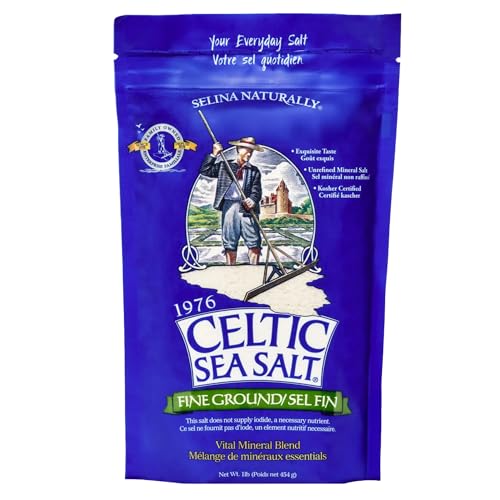
Fine grains make this the most versatile choice here for daily cooking, baking, and seasoning, while the other fine ground options are promoted with organic claims or a larger package. The salt is hand-harvested and the maker says it is third-party lab tested for purity. Its 1-pound package suits regular kitchen use. The limitation is that the maker does not establish a health advantage: mineral presence does not make sea salt a substitute for iodine or reduce its sodium. Choose it for its culinary form, not as a wellness supplement.
Bottom line: Pick this for fine-grain versatility in everyday recipes.
Celtic Sea Salt Light Grey Coarse, 1 lb

Coarse whole crystals distinguish this option from the fine ground salts, making it the one to consider when a more noticeable salt texture matters. The name identifies it as light grey, and the package weighs 1 pound. The maker describes it as unrefined and additive-free, and its title says it is lab tested. Coarse grains dissolve more slowly than fine grains, so they can be less convenient when a recipe needs salt distributed evenly. This remains a seasoning salt, not a treatment or a source of established health benefits.
Bottom line: Choose this when coarse crystals matter more than quick dissolving.
Le Marinier Organic Fine Ground, 18 oz
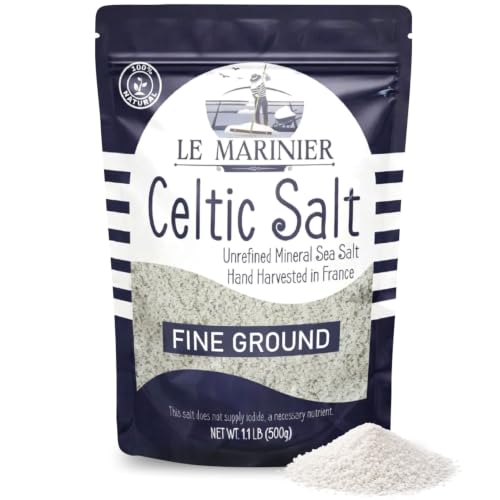
Le Marinier combines a fine grind with an organic claim and an 18-ounce package, a larger amount than the 1-pound options. The maker says the French sea salt is hand-harvested and unrefined, with more than 82 minerals. Fine texture makes it suited to baking and everyday seasoning. The mineral count is a product claim, not evidence that the salt improves health or hydration. Anyone limiting sodium should measure portions rather than relying on a mineral-rich label.
Bottom line: Pick this for a larger package of organic-marketed fine salt.
Sante Naturelle Organic Fine Ground, 18 oz

Sante Naturelle is a fine ground option with an 18-ounce package and an organic claim, making it similar in format to the other large fine ground choice. Its maker describes a slightly moist texture and says it is hand-harvested in French ocean marshes. That moisture may matter if you prefer a drier, free-flowing salt for a shaker; the product facts do not establish storage behavior or a health benefit. The maker’s mineral and electrolyte language should not be read as proof of improved hydration or overall health.
Bottom line: Choose this if you prefer the maker-described slightly moist texture.
How to choose Celtic salt for health
Choose Celtic salt for its culinary form, not as a health intervention: salt is primarily sodium chloride, and sea-salt mineral claims do not establish a health advantage. The U.S. Dietary Guidelines recommend adults limit sodium to less than 2,300 milligrams per day; people with clinician-set limits should use those instead. Fine grains dissolve and distribute more readily in batters and seasoning mixes, while coarse grains stay noticeable longer on food. If the goal is reducing sodium, compare measured amounts rather than relying on salt color, origin, or mineral language. A practical rule is to pick fine grains for recipes that need even distribution and coarse crystals for a deliberate finishing crunch.
| Need | Useful choice |
|---|---|
| Even mixing or baking | Fine grind |
| Visible finishing crystals | Coarse grind |
| Less sodium | Measure portions; salt type does not remove sodium |
Fine versus coarse Celtic salt
Fine and coarse grains differ mainly in how quickly they dissolve and how evenly they spread. Fine salt is easier to blend into liquids, doughs, and seasoning mixes; coarse crystals are better suited to a deliberate crunchy finish, but can leave unevenly salted bites if used in place of fine salt without adjustment. A teaspoon is a volume measure, so its weight and sodium can vary with crystal size and packing; weighing salt gives more consistent results. Do not substitute coarse for fine by volume in baking unless the recipe accounts for grain size. The products here include both formats, so make the texture and recipe the deciding factors.
Minerals, iodine, and sodium
Mineral content does not make salt a meaningful replacement for a varied diet, and salt remains a concentrated source of sodium. Iodized salt is an important dietary iodine source in the United States; specialty sea salts are not automatically iodized, so verify the label if iodine is part of your plan. Adults generally need 150 micrograms of iodine daily, while pregnancy and breastfeeding needs are higher. Avoid using a salt’s mineral count as a guide to iodine content or hydration benefits. If you have a sodium restriction, follow your clinician’s target and count salt from all foods, not only the pinch added at the table.
Using and storing specialty sea salt
Use a measured amount when seasoning, especially if you are monitoring sodium: the FDA Daily Value is 2,300 milligrams, and a teaspoon of ordinary table salt is roughly that amount, though crystal size changes the amount that fits in a spoon. Add fine salt gradually to recipes; reserve coarse crystals for finishing when their texture is intended. Moisture can make unrefined salt clump, so keep it in a dry, tightly closed container and use a clean, dry spoon. Do not assume an unrefined or hand-harvested label changes safe sodium limits. People managing blood pressure, kidney disease, or other conditions should use individual medical guidance rather than a salt marketing claim.
Frequently Asked Questions
Does Celtic salt provide a health benefit over table salt?
No established health advantage follows from the mineral claims on these products. Both types contribute sodium, so sodium limits still apply.
Is Celtic sea salt a good source of iodine?
Do not assume it is; check whether the package explicitly says iodized. Adults generally need 150 micrograms of iodine daily, and pregnancy raises the requirement.
How much sodium should adults aim to limit?
The U.S. Dietary Guidelines recommend less than 2,300 milligrams daily for adults. A clinician may set a different target for a particular health condition.
Can coarse Celtic salt replace fine salt in baking?
Not reliably by volume, because crystal size changes how much salt fits in a spoon and how quickly it dissolves. Use fine-grain salt for even distribution unless a recipe gives a conversion.
Does Celtic salt help with hydration after exercise?
A mineral or electrolyte claim alone does not establish a hydration benefit. For prolonged exercise or heat exposure, hydration needs depend on duration, sweat loss, and individual health.