
Cutting Oil for Glass Cutter: 5 Oils Compared

Novacan Cutter Oil is the named 8-ounce option, while bottle size and stated tool compatibility distinguish the alternatives. Glass cutting oil lubricates the cutter wheel as it scores glass; occasional users may prefer a 4-ounce bottle, while buyers needing broader stated use can consider another option.
We earn a commission if you buy through links on this page. As an Amazon Associate I earn from qualifying purchases. Products are compared on manufacturer specifications, not hands-on testing.
- Best overall: Novacan Cutter Oil, 8 oz – The named Novacan option comes in an 8-ounce bottle.
- Best for broad stated use: Premium Glass Cutting Oil, 8 oz – The 8-ounce oil is described for glass, mirrors, tiles and glass drill bits.
- Best for 4-ounce size: 1DFAUL Glass Cutting Oil, 100 ml – The TOYO bottle is a 4-ounce glass cutting oil.
- Best for applicator bottle: TOYO Glass Cutting Oil, 4 oz – The WINUSD product name specifies a 4-ounce bottle with applicator.
| Product | Best for | Bottle size | Stated tool fit | Color | Shop |
|---|---|---|---|---|---|
| Novacan Cutter Oil, 8 oz | Named product | 8 oz | Glass cutter | — | Check Price on Amazon |
| Premium Glass Cutting Oil, 8 oz | Broad tool fit | 8 oz | Hand, drill-bit, tile tools | — | Check Price on Amazon |
| 1DFAUL Glass Cutting Oil, 100 ml | Compact bottle | 100 ml (3.4 fl oz) | Manual and machine cutting | Transparent | Check Price on Amazon |
| TOYO Glass Cutting Oil, 4 oz | TOYO cutters | 4 oz | TOYO cutter wheels | Blue | Check Price on Amazon |
| WINUSD Glass Cutting Oil, 4 oz | Applicator included | 4 oz | Handheld, oil-fed, bottle cutters | Clear | Check Price on Amazon |
Cutting Oil for Glass Cutter Tools
Compare bottle size and stated uses to match the oil to your cutter and project.
Novacan Cutter Oil, 8 oz

Novacan Cutter Oil is the named product and comes in an 8-ounce bottle. The maker identifies its size but does not give a specific cutter style or project range, so it is a straightforward match for shoppers seeking this exact oil rather than a feature-led alternative. The larger bottle size may suit people who expect to cut glass regularly; occasional users may prefer one of the 4-ounce choices to keep less oil on hand. Match the oil to the cutter maker’s guidance when the tool calls for a particular lubricant.
Bottom line: Choose this if you want the named 8-ounce oil.
Premium Glass Cutting Oil, 8 oz
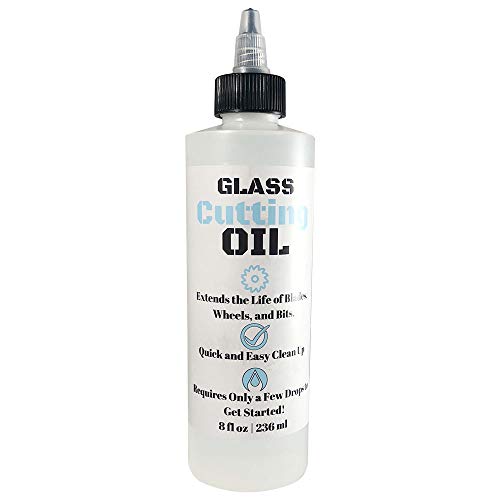
This 8-ounce oil has the broadest tool range here: the maker says it is for glass cutters, glass drill bits, mirror tools and tile cutters. The maker also says its viscosity is formulated for lubrication, that it resists drying, and that it cleans up with soap or alcohol. Those claims make it a fit for projects that move between tool types, but the wide compatibility claim does not replace checking a tool maker’s lubricant requirements. Buyers focused on a single glass cutter may have no need for its broader stated applications.
Bottom line: Pick this for projects involving several stated tool types.
1DFAUL Glass Cutting Oil, 100 ml
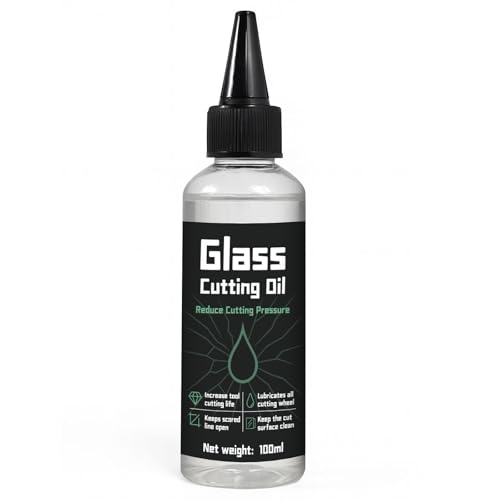
The 1DFAUL oil is supplied in a 100 ml transparent bottle, making it the smallest quantity among these choices. Its maker describes use with manual operations and machine machining, and claims the oil forms a lubricating film and helps reduce friction, heat and edge defects. That range can suit a buyer using more than a handheld cutter, but it is not the best match for someone who needs a larger bottle or wants a product specifically named for a particular cutter model. The color may also help identify the oil during setup.
Bottom line: Choose this when a smaller bottle and machine use matter.
TOYO Glass Cutting Oil, 4 oz

TOYO’s 4-ounce oil is the only option here whose viscosity is calibrated for TOYO cutter wheels. The maker says it distributes evenly, resists gumming, and helps reduce skipped scores and wheel wear; the oil is blue. Those features make it a focused choice for a TOYO cutter setup rather than a generic choice based only on bottle size. Its 4-ounce quantity may suit occasional or smaller jobs, while buyers wanting a larger volume should compare the 8-ounce options. The maker’s cutter-specific claim is a reason to check tool compatibility before using it in another system.
Bottom line: Choose this for a TOYO wheel and a 4-ounce bottle.
WINUSD Glass Cutting Oil, 4 oz

WINUSD stands apart by naming an applicator in its 4-ounce bottle description. The maker says the oil works with handheld glass cutters, oil-fed cutters and bottle cutters, and claims it reduces friction, chipping and wheel wear. That stated range makes it a candidate for bottle-cutting projects as well as standard scoring. The product is clear, which differs from the blue TOYO oil. Buyers who do not need an applicator or bottle-cutter compatibility can compare the other 4-ounce choices instead.
Bottom line: Pick this if the applicator and bottle-cutter use suit your setup.
How glass cutting oil works
Glass cutting oil lubricates the cutter wheel and score path; it does not cut through the glass or replace controlled scoring. A glass cutter makes a fine score that guides the glass to separate, so a smooth, continuous pass matters more than pressing hard. Keep the wheel aligned and avoid tracing the same line repeatedly, which can create a rough score. Apply oil as directed for the cutter style: oil-fed cutters draw from a reservoir, while other tools may need oil applied to the wheel or score area. Use a stable, flat work surface and keep hands clear of the scored edge, since freshly separated glass can be sharp.
How to choose glass cutter oil
Match the oil to the cutter before comparing bottle size: a 4-ounce bottle may be enough for occasional jobs, while an 8-ounce bottle provides twice the volume. Product claims also differ in scope: one option is specifically calibrated for TOYO wheels, while others name broader tool types. Check your cutter maker’s lubricant guidance if the tool is oil-fed or designed around a particular oil. For a useful selection rule, choose the 4-ounce option when you expect only occasional scoring and select 8 ounces when you regularly cut glass; the 100 ml bottle is about 3.4 fluid ounces. Color is an identification cue, not evidence of performance.
Glass cutter oil uses by tool type
Tool style determines whether a broad compatibility claim is useful: handheld cutters, oil-fed cutters, bottle cutters and drill bits do not all apply oil in the same way. The products here name different use cases, so compare those named applications rather than assuming every oil suits every tool. This table summarizes stated fit, not a universal compatibility guarantee.
| Tool or need | Stated fit to compare | Selection cue |
|---|---|---|
| TOYO wheel | TOYO oil | Wheel-specific viscosity claim |
| Handheld or oil-fed cutter | WINUSD oil | Applicator bottle named |
| Glass drill bit or tile tool | Premium oil | Those tools are named |
| Manual or machine operation | 1DFAUL oil | Both operation types are named |
Safe scoring and cleanup
Wear eye protection and cut-resistant gloves when handling glass, and keep children and pets away from the work area; broken edges and small fragments can cause cuts. Support the pane fully on a stable surface and use a straightedge where a straight score is needed. Apply only enough oil for the cutter to move smoothly, and wipe excess from the work surface to avoid a slippery handling area. Glass cutting oil is a lubricant, not a substitute for safe glass handling or a suitable cutter. Collect fragments with a brush and dustpan rather than bare hands, then dispose of them in a rigid container.
Frequently Asked Questions
Does glass cutter oil work with every cutter?
No single compatibility assumption fits every tool style. Some oils name handheld, oil-fed or bottle cutters, while the TOYO oil specifically names TOYO wheels; check the cutter maker’s lubricant guidance when compatibility is uncertain.
How much glass cutting oil should I buy?
The choices here range from 100 ml, about 3.4 fluid ounces, to 8 ounces. For occasional small projects, a 4-ounce bottle is a reasonable size; regular cutting may call for 8 ounces.
Can I use glass cutting oil on mirrors?
Some products here explicitly name mirrors or mirror-cutting tools. Score the mirror’s glass face with a compatible cutter, and handle the separated edges carefully because glass edges can cut.
Should I press hard when scoring glass?
No; use a controlled, continuous score rather than forcing the wheel into the glass. Excess pressure or repeating a score can make the line rough and complicate separation.
How do I clean glass cutting oil off a work surface?
The 8-ounce Premium oil’s maker says it can be cleaned with soap or alcohol. Regardless of oil, wipe residue off the work area before handling glass so the surface does not become slippery.