
Blink Eye Drops for Dry Eyes: 3 Types Compared

Blink Triple Care Blink Triple Care Lubricant Drops suits most people choosing Blink eye drops for dry eyes because its formula combines hyaluronate with natural oil for moisture retention. Choose the lighter Tears formula Blink Tears Lubricating Drops for mild to moderate dryness, or the thicker GelTears Blink GelTears Lubricating Drops when a more viscous drop is preferred.
Lubricating drops supplement the tear film; they do not address every cause of eye discomfort. Seek prompt eye care for eye pain, vision changes, significant redness, or symptoms that persist despite using lubricants.
We earn a commission if you buy through links on this page. As an Amazon Associate I earn from qualifying purchases. Products are compared on manufacturer specifications, not hands-on testing.
- Best overall: Blink Triple Care Lubricant Drops – The water-based formula combines hyaluronate with natural oil for a moisture seal.
- Best for mild dryness: Blink Tears Lubricating Drops – Its thinner lubricant formula is intended for mild to moderate dry eyes.
- Best for thicker drops: Blink GelTears Lubricating Drops – The more viscous formula is intended for moderate to severe symptoms and day or night use.
| Product | Best for | Formula feature | Intended dryness level | Size | Shop |
|---|---|---|---|---|---|
| Blink Triple Care Lubricant Drops | Moisture sealing | Hyaluronate, natural oil | Dry eye symptoms | 10 mL | Check Price on Amazon |
| Blink Tears Lubricating Drops | Mild dryness | Hyaluronate | Mild to moderate dry eyes | 30 mL | Check Price on Amazon |
| Blink GelTears Lubricating Drops | Thicker lubrication | Highest hyaluronate level; gel | Moderate to severe symptoms | 0.34 fl oz | Check Price on Amazon |
Blink Eye Drops for Dry Eyes Compared
Compare the formulas by texture, intended symptom level, and bottle size before choosing.
Blink Triple Care Lubricant Drops

Triple Care stands apart by combining hyaluronate with natural oil in a water-based lubricant formula. The maker says the dual-action moisture seal helps limit tear evaporation and provides extended symptom relief. The 10 mL bottle is a fit for someone who wants a lubricant drop with both hydration and an oil component, rather than a thicker gel. Its defining tradeoff is the added oil-based element; someone who prefers a simpler, thinner-feeling formula may favor Tears instead.
Bottom line: Choose it if moisture retention from an oil-enhanced formula is your priority.
Blink Tears Lubricating Drops

Tears is the straightforward choice among these formulas for mild to moderate dryness, and its 30 mL bottle is larger than the other drop bottles here. The maker says its hyaluronate formula moisturizes and stabilizes the tear film, and that the drops restore tears’ natural salt balance. This suits people who want a lubricating drop without the thicker gel texture. It is not the formula described for moderate to severe symptoms, so someone seeking that heavier feel may prefer GelTears.
Bottom line: Pick it for mild to moderate dryness and a larger bottle.
Blink GelTears Lubricating Drops
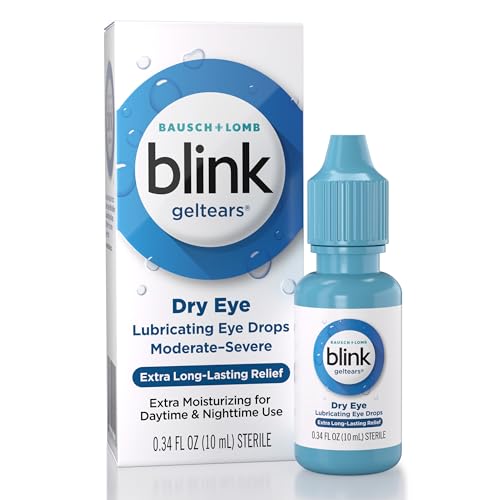
GelTears differs from the other two drops through its thicker, more viscous gel texture and higher hyaluronate level. The maker says it is intended for moderate to severe dry eye symptoms and daytime or nighttime use. That texture may suit someone seeking longer-lasting lubrication, including end-of-day comfort. The limitation is also the texture: people who want a lighter-feeling drop may find Tears a better match. The bottle holds 0.34 fl oz.
Bottom line: Choose it if you want a thicker gel formula for moderate to severe symptoms.
How to choose Blink dry eye drops
Match the formula to the texture and symptom level you want: Tears is intended for mild to moderate dryness, while GelTears is intended for moderate to severe symptoms. Triple Care adds natural oil to its hyaluronate formula, a difference for people prioritizing moisture retention. Artificial tears generally lubricate the eye surface; gels are thicker and can blur vision temporarily, so many people reserve them for times when temporary blur is less disruptive. Use only the frequency and amount on the package label, and avoid touching the dropper tip to the eye or any surface. Persistent discomfort, pain, marked redness, or vision changes calls for professional eye care rather than simply switching lubricant formulas.
When a gel eye drop makes sense
A gel lubricant is the thicker option when a conventional drop does not feel lasting enough, but its viscosity can make vision blur briefly after application. That tradeoff makes a gel more convenient at bedtime or when clear vision is not immediately needed. Thin lubricants are usually easier to use during tasks that require sharp vision. Contact lens wearers should use a product specifically labeled for use with their lenses; do not assume a general dry-eye drop is compatible while lenses are in. Remove lenses before using a product whose label does not confirm compatibility, and check the label for timing before reinserting them. New or worsening symptoms should not be treated by escalating to a thicker formula alone.
Using lubricating eye drops safely
Wash and dry your hands before using eye drops, then keep the bottle tip from touching the eye, eyelid, fingers, or another surface to reduce contamination risk. If more than one eye medicine is used, allow about 5 minutes between different drops so the next dose is less likely to wash out the first; ointments generally go last. Do not share an eye-drop bottle, and discard it according to its package instructions. Redness, pain, light sensitivity, discharge, or a sudden change in vision can signal a problem that lubricating drops cannot resolve. Contact lens wearers should remove lenses if the eyes become painful or red and get professional guidance rather than putting drops in over lenses unless the label permits it.
Dry eye triggers and common mistakes
Screen use can reduce blinking, and dry indoor air, wind, or smoke can increase tear evaporation; regular breaks and avoiding direct airflow can help reduce exposure. A practical screen habit is the 20-20-20 rule: every 20 minutes, look about 20 feet away for 20 seconds, and blink fully. A common mistake is treating every irritated or red eye as simple dryness; allergies, infection, and other eye problems can cause similar symptoms. Another is using redness-relief drops as a substitute for lubricating drops. If symptoms continue for more than a few days, recur often, or interfere with daily tasks, arrange an eye-care assessment to identify the cause.
Frequently Asked Questions
Can dry eye drops blur vision after use?
Thicker gel lubricants can blur vision temporarily because they remain on the eye surface longer. Use them when brief blur will not interfere with driving or other tasks requiring clear vision.
How long should I wait between different eye drops?
Wait about 5 minutes between separate eye-drop medicines so one dose is less likely to wash out another. Apply eye ointment after drops because ointment can block their absorption.
Can I use regular dry eye drops with contacts in?
Only use drops over contact lenses when the label specifically permits it. If compatibility is unclear, remove the lenses and follow the package guidance for when to reinsert them.
When should dry eye symptoms get medical attention?
Seek prompt care for eye pain, sudden vision changes, marked redness, light sensitivity, or discharge. Arrange an eye exam when dryness persists for several days or repeatedly disrupts normal activities.
Does screen time make dry eyes worse?
Long screen sessions can reduce blinking and increase tear evaporation. Every 20 minutes, look about 20 feet away for 20 seconds and blink fully.