
Contact Paper on Wall: 4 Options by Finish and Fit

For decorative contact paper on a wall, Safiyya White Peel-and-Stick Wallpaper suits most people because its 17.7-inch-by-118-inch roll combines a simple white finish with a removable, self-adhesive design. Choose WENMER Brown Wood Wallpaper or practicalWs Glossy Marble Contact Paper instead for wood or marble looks, or Nortix Whiteboard Wallpaper for a writable whiteboard surface.
Contact paper is a thin adhesive film, so it works best on clean, smooth, dry surfaces; textured walls can prevent a reliable bond.
We earn a commission if you buy through links on this page. As an Amazon Associate I earn from qualifying purchases. Products are compared on manufacturer specifications, not hands-on testing.
- Best overall: Safiyya White Peel-and-Stick Wallpaper – The white, 17.7-inch-by-118-inch roll provides a versatile decorative finish.
- Best for wood look: WENMER Brown Wood Wallpaper – Its brown wood pattern covers about 14.5 square feet per roll.
- Best for marble look: practicalWs Glossy Marble Contact Paper – The gray-and-white marble pattern fits smaller projects at 11.8 by 78.7 inches.
- Best for writing: Nortix Whiteboard Wallpaper – The 3-by-4-foot sheet is made for a writable whiteboard surface.
| Product | Best for | Size | Finish | Material | Shop |
|---|---|---|---|---|---|
| Safiyya White Peel-and-Stick Wallpaper | Simple white decor | 17.7 × 118 in. | White texture | Vinyl | Check Price on Amazon |
| WENMER Brown Wood Wallpaper | Wood-look accents | 17.71 × 118 in. | Brown distressed wood | PVC | Check Price on Amazon |
| practicalWs Glossy Marble Contact Paper | Marble-look areas | 11.8 × 78.7 in. | Gray and white marble | PVC | Check Price on Amazon |
| Nortix Whiteboard Wallpaper | Writable wall surface | 48 × 36 in. | Whiteboard | PET | Check Price on Amazon |
Contact paper on wall options
Compare the finish, size and intended use before choosing film for a wall.
Safiyya White Peel-and-Stick Wallpaper

For a neutral wall finish, Safiyya White Peel-and-Stick Wallpaper uses a textured white surface rather than a wood, marble or writing pattern. The 17.7-inch-wide, 118-inch-long roll covers about 14.5 square feet before trimming, and its self-adhesive vinyl needs no separate glue. The maker says the film is removable, waterproof and wipe-clean, and recommends applying it to clean, flat surfaces. That smooth-surface requirement matters: textured or dusty walls can make the film harder to position and keep in place. Choose this roll for a restrained decorative update, not for a wall you want to write on.
Bottom line: Choose it for a neutral, textured white finish on a smooth wall.
WENMER Brown Wood Wallpaper
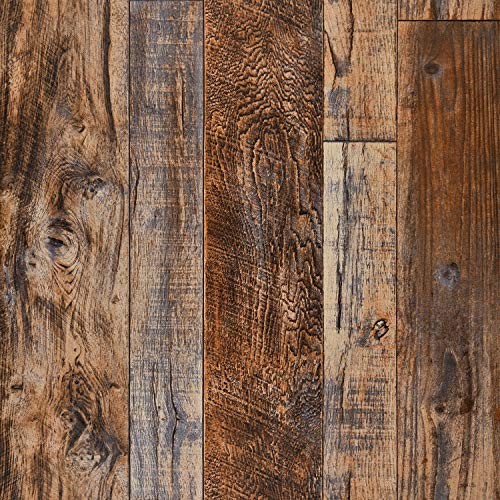
For a wood-patterned accent, WENMER Brown Wood Wallpaper has a brown distressed-wood appearance, unlike the plain white or marble finishes in this group. Its PVC roll measures 17.71 inches by 118 inches and covers about 14.55 square feet, so plan seams and cuts before starting a larger wall. The maker says it is waterproof and removable and intended for smooth, flat surfaces. The narrow roll means a wide feature wall will require multiple lengths, making careful alignment important if you want to minimize visible joins.
Bottom line: Pick it when a distressed wood effect matters more than a plain finish.
practicalWs Glossy Marble Contact Paper

For a marble effect on a smaller wall area, practicalWs Glossy Marble Contact Paper has a glossy gray-and-white pattern with a hint of brown, while the other decorative films use white or wood styling. The PVC sheet measures 11.8 by 78.7 inches, or roughly 6.45 square feet before trimming; its narrower, shorter format suits small sections better than a broad wall. The maker says it is self-adhesive and can be pieced together. Measure the target area first, because this roll’s coverage is less than half that of the 118-inch rolls.
Bottom line: Choose it for a small marble-look area and plan around its limited coverage.
Nortix Whiteboard Wallpaper

For notes or diagrams rather than a decorative pattern, Nortix Whiteboard Wallpaper is a whiteboard film measuring 48 by 36 inches, covering 12 square feet. Its PET writing surface is intended to erase cleanly, and the maker says marks can be wiped away without residue even after 60 days. The maker also cautions against using it on uneven, rough, textured, embossed, painted or bumpy walls; the suggested surfaces are smooth materials such as glass, metal and plastic. That restriction makes it a poor choice for many ordinary painted walls unless the surface is confirmed suitable.
Bottom line: Pick it for a smooth compatible surface where you need a writable area.
How to choose contact paper for a wall
Choose the finish and intended use first, then match the film to the wall surface. Decorative vinyl and PVC films can change a wall’s appearance; whiteboard film is for writing, not a patterned accent. Smooth, clean and dry surfaces give adhesive film the best chance of lying flat, while texture and dust can cause poor contact or bubbles. Measure the wall in inches and multiply width by height, then divide by 144 for square feet. Add extra area for trimming and pattern alignment; a wall measuring 8 feet by 8 feet is 64 square feet, far more than one roll of these options covers. For a large area, compare roll width and length as well as finish so seams land in less conspicuous places.
Wall surface and removal considerations
Adhesive film is best suited to smooth, sealed surfaces; textured, porous or dusty walls can undermine adhesion and make seams lift. Painted walls deserve extra care because removal may pull paint, particularly if the coating is weak, fresh or already peeling. Let fresh paint cure for at least 30 days before applying adhesive film, and test a small hidden area first when removability matters. Peel slowly and close to the wall rather than pulling straight out, which can reduce stress on the paint. Do not assume that a product called removable will come off every wall without damage: the paint condition and wall finish are part of the fit decision.
Compare wall film sizes and uses
Roll dimensions determine how many seams and cuts a wall project needs. The table compares the four options by their size and use; square-foot coverage is approximate and excludes overlap, trimming and pattern matching.
| Option | Approximate coverage | Use |
|---|---|---|
| Safiyya White Peel-and-Stick Wallpaper | 14.5 sq. ft. | White textured decor |
| WENMER Brown Wood Wallpaper | 14.55 sq. ft. | Brown wood pattern |
| practicalWs Glossy Marble Contact Paper | 6.45 sq. ft. | Glossy marble pattern |
| Nortix Whiteboard Wallpaper | 12 sq. ft. | Whiteboard writing surface |
Use the exact stated dimensions to plan placement; nominal coverage does not guarantee a seamless fit. Patterned film may need extra material to align adjoining strips, while the whiteboard format is a single 4-by-3-foot piece.
How to apply contact paper without bubbles
Apply adhesive film in small, controlled sections rather than exposing the whole backing at once. Clean the wall and let it dry completely, then mark a level guide and cut each strip with a little extra length for trimming. Peel back a few inches of liner, align the edge, and smooth outward as you gradually remove more backing; a plastic smoothing tool or squeegee helps push trapped air toward the edge. Avoid stretching the film, which can make it retract or distort after application. If a bubble remains, lift the film gently while it is still repositionable and smooth again; repeatedly pulling at a set adhesive edge can damage paint.
Frequently Asked Questions
Can contact paper stick to a painted wall?
Contact paper can adhere to smooth, fully cured paint, but weak or textured paint can reduce the bond or lift during removal. Wait at least 30 days after painting and test a hidden patch first if preserving the finish matters.
How much contact paper covers a wall?
Coverage is the product’s width multiplied by its length, converted from square inches to square feet by dividing by 144. For example, a 17.7-by-118-inch roll covers about 14.5 square feet before trimming or pattern alignment.
How do you prevent bubbles under wall contact paper?
Start with a clean, dry wall and apply the film gradually while smoothing from the center toward the edges. Working a few inches of backing at a time makes it easier to release air before the adhesive settles.
Can removable contact paper damage wall paint?
Yes, removal can pull paint if the coating is fresh, poorly bonded or fragile. Allow fresh paint at least 30 days to cure, test an inconspicuous area and peel slowly close to the wall.
Can contact paper go on a textured wall?
Textured walls are a poor fit because raised areas limit adhesive contact and can create bubbles or lifted edges. Choose a smooth, flat surface instead, especially for writable film that requires a compatible smooth base.