
Best Self-Watering Spikes: 4 Styles Compared

The 15-pack TKSCUSR terracotta stakes suit most people who want passive watering, with porous clay that seeps water as soil dries. Choose Adjustable Plastic Spikes, 20 Pack instead if you want an adjustable valve, or Terracotta Bottle Stakes, 6 Pack if you need stakes designed for long-neck bottles.
Self-watering spikes use a reservoir to feed moisture into potting soil gradually; their usefulness depends on bottle fit and how quickly the soil draws water.
We earn a commission if you buy through links on this page. As an Amazon Associate I earn from qualifying purchases. Products are compared on manufacturer specifications, not hands-on testing.
- Best overall: TKSCUSR Terracotta Stakes, 15 Pack – A 15-pack of terracotta stakes that seep water as the soil dries and can use many bottles.
- Best for flow control: Adjustable Plastic Spikes, 20 Pack – Plastic spikes have an adjustable valve with a maker-stated range of 0–60 seconds per drip.
- Best for wine bottles: Terracotta Bottle Stakes, 6 Pack – The terracotta stakes are designed to connect to long-neck wine or plastic bottles.
- Best for small reservoirs: RYMTK Terracotta Bulbs, Set of 4 – Each terracotta bulb holds 100 mL of water.
| Product | Best for | Material | Pack size | Size | Shop |
|---|---|---|---|---|---|
| TKSCUSR Terracotta Stakes, 15 Pack | Passive watering | Terracotta | 15 stakes | 7.1 in tall | Check Price on Amazon |
| Adjustable Plastic Spikes, 20 Pack | Adjustable flow | Plastic | 20 spikes | 4.3 in tall | Check Price on Amazon |
| Terracotta Bottle Stakes, 6 Pack | Wine bottles | Terracotta | 6 stakes | 6.3 in long | Check Price on Amazon |
| RYMTK Terracotta Bulbs, Set of 4 | Small reservoirs | Terracotta | 4 bulbs | 100 mL capacity | Check Price on Amazon |
Self-Watering Spikes Compared
Compare how each design delivers water, what reservoir it uses, and which setup best matches your pots.
TKSCUSR Terracotta Stakes, 15 Pack

The TKSCUSR set offers the largest terracotta stake count among these options, making it a practical match for several pots. Each stake is 7.1 inches tall and has a 12-sided concave design; the maker says the thicker bell opening is intended to reduce breakage. The porous clay is designed to seep water as soil dries, and the stakes can use many bottles, including long-neck and plastic beverage bottles. This passive setup suits buyers who do not need a flow-control valve. Bottle neck fit still matters, so check the opening before buying.
Bottom line: Choose this set for several pots and passive terracotta watering.
Adjustable Plastic Spikes, 20 Pack
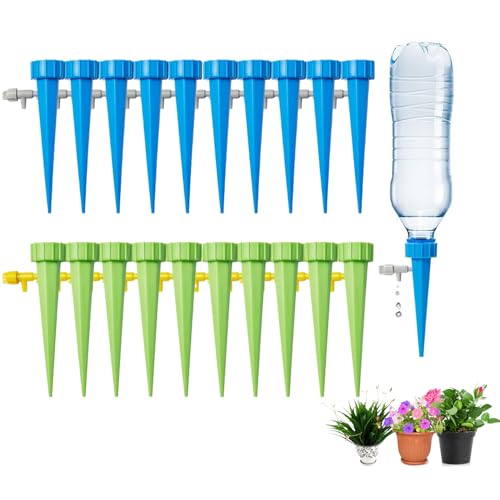
The adjustable plastic set stands apart with a valve for changing drip speed, unlike the terracotta designs here. The maker gives a control range of 0–60 seconds per drip and says the spikes fit beverage bottles with a 1.1-inch inner diameter. Its 20-piece pack suits plant owners who want multiple units and a way to adjust flow rather than rely on porous clay. The plastic body is 4.3 inches tall. The bottle size is a specific fit condition, so measure the bottle opening before relying on a container you already own.
Bottom line: Pick this set if you want adjustable flow and compatible bottles.
Terracotta Bottle Stakes, 6 Pack
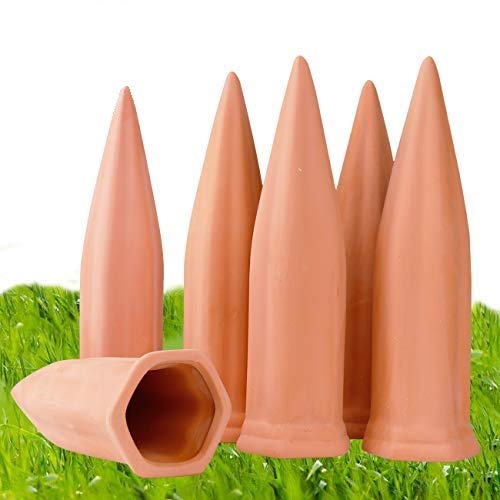
The six-pack is built around a bottle-fed setup: the maker says each terracotta stake connects to a long-neck wine bottle or plastic bottle. At 6.3 inches long, these stakes are intended to be inserted most of the way into the soil, then used with an inverted, filled bottle. The maker says terracotta releases water automatically, but also notes that thinner stakes drain faster and that the material can be fragile. This option fits buyers who want to reuse a suitable bottle as the reservoir; it is less suitable if break resistance is the priority.
Bottom line: Choose these for a bottle-fed setup with a long-neck reservoir.
RYMTK Terracotta Bulbs, Set of 4

The RYMTK set uses compact, 100 mL terracotta bulbs rather than a separate beverage bottle. The maker says porous clay lets water seep into soil as it dries, and the bulbs are described for indoor and outdoor plants. Their dimensions are 4.53 inches tall by 2.56 inches wide and long. The smaller reservoir capacity makes these a better match for pots that need a modest water supply than for buyers seeking a larger bottle-fed reservoir. As with other terracotta devices, the passive release does not provide a valve for setting a drip rate.
Bottom line: Pick these for a compact 100 mL terracotta reservoir.
How self-watering spikes deliver water
Self-watering spikes draw water from a reservoir into potting soil, but the delivery method differs by material. Porous terracotta passes moisture through its walls; plastic models may instead use a valve to regulate drips. Soil dryness, the potting mix, and the spike’s insertion depth all affect how quickly water reaches the root zone. A loose, coarse mix can drain differently from dense, fine mix, so a device that works in one pot may not behave the same in another. For a valve-controlled spike, use its adjustment range as a starting point, not a guarantee of a specific amount of water. Test the complete pot-and-reservoir setup for several days before leaving plants unattended.
Match the reservoir and bottle opening
Bottle fit is a deciding factor for bottle-fed stakes: the reservoir opening must connect securely without tipping or leaking. The adjustable plastic set gives a 1.1-inch inner-diameter beverage-bottle fit, while the six-pack is intended for long-neck bottles. Measure the opening rather than relying on a bottle’s capacity or outside width. A spike should also sit firmly in the soil; pushing brittle terracotta into compacted mix can damage it. Use a pre-dug hole if the soil resists insertion, then make sure the bottle remains upright and stable. Confirm the bottle opening before buying stakes that depend on a particular neck size.
Choose terracotta or adjustable plastic
Terracotta stakes release moisture through porous clay, while an adjustable plastic stake offers a mechanical flow setting. Use the following comparison to narrow the style by how you want to manage water.
| Need | Suitable style | Key check |
|---|---|---|
| Passive watering | Porous terracotta | Reservoir and soil fit |
| Changeable drip rate | Adjustable plastic | Bottle opening dimension |
| Reuse a wine bottle | Long-neck bottle stake | Neck connection and stability |
Neither style removes the need to match water delivery to a plant’s pot and soil. A small container can empty sooner than a larger one, and a valve setting does not ensure that every plant receives the same amount.
Prepare spikes before time away
Test a watering spike in its actual pot for at least two or three days before relying on it during a trip. Mark the reservoir’s starting level and observe how much water the pot takes up; check whether the soil stays evenly moist rather than becoming waterlogged or drying out. A spike’s flow depends on the soil, insertion depth, and reservoir position, so a short trial is more useful than assuming a fixed number of days per fill. Keep glass or bottle reservoirs stable and away from edges where they could fall. For multiple pots, test each soil-and-pot combination separately because nearby plants can have different water needs.
Frequently Asked Questions
How long can a watering spike keep a plant watered?
There is no single duration because reservoir capacity, pot size, soil mix, and plant water use all affect how quickly water is drawn. Test the filled setup in its actual pot for at least two or three days and track the water level before depending on it while away.
Should terracotta watering spikes be soaked first?
Start with a brief soak and then test the stake in its pot, since soil texture and insertion depth change the water release.
How deep should a watering spike go in soil?
Insert the water-delivery portion securely into the soil while leaving the reservoir connection stable above it. If compacted soil resists, make a pilot hole first; forcing a fragile terracotta stake can crack it.
Can watering spikes overwater potted plants?
Yes, a spike can deliver more water than a potting mix or plant needs, especially if the reservoir drains quickly. Check soil moisture and reservoir use during a two- or three-day trial before leaving the setup unattended.
Do watering spikes work with every bottle?
No; the bottle neck must fit the stake and remain stable when inverted. One adjustable plastic set specifies beverage bottles with a 1.1-inch inner diameter, so measure the opening before choosing a bottle.