
Best Lightweight Gas Lawn Mower: 4 Models Compared

SENIX 18-inch 144cc Push Mower is the best lightweight gas lawn mower here because it weighs 37.5 pounds and has an 18-inch cutting width. Choose a different mower if you need self-propulsion for slopes or a wider deck to cover more lawn per pass.
Gas walk-behind mowers use an engine to turn a blade, while push models rely on the operator to move the mower forward.
We earn a commission if you buy through links on this page. As an Amazon Associate I earn from qualifying purchases. Products are compared on manufacturer specifications, not hands-on testing.
- Best overall: SENIX 18-inch 144cc Push Mower – At 37.5 pounds, it is the lightest mower and uses a push design.
- Best for bagging: SENIX 21-inch 144cc Push Mower – Its 21-inch deck has a 1.7-bushel grass catcher and 3-in-1 mowing modes.
- Best for slopes: SENIX 22-inch 201cc Self-Propelled Mower – Self-propulsion and 11-inch rear wheels suit uneven ground and slopes.
| Product | Best for | Weight | Cutting width | Drive | Shop |
|---|---|---|---|---|---|
| SENIX 18-inch 144cc Push Mower | Small flat yards | 37.5 lb | 18 in | Push | Check Price on Amazon |
| SENIX 21-inch 144cc Push Mower | Bagging clippings | 54.2 lb | 21 in | Push | Check Price on Amazon |
| YARDMAX 22-inch 201cc Self-Propelled Mower | Variable walking pace | 95.7 lb | 22 in | Self-propelled, FWD | Check Price on Amazon |
| SENIX 22-inch 201cc Self-Propelled Mower | Slopes and rough ground | 79 lb | 22 in | Self-propelled, RWD | Check Price on Amazon |
Lightweight gas lawn mowers compared
Compare mower weight, cutting width and propulsion to match the machine to your yard and strength.
SENIX 18-inch 144cc Push Mower

At 37.5 pounds, this 18-inch SENIX is the lightest option here, making it easier to push and turn than the wider, self-propelled alternatives. Its 144cc four-cycle engine powers a side-discharge design, and the three cutting positions span 1.2 to 3.15 inches. Seven-inch rear wheels and an ergonomic handle support maneuvering around tight corners. The tradeoff is its narrower deck and push-only drive: buyers with large lawns, steep slopes or frequent bagging needs should consider a different configuration.
Bottom line: Choose this for a smaller, mostly level lawn where easy handling matters more than deck width.
SENIX 21-inch 144cc Push Mower
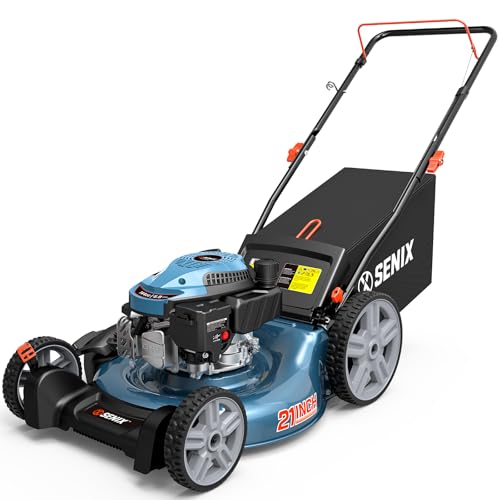
The 21-inch deck and included 1.7-bushel catcher distinguish this SENIX from the lighter 18-inch push mower, while its 54.2-pound weight remains below the two self-propelled choices. It offers rear bagging, side discharge and mulching, with a 144cc four-cycle engine. The cutting-height range is 1.25 to 3.75 inches. A wider deck can reduce passes, but the added weight and push-only drive may be harder to manage on slopes or when lifting the mower for storage.
Bottom line: Choose this when collecting clippings or switching mowing modes matters more than minimum weight.
YARDMAX 22-inch 201cc Self-Propelled Mower

The YARDMAX pairs a 22-inch deck with a six-speed continuously variable transmission, letting the operator adjust mower pace rather than pushing a fixed-speed machine. Its 201cc engine, front-wheel drive and aggressive tire tread set it apart from the simpler push models. An automatic choke eases startup, and a deck cleanout port helps remove grass underneath. At 95.7 pounds, it is the heaviest option here, so buyers prioritizing easy lifting or transport should choose a lighter mower.
Bottom line: Choose this for variable pace control and traction features when weight is secondary.
SENIX 22-inch 201cc Self-Propelled Mower

This SENIX combines a 22-inch steel deck with rear-wheel-drive self-propulsion and 11-inch rear wheels, a different setup from the lighter push models and the front-wheel-drive YARDMAX. The 201cc four-cycle OHV engine and wider cut are aimed at medium to large lawns; the maker says the drive and large rear wheels help on slopes, uneven terrain and thicker grass. Its 79-pound weight is below the other self-propelled mower here, but is still more than twice the 18-inch push mower’s weight.
Bottom line: Choose this when powered movement and large rear wheels matter more than carrying weight.
How to choose a lightweight gas mower
For the easiest handling, compare complete mower weight first, then deck width and drive type. Here, the 37.5-pound push mower is substantially lighter than either self-propelled model, while the 22-inch decks cut a wider swath than the 18-inch model. Push mowers require you to supply forward motion; self-propelled mowers drive their wheels, which can help on slopes but add weight and mechanical complexity. A practical rule: if you must regularly lift a mower into a vehicle or up stairs, favor the 37.5-pound option over models weighing 79 pounds or more. Match the added width to open lawn space; a narrower deck can be easier to steer between obstacles.
Cutting width and lawn fit
An 18-inch deck is easier to thread through tight spaces, while 21- and 22-inch decks cover more ground per pass. The difference matters most on broad, open lawns; narrow gates, planted borders and many turns can make a wider deck awkward. Before choosing, measure the narrowest gate and account for the mower’s overall width, not only its cutting blade. Cutting height also affects the result: the two SENIX push mowers span 1.2–3.15 inches and 1.25–3.75 inches, respectively. Raising the deck for taller grass and removing only about one-third of the grass blade in a mowing session helps avoid scalping and excessive clipping load.
Push versus self-propelled mower types
Push mowers are the lighter, simpler choice for level lawns; self-propelled mowers use engine power to move the wheels and can reduce pushing effort on slopes. Front-wheel drive can be easier to pivot by lifting the front wheels, while rear-wheel drive generally keeps powered traction at the back when climbing. Drive type does not make a heavy mower easy to carry, so consider storage and transport separately. The table shows the tradeoff among these options.
| Need | Choice | Tradeoff |
|---|---|---|
| Lowest weight | 18-inch push | Narrower cut; manual pushing |
| Clipping collection | 21-inch push with catcher | Heavier than the 18-inch mower |
| Powered drive | 22-inch self-propelled | More weight to store and move |
Grass height and safe mowing
Cutting more than one-third of the grass blade at once can stress turf and leave clumps, so raise the mower deck for overgrown grass and lower it gradually across later cuts. Wet grass tends to clog decks and discharge openings, and can make footing less secure; wait until the lawn is dry when possible. Keep hands and feet away from the blade, stop the engine and disconnect the spark plug wire before clearing a blockage or working under the deck. Side discharge can scatter clippings, while bagging collects them and mulching returns finely chopped clippings to the lawn; choose the mode that suits grass length and cleanup needs.
Frequently Asked Questions
How light is a lightweight gas lawn mower?
Among these choices, the lightest mower weighs 37.5 pounds. Push mowers generally avoid the added drive hardware of self-propelled models, which can make them easier to lift and steer.
Is an 18-inch mower wide enough for a small yard?
An 18-inch cutting width can suit a small or obstacle-filled lawn, where maneuverability matters more than covering broad ground quickly. A 21- or 22-inch deck takes wider passes but needs more clearance around gates and landscaping.
Are self-propelled mowers easier on hills?
Self-propelled drive can reduce the effort of moving a mower uphill, and rear-wheel drive can help maintain traction while climbing. Check the slope and footing, and do not mow a slope that feels unsafe or unstable.
How often should I sharpen a gas mower blade?
A common maintenance interval is to sharpen the blade about once per mowing season, or sooner if it hits debris or leaves ragged grass tips. Disconnect the spark plug wire before blade service, and balance the blade after sharpening.
Can I cut tall grass with a gas mower?
Yes, but raise the cutting height and remove no more than about one-third of the grass blade in one pass. Very tall growth may need several cuts spaced apart to avoid stressing turf and clogging the deck.