
WALLA SOUND Earbuds: 3 Models Compared by Fit

For most listeners seeking WALLA SOUND earbuds, WALLA SOUND In-Ear Earbuds is the straightforward pick: its in-ear design has stabilizing fins for a secure fit during workouts. Choose WallaBuds Fit Open Ear instead to keep your ears open to nearby sounds, or WallaBuds Pro Dot for a low-profile shape intended for sleep.
We earn a commission if you buy through links on this page. As an Amazon Associate I earn from qualifying purchases. Products are compared on manufacturer specifications, not hands-on testing.
- Best overall: WALLA SOUND In-Ear Earbuds – Its twist-in fins are designed to help the in-ear buds stay put during running and gym workouts.
- Best for awareness: WallaBuds Fit Open Ear – The open-fit design lets surrounding sounds remain audible while you listen.
- Best for sleeping: WallaBuds Pro Dot – The low-profile form is designed to sit nearly flush for side sleepers.
| Product | Best for | Fit style | Water resistance | Stated battery life | Shop |
|---|---|---|---|---|---|
| WALLA SOUND In-Ear Earbuds | Workout fit | In-ear with fins | IPX5 | 50 hours | Check Price on Amazon |
| WallaBuds Fit Open Ear | Situational awareness | Open fit | IPX4 | 28 hours | Check Price on Amazon |
| WallaBuds Pro Dot | Sleep and small ears | Low-profile in-ear | IPX4 | 28 hours | Check Price on Amazon |
WALLA SOUND Earbuds Compared
Choose by how the earbuds sit in your ears and what you need to hear around you.
WALLA SOUND In-Ear Earbuds

WALLA SOUND In-Ear Earbuds differs from the other WALLA SOUND options with an in-ear fit and stabilizing twist-in fins, aimed at staying secure during running and gym sessions. The Bluetooth 5.3 earbuds have touch controls for playback, volume and calls, plus a USB-C charging case with an LED display. This style suits listeners who want a more secure in-ear fit, but it is not the open ear choice for keeping ambient sounds prominent.
Bottom line: Pick this if a fin-stabilized in-ear fit matters more than an open design.
WallaBuds Fit Open Ear
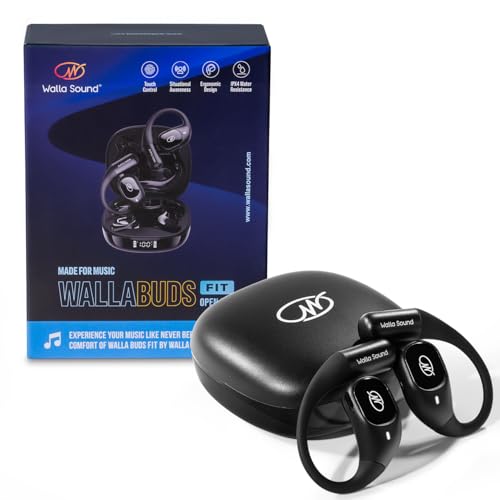
WallaBuds Fit Open Ear is the open-fit alternative: it is designed to let you stay aware of nearby sounds during commutes, office use or workouts. The product name gives a 28-hour battery-life claim and Bluetooth 5.3, and the features mention a USB-C charging case. The fit may suit listeners who dislike an in-ear seal or need more awareness of their surroundings. Open designs generally provide less passive isolation than sealed in-ear earbuds, so they are a less suitable choice when blocking ambient sound is the priority.
Bottom line: Choose this when hearing nearby activity matters more than sealing the ear.
WallaBuds Pro Dot

WallaBuds Pro Dot stands apart with a mini, low-profile in-ear shape intended for sleep, side sleeping and smaller ears. The product name gives a weight of 6 grams per bud and a 28-hour total playtime claim; the features describe use with white noise, podcasts or audiobooks. Its compact shape may appeal to listeners who find larger buds intrusive against a pillow. This remains an in-ear design, not an open-fit model, and fit comfort varies by ear shape, so side sleepers should pay particular attention to how the buds sit before relying on them overnight.
Bottom line: Pick this for a compact shape intended for side-sleeping and smaller ears.
How to choose WALLA SOUND earbuds
Start with fit: sealed in-ear buds, open-fit buds and low-profile sleep buds serve different listening situations. Sealed earbuds can reduce outside sound through their physical fit, while open-fit designs leave the ear canal less obstructed and preserve more awareness. For workouts, prioritize a stable fit; for travel or shared spaces, decide whether you need to hear announcements or voices nearby. Bluetooth 5.3 is a version number, not a promise of a particular connection distance or sound quality. A practical rule: choose open-fit when nearby sounds are part of the task, and a sealed or low-profile in-ear shape when a more enclosed fit matters.
What IPX4 and IPX5 water ratings mean
IPX4 indicates protection against water splashes, while IPX5 is tested against water jets; neither rating means the earbuds are suitable for submersion. The IP code comes from IEC 60529, and the X means the rating does not specify dust protection. For sweaty exercise or light rain, these ratings can help compare models, but they do not make earbuds swim gear. Dry the earbuds and case before charging, and keep USB-C ports free of moisture. A rating applies under defined test conditions, so avoid assuming that soap, pool chemicals or a direct high-pressure spray are covered.
Match the earbud shape to its use
Open-fit, fin-stabilized and low-profile in-ear designs solve different fit problems. Open-fit buds suit people who want greater awareness of their surroundings; fin-stabilized buds are shaped for a more secure hold during movement; low-profile buds are intended to reduce bulk against a pillow. Ear shapes vary, so a comfortable fit on one person may create pressure or looseness for another. With side sleeping, choose a bud that does not protrude enough to press painfully into the pillow. For outdoor workouts, stay alert to traffic and other hazards even when using an open-fit design.
| Need | Fit to consider |
|---|---|
| Hear nearby activity | Open fit |
| Keep buds stable during exercise | In-ear with fins |
| Reduce bulk against a pillow | Low-profile in-ear |
Battery claims and charging habits
Battery totals often combine listening time from the earbuds with additional charges from the case, so a total-playtime figure is not the same as one continuous charge. Volume, call use and connection conditions can change actual runtime. USB-C is the charging connector on the case for the models whose features identify it, but connector type alone does not establish charging speed. Avoid charging wet earbuds, and store the case in a dry place. If you need a minimum number of hours between charges, compare the claimed total with your daily listening pattern and allow for variation in real use.
Frequently Asked Questions
Can IPX4 earbuds be used in the rain?
IPX4 is for water splashes, so light rain may be within the kind of exposure the rating addresses. It does not mean the earbuds can be submerged, and wet earbuds should be dried before charging.
Are open-fit earbuds better for outdoor workouts?
Open-fit earbuds can leave nearby sounds more audible, which can help with awareness outdoors. They do not guarantee safety, so keep volume low enough to hear traffic and other hazards.
Does 50 hours mean one charge?
A total-playtime claim commonly counts listening time plus charges stored in the case, rather than one continuous earbud charge. Check whether a runtime figure applies per charge if that distinction affects your routine.
What does Bluetooth 5.3 tell me about earbuds?
Bluetooth 5.3 identifies the Bluetooth version, but it does not by itself specify range, codec support or sound quality. Connection performance can also depend on the paired device and surroundings.
Can I sleep with earbuds in every night?
A low-profile shape is intended to reduce bulk, but comfort depends on ear and pillow fit. Stop using earbuds if they cause pain, and keep listening volume low during extended playback.