
Best Brace for TFCC Tear: 5 Wrist Supports Compared

For most people, HiRui Ulnar-Support Wrist Brace is the best brace for TFCC tear support because its adjustable wrap fits wrists from 12 to 25 cm and has ulnar-side cushion pads. Choose a different option if you need a water-wear feature, a ring-style pad, or a low-profile design.
A TFCC brace supports the ulnar side of the wrist, but a brace does not diagnose or heal an injury; seek clinical guidance for persistent pain or limited rotation.
We earn a commission if you buy through links on this page. As an Amazon Associate I earn from qualifying purchases. Products are compared on manufacturer specifications, not hands-on testing.
- Best overall: HiRui Ulnar-Support Wrist Brace – Adjustable wrap and ulnar-side pads, with a 12–25 cm wrist fit.
- Best for water wear: WristWidget TFCC Wrist Brace – Designed to be worn in water and fits a 14–22 cm wrist range.
- Best for low profile: Fitomo Ultra-Thin TFCC Brace – Its 0.5 mm nylon fabric and anti-slip tail suit buyers seeking a thin fit.
| Product | Best for | Wrist fit | Support design | Profile | Shop |
|---|---|---|---|---|---|
| HiRui Ulnar-Support Wrist Brace | Adjustable compression | 12–25 cm | Dual 3D cushion pads | 1 mm | Check Price on Amazon |
| WristWidget TFCC Wrist Brace | Water activities | 14–22 cm | Radius and ulna support | — | Check Price on Amazon |
| Fitomo Ultra-Thin TFCC Brace | Thin under sleeves | 15–23 cm | 3D compression pad | 0.5 mm | Check Price on Amazon |
| JOMECA TFCC Brace with Ring Pad | Ring pad support | — | Built-in soft ring pad | — | Check Price on Amazon |
| FITTOO Copper-Infused Ring-Pad Brace | Copper-infused fabric | — | O-ring pad | — | Check Price on Amazon |
Best braces for TFCC tear support
Compare these wrist supports by fit range, support style and profile before choosing one for your wrist and activities.
HiRui Ulnar-Support Wrist Brace

Among these options, HiRui Ulnar-Support Wrist Brace combines a broad stated fit range with adjustable compression and two ulnar-side cushion pads. The wrap fits wrists from 12 to 25 cm and can be worn on either hand. Its 1 mm low-profile fabric is intended to fit under sleeves, and a visual scale helps you return to a preferred strap setting. This is a practical choice if you want to tune compression rather than rely on a fixed fit. The tradeoff is that its wrap provides compression, not the rigid motion restriction some injuries may require; ask a clinician which level of support suits your symptoms.
Bottom line: Choose this if you want adjustable compression and a wider stated wrist-fit range.
WristWidget TFCC Wrist Brace

Unlike the wrap-and-pad designs, WristWidget TFCC Wrist Brace is described as supporting the radius and ulna while allowing wrist movement. It fits either wrist with a 14 to 22 cm circumference, and the maker says it can be worn in water and during sports or exercise. The latex- and rubber-free construction may matter to buyers avoiding those materials. A lifetime guarantee is included. The narrower fit range may rule it out for wrists outside that measurement, and its design does not provide the same adjustable compression system described for some alternatives.
Bottom line: Choose this if water wear and a movement-friendly design are priorities.
Fitomo Ultra-Thin TFCC Brace
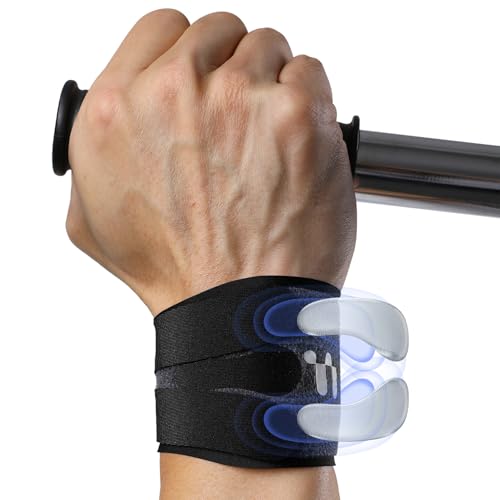
Fitomo Ultra-Thin TFCC Brace has the thinnest profile here at 0.5 mm, paired with a 3D compression pad and an anti-slip tail. Its fit range is 15 to 23 cm, and the reversible design works on either wrist. The slim nylon construction is meant for wear under sleeves, gloves, or during activities such as lifting. This option suits someone who wants targeted support without a bulky brace. Its fit range is narrower than HiRui Ulnar-Support Wrist Brace, so measure around the wrist before choosing; the thin profile also should not be mistaken for rigid immobilization.
Bottom line: Choose this if a very thin, reversible brace matters more than a broad fit range.
JOMECA TFCC Brace with Ring Pad

JOMECA TFCC Brace with Ring Pad stands out for its built-in soft ring pad, which the maker says is designed to compress and stabilize the distal radioulnar joint (DRUJ). The adjustable hook-and-loop strap fits either hand, while soft padding and minimal seams are intended to reduce chafing. Its L/XL size is the only size specified here, so this choice depends on whether that size fits your wrist. Unlike products with a numerical circumference range, you will need to confirm the fit before ordering. The ring pad approach may also feel different from a wrap with broader cushion pads.
Bottom line: Choose this if you specifically want an adjustable brace with a ring pad.
FITTOO Copper-Infused Ring-Pad Brace

FITTOO Copper-Infused Ring-Pad Brace pairs an O-ring pad with copper-infused fabric, distinguishing it from the other ring pad option. The maker describes the pad as supporting the DRUJ, and the brace is intended for either wrist and repetitive wrist movements. Its size is Large, without a circumference range, so verify that the fit works for your wrist before ordering. The specifications do not establish that copper provides a medical benefit, so treat the material as a construction feature rather than a reason to expect a particular outcome. Buyers who need a measurable fit range may prefer an option that provides one.
Bottom line: Choose this if copper-infused fabric is a preference and Large is the right fit.
How to choose a brace for a TFCC tear
Choose by fit, support style, and the movements you need to limit; no single brace style suits every TFCC injury. The triangular fibrocartilage complex sits on the little-finger side of the wrist and helps stabilize the wrist and the joint between the radius and ulna. Some braces use a strap or pad to add pressure over that side, while rigid splints restrict more wrist motion. Measure wrist circumference at the level the maker specifies, then compare the measurement with the product’s fit range. As a practical rule, if your measurement falls outside the range, choose a different size or design rather than tightening a brace beyond its intended fit. A clinician can advise whether compression or immobilization is appropriate.
TFCC brace fit and support styles
Fit varies with wrist circumference and with whether the brace wraps around the wrist or uses a localized pad. An adjustable wrap lets you alter tension; a ring or cushion pad concentrates contact near the ulnar side. A thin fabric brace may fit more easily under a sleeve, but thinness alone does not mean stronger stabilization. Check that the brace is intended for the left or right hand you need, and make sure the strap does not cause numbness, tingling, or color change. The table summarizes the main style tradeoffs; it is a selection aid, not a treatment plan.
Use the support style that matches the movement limitation recommended for your situation.
| Style | Typical purpose | Tradeoff |
|---|---|---|
| Compression wrap | Adjustable pressure and support | Usually allows wrist movement |
| Localized pad | Contact near the ulnar side | May feel more focused on one spot |
| Rigid splint | Limits wrist motion | Can restrict daily tasks |
When to wear a wrist brace for TFCC pain
A brace can support a wrist during activity, but it cannot confirm the cause of ulnar-sided pain. Wrist rotation, forceful gripping, and pushing through the hand can load the TFCC region, so avoid movements that reliably worsen pain while you arrange appropriate assessment. TFCC problems can occur alongside other wrist conditions, and pain with forearm rotation or reduced grip strength deserves evaluation rather than simply increasing strap tension. If a brace causes numbness, tingling, swelling, or changes in hand color, loosen or remove it and seek medical advice. Return to demanding activity gradually instead of treating a brace as permission to push through symptoms.
Common mistakes with TFCC wrist braces
The most common sizing mistake is choosing by a generic “one size” label without measuring the wrist circumference. Wraps and ring pad braces also put pressure in different places, so a pad that feels uncomfortable is not necessarily improved by tightening the strap. Avoid wearing a brace so tightly that circulation or sensation changes, and do not assume a soft brace immobilizes the joint. Check that the product fits the intended hand and use; water wear is a feature only when the maker says so. Ongoing pain, weakness, or difficulty rotating the forearm warrants clinical assessment, especially if symptoms are worsening rather than settling with reduced aggravating activity.
Frequently Asked Questions
Where should a TFCC wrist brace sit?
A TFCC support is positioned around the wrist near the little-finger side, where the TFCC and distal radioulnar joint are located. Follow the brace’s intended pad placement, and loosen it if pressure causes tingling or numbness.
How tight should a TFCC brace feel?
A brace should feel secure without causing numbness, tingling, color change, or increased pain. If any of those occur, loosen or remove it rather than tightening it further.
Does a TFCC brace stop wrist rotation?
A soft wrap or pad generally adds compression while allowing some movement; a rigid splint is designed to limit motion more. Check the specific brace style and get clinical advice if limiting forearm rotation is needed.
How do I measure my wrist for a TFCC brace?
Use a flexible tape to measure wrist circumference at the point specified by the maker, keeping the tape snug but not tight. Compare that number in centimeters or inches with the range and do not assume a one-size label guarantees fit.