
BetaClean GC 800 Glass Cleaner: Sizes Compared

For most buyers, Dow Automotive GC-800 Beta Clean is the clearest match for BetaClean GC 800 glass cleaner because it is an 18-ounce can identified for automotive glass and surface cleaning. Choose GC-800 Beta Clean 12 Tubes instead if you prefer twelve 1.5-ounce tubes; Dow GC-800 Glass Cleaner is another single 18-ounce option.
GC-800 is an automotive glass cleaner that may also be used as a cutout lubricant, so choose it for automotive glass work rather than assuming a household window cleaner has the same purpose.
We earn a commission if you buy through links on this page. As an Amazon Associate I earn from qualifying purchases. Products are compared on manufacturer specifications, not hands-on testing.
- Best overall: Dow Automotive GC-800 Beta Clean – An 18-ounce can explicitly identified for automotive glass and surface cleaning.
- Best for small portions: GC-800 Beta Clean 12 Tubes – Twelve 1.5-ounce tubes provide separate small-format portions.
- Best for a straightforward can: Dow GC-800 Glass Cleaner – A single 18-ounce GC-800 can without extra stated use claims.
| Product | Best for | Package format | Package amount | Use | Shop |
|---|---|---|---|---|---|
| Dow Automotive GC-800 Beta Clean | Automotive glass prep | Can | 18 oz | Glass and surfaces | Check Price on Amazon |
| GC-800 Beta Clean 12 Tubes | Small portions | 12 tubes | 12 × 1.5 fl oz | Glass surfaces | Check Price on Amazon |
| Dow GC-800 Glass Cleaner | Single can | Can | 18 oz | Glass cleaner | Check Price on Amazon |
BetaClean GC 800 glass cleaner options
Compare the package sizes and stated uses to choose the format that suits your automotive glass work.
Dow Automotive GC-800 Beta Clean

Dow Automotive GC-800 Beta Clean is the most explicitly automotive-focused option: it is an 18-ounce can identified for glass and surface cleaning, and it may be used as a cutout lubricant. The product’s fast evaporation is intended to leave a dry, residue-free bonding surface, which makes the bonding-prep use the key distinction from a cleaner described only for general glass surfaces.
Choose this format for automotive glass work where that specified use matters. The package weight is given as 19 pounds, so confirm the package weight and quantity before arranging handling or storage.
Bottom line: Pick this if automotive glass and the cutout-lubricant use are central to the job.
GC-800 Beta Clean 12 Tubes

GC-800 Beta Clean 12 Tubes differs from the cans by splitting its contents into twelve 1.5-fluid-ounce tubes. Its use is cleaning glass surfaces, including windows, mirrors and glass doors, and the product claims a streak-free finish without smearing or residue.
Choose the tube format when separate small portions suit the task better than one can.
Bottom line: Choose this when twelve small-format tubes suit your glass-cleaning needs.
Dow GC-800 Glass Cleaner
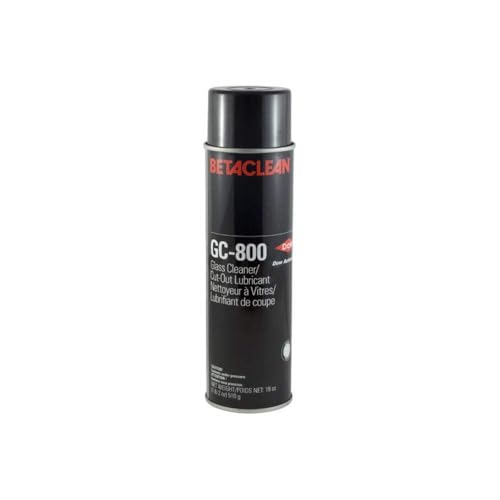
Dow GC-800 Glass Cleaner is a simple single-can GC-800 option in an 18-ounce size. Its product name identifies it as a glass cleaner, but the specifications do not give additional use claims to distinguish it from Dow Automotive GC-800 Beta Clean.
Choose it if the straightforward GC-800 name and single-can size are what you need. The main limitation is that buyers looking specifically for the automotive surface, bonding-surface or cutout-lubricant claims will find those purposes explicitly attached to Dow Automotive GC-800 Beta Clean, not this option.
Bottom line: Pick this for a single 18-ounce can when the basic GC-800 glass cleaner format is enough.
Choosing a GC-800 package format
Choose by the amount and dispensing format needed for the job: the cans hold 18 ounces, while the tube option has twelve 1.5-fluid-ounce portions. Small portions can be convenient where opening a full can is unnecessary, while a single can avoids managing multiple tubes. For automotive glass work, distinguish cleaning from bonding preparation: the automotive-focused can specifically claims a dry, residue-free bonding surface and cutout-lubricant use. General glass cleaner claims alone do not establish those uses. Match the package to the work area and the amount you expect to use at a time, then check that the package format suits your storage and application setup.
GC-800 and automotive glass preparation
GC-800 can be relevant to automotive glass work because one product’s uses include glass and surface cleaning, a dry bonding surface, and cutout lubrication. A bonding surface is the area prepared for an adhesive to adhere during glass installation; it is not interchangeable with ordinary household window cleaning. Use the product only for the task its manufacturer identifies, and keep glass-preparation steps separate from cosmetic cleaning. If the job involves installing replacement glass, the vehicle and adhesive system determine the full preparation procedure. A cleaner’s use as a cutout lubricant does not, by itself, establish compatibility with every glass, adhesive, or vehicle setup.
How to compare cleaner quantities
Compare package size in ounces and keep fluid ounces distinct from package weight in pounds: ounces measure the cleaner quantity here, while pounds refer to a package-weight figure. The tube package totals 18 fluid ounces across twelve individual 1.5-fluid-ounce tubes, matching the 18-ounce size of each can by quantity but not by package format. The package format can affect how easily portions are separated and stored. For repeated work, decide whether a single can or separate tubes better fit the work rhythm; for an occasional task, consider how much product you want to open at once. Do not infer identical application performance merely from equal total volume.
Safe use on automotive glass
Automotive glass work calls for care around occupants, painted surfaces and adhesive areas. Keep cleaner away from eyes and skin, avoid breathing mist, and ventilate the work area; aerosol and chemical-product labels provide the product-specific precautions and first-aid steps. Do not use a cleaner on a surface or in an adhesive-preparation step unless its label permits that use. For glass installation, follow the vehicle and adhesive maker’s process because bonding depends on the compatible preparation materials and correct application. A cutout-lubricant use does not mean the cleaner can replace every installation product. Store the container closed and away from heat or flame when its label identifies it as pressurized or flammable.
Frequently Asked Questions
Can GC-800 be used as a cutout lubricant?
The automotive GC-800 option specifically says it may be used as a cutout lubricant. That claim does not establish suitability for every glass-removal or adhesive system, so verify compatibility for the specific job.
How much cleaner is in the tube package?
The tube package contains twelve portions of 1.5 fluid ounces each, or 18 fluid ounces total. Each tube is a separate smaller portion rather than one 18-ounce container.
Does GC-800 leave a bonding surface ready?
The automotive-focused GC-800 option says it evaporates quickly to leave a dry, residue-free bonding surface. Adhesive and vehicle procedures still determine whether that preparation is right for a particular installation.
Is GC-800 only for automotive glass?
The automotive-focused option is identified for automotive glass and surfaces, while the tube version describes windows, mirrors, doors and other glass surfaces. Choose based on the specific use claims and follow the label for the surface being cleaned.