
Toothpaste That Reverses Cavities: 5 Options Compared

No toothpaste can repair a hole in a tooth; for early enamel mineral loss without a cavity hole, choose a remineralizing toothpaste such as CAREDO Cavity Reversal Toothpaste or Dr. Glow Adult Cavity Repair Toothpaste and arrange dental assessment. A cavity that has formed a hole needs professional treatment, so anyone with a visible hole, pain, or worsening sensitivity should not rely on toothpaste alone.
We earn a commission if you buy through links on this page. As an Amazon Associate I earn from qualifying purchases. Products are compared on manufacturer specifications, not hands-on testing.
- Best overall: CAREDO Cavity Reversal Toothpaste – Marketed for adult cavity repair and contains hydroxyapatite; its 3.5-ounce size is smaller than the 4-ounce alternatives.
- Best for cavity-repair focus: Dr. Glow Adult Cavity Repair Toothpaste – Marketed specifically for adult cavity repair and remineralization, with a 3.52-ounce tube.
- Best for a stated nHA percentage: Mouthology 10% Nano-Hydroxyapatite – Its formula specifies 10% nano-hydroxyapatite in a 4-ounce tube.
| Product | Best for | Key ingredient or claim | Size | Shop |
|---|---|---|---|---|
| CAREDO Cavity Reversal Toothpaste | Adult repair focus | Hydroxyapatite; cavity-repair claim | 3.5 oz | Check Price on Amazon |
| Dr. Glow Adult Cavity Repair Toothpaste | Repair-claim focus | Hydroxyapatite; cavity-repair claim | 3.52 oz | Check Price on Amazon |
| Mouthology 10% Nano-Hydroxyapatite | Specified nHA amount | 10% nano-hydroxyapatite | 4 oz | Check Price on Amazon |
| Boka Ela Mint Nano-Hydroxyapatite | Low-foam brushing | Nano-hydroxyapatite | 4 oz | Check Price on Amazon |
| Boka Nano-Hydroxyapatite Whitening | Surface-stain care | Nano-hydroxyapatite; silica | 4 oz | Check Price on Amazon |
Toothpaste That Reverses Cavities Compared
These products are marketed for enamel care or cavity repair, but toothpaste cannot fill or repair a cavity hole.
CAREDO Cavity Reversal Toothpaste

CAREDO is the clearest match for shoppers seeking an adult toothpaste marketed for cavity reversal: its formula includes hydroxyapatite and is promoted for weakened enamel and sensitivity. The tube contains 3.5 ounces and is fluoride-free and SLS-free. That makes its approach distinct from products whose claims focus more generally on enamel care. The main limitation is that a toothpaste cannot restore a tooth with a hole or replace a dental exam; use this only as part of routine oral care, not as a substitute for treatment of suspected decay.
Bottom line: Choose this if you want a fluoride-free hydroxyapatite toothpaste marketed specifically for adult cavity repair.
Dr. Glow Adult Cavity Repair Toothpaste

Dr. Glow stands out for its direct adult cavity repair and remineralization positioning, with hydroxyapatite as its key mineral. It comes in a 3.52-ounce tube and is fluoride-free. The product claims a 3-to-10-month period for cavity reversal; that is a maker claim, not a reason to postpone professional care. Toothpaste may support enamel care, but a formed cavity hole cannot be filled by brushing. Anyone with a visible defect or persistent tooth pain should have a dentist determine whether the tooth needs treatment.
Bottom line: Pick this if an adult cavity repair focus and hydroxyapatite matter more than fluoride.
Mouthology 10% Nano-Hydroxyapatite
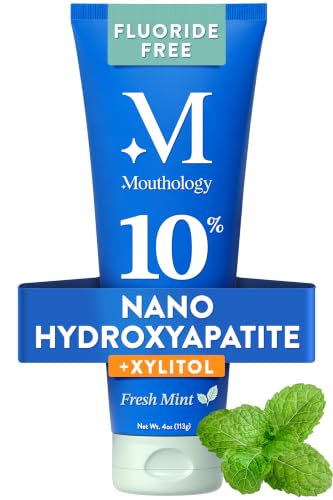
Mouthology is the only option here that specifies a 10% nano-hydroxyapatite concentration, making it a more clearly quantified choice for buyers comparing nHA formulas. The 4-ounce toothpaste is also fluoride-free and contains xylitol. Its focus is enamel care and sensitivity rather than a direct cavity-reversal claim, so it is a partial fit for this search. A specified ingredient percentage does not establish that the paste can repair a cavity hole; seek dental care for suspected decay.
Bottom line: Choose this if you want a fluoride-free toothpaste with a 10% nano-hydroxyapatite concentration.
Boka Ela Mint Nano-Hydroxyapatite

Boka Ela Mint differs with a low-foaming, creamy texture alongside nano-hydroxyapatite, xylitol and aloe vera. The fluoride-free tube contains 4 ounces and is positioned for enamel care and sensitive teeth, rather than explicitly for cavity reversal. That makes it a related option for someone seeking a remineralizing toothpaste, not a treatment for a formed cavity. If a tooth has a visible hole, lingering pain or increasing sensitivity, a dentist needs to assess it rather than relying on a toothpaste switch.
Bottom line: Pick this if a low-foaming texture is a priority and your goal is general enamel care.
Boka Nano-Hydroxyapatite Whitening

This Boka formula pairs nano-hydroxyapatite with high-cleaning silica and is positioned to polish away everyday surface stains such as tea and coffee marks. It is a 4-ounce, fluoride-free toothpaste, so its whitening and enamel-care angle sets it apart from the products marketed directly for cavity repair. Surface stain removal is not cavity treatment, however, and the formula cannot fill a hole in a tooth. Choose it for its surface-stain focus only if that is relevant to your routine, and get suspected decay assessed by a dentist.
Bottom line: Choose this if surface-stain polishing is a goal alongside fluoride-free enamel care.
What toothpaste can do for early enamel damage
Toothpaste can support remineralization of early enamel changes, but it cannot rebuild a cavity hole. Early non-cavitated lesions are mineral loss at the tooth surface; a dentist can determine whether a spot is still in that stage or has progressed. Fluoride toothpaste is a well-established option for cavity prevention, and adults generally brush twice daily with a pea-sized amount. Hydroxyapatite pastes offer another mineral-based approach, but marketing a product as cavity-reversing does not show that it can treat decay that has broken through the enamel. Choose according to your dental professional’s advice and your fluoride preference, and do not use a toothpaste change to delay care for pain or a visible hole.
How to choose a cavity-care toothpaste
Start by distinguishing fluoride toothpaste from fluoride-free hydroxyapatite formulas. Fluoride is the standard ingredient in many cavity-prevention toothpastes; these products instead emphasize hydroxyapatite, and one specifies 10% nano-hydroxyapatite. The percentage is useful for comparing formulas but does not prove a product can reverse a formed cavity. Use this quick guide to match the formula with your priority:
| Priority | What to look for | Limit |
|---|---|---|
| Fluoride preference | Confirm the ingredient label and ask your dentist if unsure | These five options are described as fluoride-free |
| Hydroxyapatite comparison | A nHA percentage, if concentration matters to you | Only one option here gives a percentage |
| Visible hole or pain | Dental evaluation | Toothpaste cannot fill a cavity hole |
For children, fluoride amount and swallowing risk need age-appropriate guidance; do not assume an adult fluoride-free product is suitable for a child.
When a cavity needs a dentist
A tooth with a visible hole, persistent pain, or sensitivity that is worsening needs a dental assessment rather than a trial period with toothpaste. Cavities can progress beneath the surface, and pain is not a reliable measure of how far decay has gone. A dentist can check whether a spot is an early lesion that may be managed noninvasively or a cavity that needs a filling or other treatment. The product claim of a months-long reversal period should never be used to defer that decision. For sudden severe pain or facial swelling, seek urgent dental care; swelling can signal an infection that toothpaste cannot treat.
Frequently Asked Questions
Can toothpaste reverse a cavity that has a hole?
No; toothpaste cannot fill a cavity hole or restore missing tooth structure. A dentist needs to assess a visible hole and determine treatment.
Can early enamel mineral loss improve without a filling?
Some early lesions that have not formed a hole can remineralize and may be managed without a filling. A dentist must assess the tooth because surface appearance alone cannot reliably show how far decay has progressed.
Is hydroxyapatite toothpaste the same as fluoride toothpaste?
No; hydroxyapatite and fluoride are different ingredients used in oral-care products. The options compared here are described as fluoride-free, so ask a dentist about your cavity-prevention needs before choosing one.
How often should adults brush with cavity toothpaste?
Adults generally brush twice daily, using a pea-sized amount of toothpaste. Spit after brushing rather than swallowing the paste.
What should I do if a tooth hurts while brushing?
Persistent or worsening tooth pain calls for a dental assessment, not just a toothpaste change. If pain is severe or comes with facial swelling, seek urgent dental care.