
Puzzles Like Rubik’s Cube: 4 Types Compared

For a Rubik’s Cube-style puzzle with the most variety, choose Five-Puzzle Speed Cube Set: its five puzzles include 2×2, 4×4, Pyraminx, and Megaminx formats. Choose Rubik’s Cube Original 3×3 instead for the familiar six-color 3×3, or CuberSpeed Axis V2 3×3 for a shape-shifting twist on that format.
Twisty puzzles are solved by turning sections to restore a target arrangement; different shapes and piece counts change the challenge. Anyone seeking only a classic cube should skip the multi-format set and choose the standard 3×3.
We earn a commission if you buy through links on this page. As an Amazon Associate I earn from qualifying purchases. Products are compared on manufacturer specifications, not hands-on testing.
- Best overall: Five-Puzzle Speed Cube Set – The five-puzzle set spans 2×2, 4×4, Pyraminx, and Megaminx formats.
- Best for classic solving: Rubik’s Cube Original 3×3 – It uses the familiar six-color, nine-square-per-side 3×3 layout.
- Best for shape mods: CuberSpeed Axis V2 3×3 – Its Axis design changes the shape of a 3×3 as it is scrambled.
| Product | Best for | Puzzle format | Included puzzles | Material | Shop |
|---|---|---|---|---|---|
| Five-Puzzle Speed Cube Set | Variety seekers | 2×2, 4×4, Pyraminx, Megaminx | 5 puzzles | ABS | Check Price on Amazon |
| Rubik’s Cube Original 3×3 | Classic 3×3 fans | 3×3 cube | 1 puzzle | — | Check Price on Amazon |
| CuberSpeed Axis V2 3×3 | Shape-mod solvers | 3×3 shape mod | 1 puzzle | — | Check Price on Amazon |
| Megaminx Dodecahedron Puzzle | Dodecahedron fans | Megaminx dodecahedron | 1 puzzle | ABS | Check Price on Amazon |
Rubik’s Cube-style twisty puzzles
Compare the puzzle formats first, then choose the solve style and variety that suit you.
Five-Puzzle Speed Cube Set
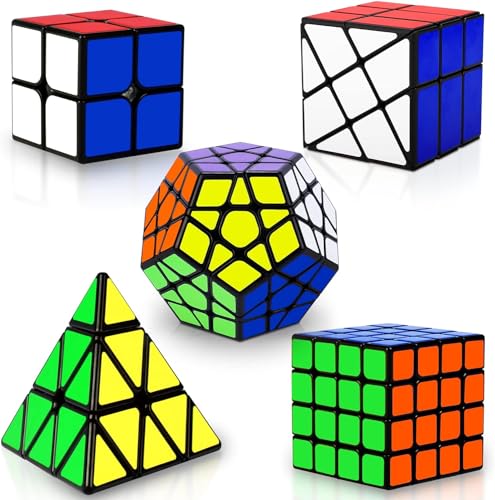
Five-Puzzle Speed Cube Set stands apart by giving you five-puzzle formats rather than a single cube. The set includes 2×2 and 4×4 cubes, plus Pyraminx, Megaminx, and Fenghuolun puzzles, all made from ABS. The maker says the cubes turn smoothly and are designed for cornering. This set suits someone who wants to switch between different shapes and piece counts without choosing just one format. Its limitation is that the included formats are specified, but individual puzzle dimensions are not, which matters if storage space or a particular hand fit is important.
Bottom line: Pick this set if variety across several twisty-puzzle formats matters most.
Rubik’s Cube Original 3×3

Rubik’s Cube Original 3×3 is the straightforward choice for the familiar 3×3 format, unlike the shape-mod and multi-format alternatives. Each of its six sides has nine colored squares, and the goal is to return each side to one color after scrambling. Its age guidance is 8 and up. This is a fit for someone who wants the standard cube-solving experience rather than a different outer shape or a bundle of puzzles. A classic 3×3 offers just one puzzle format, so it will not provide the range of solve shapes found in a set.
Bottom line: Choose this if you want the recognizable six-color 3×3 format.
CuberSpeed Axis V2 3×3
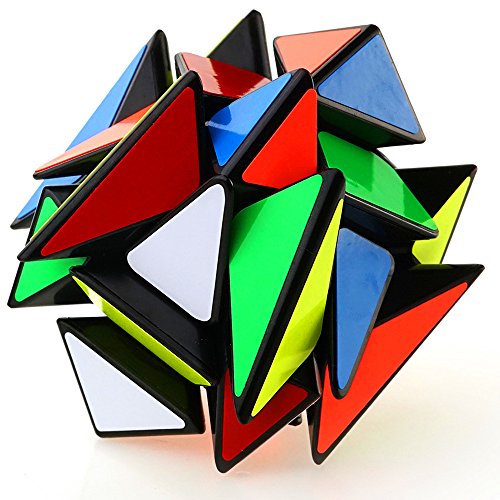
CuberSpeed Axis V2 3×3 differs from a conventional cube because its Axis shape mod changes the puzzle’s outline as pieces turn. It uses a 3×3 mechanism and MoYu-color-scheme stickers; the maker says the V2 has an improved mechanism and turns more smoothly. That makes it a natural option for someone who knows the basic cube format but wants a shape-based twist. The mechanism remains rooted in 3×3 solving, so buyers seeking a wholly different face count or a variety of puzzle types should look to another format.
Bottom line: Pick this if a shape-changing challenge built around 3×3 turns is the goal.
Megaminx Dodecahedron Puzzle

Megaminx Dodecahedron Puzzle replaces the square-faced cube shape with a Megaminx dodecahedron, making its geometry the key difference from the other options. The puzzle is made of ABS and is described as a 3x3x3 pentagonal speed cube. It suits a solver who wants a many-sided twisty puzzle rather than another conventional cube. The specifications do not clarify its exact face-turning mechanism, so a buyer who needs a particular Megaminx configuration should confirm that before choosing.
Bottom line: Choose this if the dodecahedron shape is the main attraction.
How to choose a Rubik’s Cube-style puzzle
Choose by puzzle shape and piece count, not by the word “cube” alone. A 2×2 has only corner pieces to arrange, while a 4×4 adds center and edge pieces; a 3×3 shape mod keeps the familiar layer-turning framework but can change its outline. A Pyraminx is tetrahedral, whereas a Megaminx is a dodecahedron with 12 faces. If you want several kinds of solving in one purchase, a set that names each format offers more variety; if you want repetition and skill-building on one format, choose a single puzzle. For a first twisty puzzle, the measurable rule is simple: choose a 3×3 if you want the standard six-face, nine-square-per-side target.
| Need | Format to consider | What changes |
|---|---|---|
| Classic cube solve | 3×3 | Six square faces |
| Shape-shifting challenge | 3×3 shape mod | Outline changes while turning |
| Different geometry | Pyraminx or Megaminx | Tetrahedron or 12-faced dodecahedron |
What changes between cube sizes and shapes
Higher cube orders add more layers and more kinds of pieces to track. A 2×2 has no fixed centers or edge pieces, while a 4×4 has movable centers and paired edges that make solving differ from a 3×3. Shape mods add another kind of difficulty: a turned puzzle may no longer look cubic, so matching colors alone may not reveal how pieces align. Non-cubic twisty puzzles also change the face geometry; a Pyraminx has four triangular faces, while a Megaminx has twelve pentagonal faces. Pick a format based on the challenge you want: more layers for cube-like complexity, or a different solid for a change in spatial orientation.
Materials and turning feel
ABS plastic is common in twisty puzzles because it is light and can withstand repeated hand turning; the Megaminx and five-puzzle set here specify ABS. Stickered puzzles use colored stickers over the plastic, while stickerless designs use colored plastic pieces; sticker condition can affect long-term appearance. Turning feel depends on internal design, lubrication, tension, and adjustment, not just the outer shell. A beginner generally benefits from stable, controlled turns more than maximum speed, since loose turning can make alignment harder. Avoid forcing a layer that is caught between positions: realign the faces first, then turn gently to reduce stress on the mechanism.
Care and safe puzzle use
Keep twisty puzzles clean and dry, because grit and moisture can interfere with turning and wear the mechanism. Dust the exterior with a soft cloth; do not rinse a puzzle unless its maker permits water, since liquid can remain inside the mechanism. Small puzzle pieces can present a choking hazard to young children, so keep them away from children who may mouth toys and observe the age guidance supplied with a product. For a puzzle that catches or resists, stop rather than applying extra force; a misaligned layer can cause a jam or damage. Store separate puzzles together only when they cannot scratch one another or lose detachable pieces.
Frequently Asked Questions
What is the difference between a 2×2 and a 3×3 cube?
A 2×2 has corner pieces only, while a 3×3 also has centers and edges. Choose the 2×2 for a simpler piece structure, or the 3×3 for the standard six-face format.
How many faces does a Megaminx have?
A Megaminx is a dodecahedron with 12 pentagonal faces. That geometry makes it distinct from a six-faced cube.
Is a Pyraminx the same shape as a cube?
No, a Pyraminx is a tetrahedron with four triangular faces. Choose it for a pyramid-shaped twisty puzzle rather than a square-faced cube.
What does 4×4 mean on a twisty puzzle?
A 4×4 cube has four layers across each face, unlike the three layers of a standard 3×3. It also has movable centers and paired edges to manage during solving.
How can I keep a speed cube turning smoothly?
Keep the puzzle free of grit and avoid forcing layers that are not aligned. Cleaning or lubrication methods depend on the mechanism, so use only products intended for twisty puzzles.