
25 Litre Hiking Backpack: 5 Packs Compared

For a trail-focused 25-liter hiking backpack, choose Osprey Sportlite 25L for its adjustable torso, hipbelt and trekking-pole loops. Choose NOOLA 25L Hydration Backpack instead if carrying a 3-liter bladder is central to your hike; the other packs have different stated capacities or prioritize packability over trail support.
A 25-liter pack is a daypack-sized option for food, layers and essentials, but your gear volume and water needs determine whether it fits your outing.
We earn a commission if you buy through links on this page. As an Amazon Associate I earn from qualifying purchases. Products are compared on manufacturer specifications, not hands-on testing.
- Best overall: Osprey Sportlite 25L – Its adjustable torso, padded hipbelt and trail-specific storage suit day hikes.
- Best for built-in hydration: NOOLA 25L Hydration Backpack – It includes a 3-liter bladder and a rain cover.
- Best for packability: ZOMAKE 25L Packable Backpack – It folds down to 5.5 × 6.7 × 2 inches for stowing.
| Product | Best for | Capacity | Weight | Hydration | Shop |
|---|---|---|---|---|---|
| Osprey Sportlite 25L | Trail day hikes | 25 L | 2.28 lb | Sleeve; reservoir separate | Check Price on Amazon |
| NOOLA 25L Hydration Backpack | Bladder-based hikes | 25 L | 2.14 lb | 3 L bladder included | Check Price on Amazon |
| IX INOXTO 26L Hiking Backpack | Extra capacity | 26 L | 2.2 lb | 3 L bladder included | Check Price on Amazon |
| MOUNTAINTOP 40L Backpack | Larger loads | 40 L | — | — | Check Price on Amazon |
| ZOMAKE 25L Packable Backpack | Compact travel | 25 L | 0.60 lb | — | Check Price on Amazon |
25 Litre Hiking Backpacks
Compare trail support, hydration storage and packability to match a pack to your day out.
Osprey Sportlite 25L
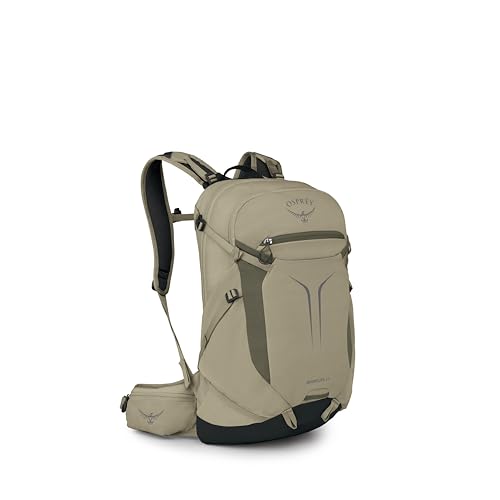
Unlike the other packs here, the Osprey Sportlite pairs an adjustable torso with a padded, ventilated hipbelt and trekking-pole loops for hiking-specific carrying. Its 25-liter main compartment, organization compartment, hipbelt pockets, stretch side pockets and front shove-it pocket provide separate places for trail essentials. The maker describes the AirScape backpanel as cushioned and ventilated, with mesh-covered foam and airflow channels. It suits hikers who want a close-to-body daypack and adjustable torso fit. The hydration sleeve is included, but the reservoir is sold separately, so it is not a ready-to-drink setup.
Bottom line: Choose this if you want a trail-oriented 25-liter pack with an adjustable torso.
NOOLA 25L Hydration Backpack

The NOOLA stands out by including a 3-liter water bladder, while the Osprey requires a separate reservoir. Its main compartment and bladder sleeve are joined by zippered storage, side pockets, a built-in rain-cover pocket and a detachable shoulder-strap phone pocket sized for phones up to 7 inches. The maker says the TPU bladder is BPA-free and odorless and describes its bite valve as push-lock. This suits hikers who prefer hands-free water access and dedicated small-item storage. The bladder’s full weight counts toward the carried load, and the pack’s weight excludes that water.
Bottom line: Pick this if you want a 25-liter hiking pack supplied with a 3-liter bladder.
IX INOXTO 26L Hiking Backpack

The IX INOXTO offers slightly more capacity than a 25-liter pack and includes both a 3-liter water bladder and a rain cover. The khaki pack measures 20.4 × 11.8 × 5.9 inches, and its polyester fabric is described by the maker as water-resistant and tear-resistant. Reinforced stress points and shoulder straps are another stated construction feature. It may suit a hiker who wants an included bladder and cover with room beyond the target capacity. Its size is 26 liters, so it is not an exact 25-liter match; choose it only if that extra capacity fits your packing needs.
Bottom line: Choose it if an included bladder and 26-liter capacity suit your load.
MOUNTAINTOP 40L Backpack

The MOUNTAINTOP has substantially more capacity than a 25-liter hiking pack, making it a larger-load alternative rather than a close size match. Its 400D polyester fabric is described by the maker as water-repellent, and the pack has a main compartment, two zippered front pockets and two side bottle pockets. Breathable mesh straps and a back panel, sponge padding, and a sternum strap with a whistle buckle are included. It suits outings where extra room matters more than compact daypack sizing. At 40 liters, it can encourage carrying more than a short hike requires; pack only what the route and conditions call for.
Bottom line: Pick this for a larger load rather than a strict 25-liter fit.
ZOMAKE 25L Packable Backpack
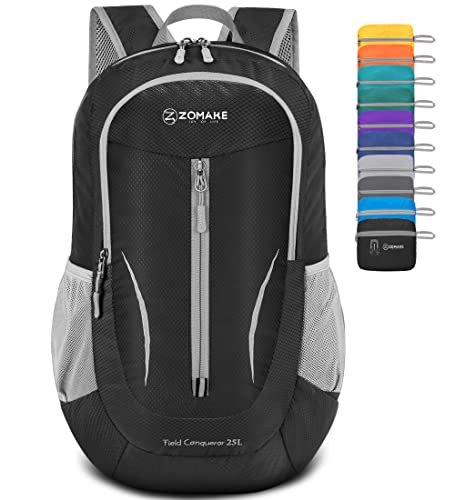
The ZOMAKE is the packability-focused option: it folds to 5.5 × 6.7 × 2 inches, unlike the more structured hiking packs. Its 25-liter capacity is arranged with a main compartment for items such as lunch boxes and A4 documents, plus pockets for a passport, bottles and umbrella. It weighs about 0.60 pound and measures about 16.1 × 10.6 × 7.9 inches unfolded. This suits travel or outings where a pack needs to stow compactly when empty. Its foldable design is less trail-specific than a pack with an adjustable torso, hipbelt and trekking-pole loops, so consider that distinction for longer hikes.
Bottom line: Choose it for compact stowage and casual outings, not a supportive trail fit.
How to choose a 25-liter hiking backpack
Choose by carrying system and the gear you need, not capacity alone. A 25-liter daypack can hold food, a rain layer and essentials for many day hikes, but bulky insulation or camera equipment can use the volume quickly. Put heavier items close to your back and centered in the pack; this helps keep the load stable. Adjustable torso length matters because a pack should sit securely without pulling the shoulder straps away from your shoulders. A hipbelt can transfer some load to your hips, while a sternum strap helps stabilize the shoulder straps. If your planned gear fills a 25-liter pack before water is added, consider a larger capacity instead of compressing essentials.
How to fit a hiking daypack
Fit the pack to your torso, not your height: torso length is measured from the prominent bump at the base of the neck to the level of the top of the hip bones. Load the pack before adjusting it, since an empty bag hangs differently. Tighten shoulder straps so they follow the shoulders without gaps, then secure the hipbelt over the hip bones if the pack has one. A sternum strap should stabilize the straps without restricting breathing. When a pack lacks a hipbelt or adjustable torso, keep the load modest and test the fit with your usual gear before a long outing. Persistent rubbing or numbness means the fit or load needs adjustment.
Hydration and water weight in a 25-liter pack
A liter of water weighs about 2.2 pounds, so a full 3-liter bladder adds roughly 6.6 pounds before the reservoir itself is counted. That weight is useful on a hot or remote route, but carrying more water than the hike requires adds unnecessary load. Estimate water needs from route length, weather, exertion and refill access; hot conditions and steep climbs increase demand. A hydration sleeve holds a reservoir, but it does not necessarily include one, so check whether the pack comes ready to drink. Keep the bladder hose accessible and check for leaks before placing electronics or spare layers in the same compartment.
Packable versus structured hiking backpacks
A packable daypack prioritizes low weight and compact storage, while a structured hiking pack emphasizes carrying stability and access on the trail. Use this quick rule: for a short walk with a light load and frequent stops, packability may matter most; for a longer hike or heavier gear, look for torso adjustment, a hipbelt and stable back contact. Side pockets and a front shove-it pocket make layers or bottles easier to reach without opening the main compartment. No pack feature replaces careful loading: keep dense items near the back and avoid loose gear that can shift as you walk.
| Need | Feature to prioritize |
|---|---|
| Stow inside luggage | Folds into a small bundle |
| Carry a reservoir | Hydration sleeve or included bladder |
| Stabilize a longer trail load | Adjustable torso and hipbelt |
Frequently Asked Questions
Is a 25-liter backpack big enough for a day hike?
A 25-liter pack is enough for many day hikes with food, water, a rain layer and basic essentials. Bulky clothing, camera gear or a long route can require more volume.
How much does water add to a hiking pack?
Each liter of water weighs about 2.2 pounds, so 3 liters add about 6.6 pounds before the bladder’s weight. Carry water according to route length, weather and refill access.
How should a hiking backpack sit on your back?
The pack should rest close to your back without shoulder-strap gaps or painful pressure points. Measure torso length from the base-of-neck bump to the top of the hip bones, then adjust the pack if its design allows.
Can a packable backpack work for hiking?
A packable backpack can work for a short hike with a light load. For longer outings or heavier gear, a stable back panel, hipbelt and torso adjustment can improve carrying comfort.
Should a hiking backpack have a rain cover?
A rain cover helps shed rain from the outside of a pack, but seams and zippers can still let water in. Keep critical items in a waterproof liner or dry bag when staying dry matters.