
Best Glue for Jewelry Rhinestone Repair: 3 Options

FITTDYHE B-7000 50 mL suits most jewelry rhinestone repairs because its needle-style tip helps place small drops precisely. Choose Aleene’s Jewelry & Metal Glue instead if you want a no-drip formula made for jewelry and metal; for larger craft projects, B-7000 Clear Glue, 4 × 15 mL comes in four 15 mL tubes.
Rhinestone adhesive bonds a stone or embellishment to a jewelry surface; the best choice depends on the joint and how much control the repair needs.
We earn a commission if you buy through links on this page. As an Amazon Associate I earn from qualifying purchases. Products are compared on manufacturer specifications, not hands-on testing.
- Best overall: FITTDYHE B-7000 50 mL – Its needle-style tip is designed for controlled placement of small adhesive drops.
- Best for multiple projects: B-7000 Clear Glue, 4 × 15 mL – Four separate 15 mL tubes let you use smaller portions across craft repairs.
- Best for no-drip control: Aleene’s Jewelry & Metal Glue – The no-drip, no-run formula is designed for controlled application on jewelry and metal.
| Product | Best for | Package size | Applicator | Bond properties | Shop |
|---|---|---|---|---|---|
| FITTDYHE B-7000 50 mL | Precise small repairs | 50 mL | Needle-style tip | Waterproof, elastic | Check Price on Amazon |
| B-7000 Clear Glue, 4 × 15 mL | Multiple small projects | 4 × 15 mL | Precision needle tip | Waterproof, elastic | Check Price on Amazon |
| Aleene’s Jewelry & Metal Glue | No-drip application | 0.1 fl oz per pack item | No-drip formula | Waterproof, impact resistant | Check Price on Amazon |
Glue for Jewelry Rhinestone Repair
Compare the application style and bond characteristics to match the adhesive to the repair.
FITTDYHE B-7000 50 mL

For a small rhinestone repair where placement matters, the needle-style tip is the key distinction. The 50 mL clear B-7000 adhesive is also described as waterproof and elastic, making it suited to jewelry and craft work where a flexible bond is useful. Its precision tip is intended to control small drops, and the cap is designed to resist clogging. The tradeoff is the larger single tube: choose another format if you prefer several smaller tubes for separate projects or a no-drip formula.
Bottom line: Choose this for controlled placement on small rhinestones and a flexible, waterproof bond.
B-7000 Clear Glue, 4 × 15 mL
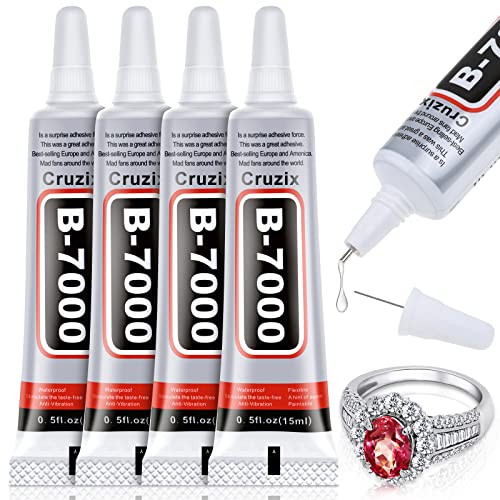
Four separate 15 mL tubes make this B-7000 option distinct when you want smaller portions for different jewelry or craft projects. The clear adhesive has a precision needle tip and is described as waterproof and elastic; its uses include crystals and metal-to-metal jewelry components. This format can suit someone who wants to keep projects separated rather than work from one larger tube. Its limitation is that the package contains four tubes, not one large supply, so it is less suited to a single high-volume crafting session.
Bottom line: Pick this when several small tubes fit your project plans better than one larger tube.
Aleene’s Jewelry & Metal Glue

A no-drip, no-run formula separates this jewelry and metal glue from the B-7000 options, which emphasize precision needle tips. The manufacturer says it forms a strong, permanent bond, dries clear and fast, and is impact resistant and waterproof; it is also AP-certified non-toxic. This three-pack format suits small jewelry fixes where controlled placement matters. Each pack item contains 0.1 fl oz, so it is a limited amount compared with the larger B-7000 tubes and may not suit repeated or broad craft work.
Bottom line: Choose this for small fixes where a controlled, no-drip formula is the priority.
How to Choose Jewelry Rhinestone Glue
Match the adhesive to the joint and the amount of control the repair needs. A small flat-backed rhinestone needs a tiny, accurately placed drop; a narrow nozzle or a no-drip formula can help keep adhesive off the visible stone face. Smooth, nonporous surfaces such as glass or metal need clean, dry contact, while porous fabric can absorb adhesive and may show residue. For a stone smaller than a pea, favor controlled application over a broad spread. Check that the glue is intended for both materials in the joint, such as stone and metal, rather than choosing by the word “jewelry” alone. Test a hidden spot first if appearance or finish matters.
Preparing a Rhinestone Repair Surface
Clean and fully dry both bonding surfaces before applying jewelry adhesive; oil, dust, and old glue can weaken contact. Remove loose residue gently without scratching a plated setting or damaging a delicate stone, and avoid soaking a piece if its other components may be water-sensitive. Apply adhesive to the setting rather than covering the rhinestone’s visible face, then align the stone before the bond begins to set. Use the smallest amount that covers the contact area: excess glue can squeeze out around the stone and leave a visible edge. Adhesive cure time varies by formula, so allow the product’s full-cure period before wearing or stressing the repair.
Applying Glue Without Cloudy Residue
Keep jewelry adhesive inside the stone’s footprint to reduce visible squeeze-out and residue. A fine applicator helps with small stones, while a no-drip formula can be easier to manage when a repair is near an exposed edge. Work on a protected, level surface in a ventilated area, and keep uncured adhesive away from skin and eyes. Do not wear or handle the piece as finished until the bond has cured; a quick initial set is not necessarily a full cure. If adhesive reaches the stone face, wipe it only if the product label allows it and the stone material can tolerate the cleanup method.
Jewelry Rhinestone Glue Options by Repair Need
Choose the adhesive style by how the repair will be applied, not by assuming every clear glue behaves the same. The table separates the three options by their distinguishing qualities.
| Repair need | Choose | Reason |
|---|---|---|
| Small, precise drop | FITTDYHE B-7000 50 mL | Needle-style tip controls small drops |
| Several small projects | B-7000 Clear Glue, 4 × 15 mL | Four 15 mL tubes |
| No-drip placement | Aleene’s Jewelry & Metal Glue | No-drip, no-run formula |
For jewelry that flexes during wear, a flexible adhesive can suit the joint better than a brittle bond, but fit the adhesive to both materials first. Waterproof claims do not mean a repaired piece should be immersed immediately or exposed to water before curing.
Frequently Asked Questions
How long should jewelry glue cure before wearing?
Wait for the adhesive’s full-cure time on its package before wearing the piece; a surface that feels dry may not have cured through the joint. Keep the repair still during that period, since movement can shift the stone.
How do I keep glue off a rhinestone face?
Apply a very small amount to the setting or contact area rather than the visible stone surface. For stones smaller than a pea, use a fine tip or a no-drip formula and align the stone before pressing it into place.
Can jewelry glue attach rhinestones to metal?
Some adhesives are intended for jewelry metal components, including the B-7000 option and the jewelry-and-metal formula here. Clean and dry both surfaces, and confirm the adhesive is suitable for the specific stone and metal before committing to a visible repair.
Is waterproof jewelry glue safe to expose to water right away?
No; wait until the adhesive has fully cured before exposing a repaired piece to water. Waterproof claims describe the bond after curing, not the uncured glue or a repair still being set.