
Forearm Fitness Equipment: 5 Options by Training Fit

Yes4All Wrist Roller is the closest match for most people seeking forearm fitness equipment because it is a wrist roller with a 100-pound maximum load and a 52.85-inch rope. Choose WristMax Fingers & Wrist Trainer, Large for a fingers-and-wrist trainer, or Infinity Hoop 360° Hand-Crank Trainer for a rotating arm trainer; BAHNU U60-100 lb Twister Arm Trainer and NOONCRAZY Adjustable Twister Arm Trainer are broader chest and upper-body devices rather than focused forearm tools.
We earn a commission if you buy through links on this page. As an Amazon Associate I earn from qualifying purchases. Products are compared on manufacturer specifications, not hands-on testing.
- Best overall: Yes4All Wrist Roller – A dedicated wrist roller accepts compatible plates and has a 100-pound maximum capacity.
- Best for finger and wrist work: WristMax Fingers & Wrist Trainer, Large – Its purpose is fingers and wrist training rather than chest-focused resistance.
- Best for rotating arm work: Infinity Hoop 360° Hand-Crank Trainer – Its 360-degree rotating design targets broader arm and shoulder movement.
| Product | Best for | Resistance or load | Rope or rotation | Main training focus | Shop |
|---|---|---|---|---|---|
| Yes4All Wrist Roller | Loaded wrist rolling | Up to 100 lb | 52.85-in rope | Forearms, wrists, grip | Check Price on Amazon |
| Infinity Hoop 360° Hand-Crank Trainer | Rotating arm movement | — | 360° rotation | Arms, shoulders, chest | Check Price on Amazon |
| WristMax Fingers & Wrist Trainer, Large | Finger and wrist training | — | — | Fingers and wrists | Check Price on Amazon |
| BAHNU U60-100 lb Twister Arm Trainer | Chest and arm training | 60–100 lb kit | — | Chest, arms, shoulders | Check Price on Amazon |
| NOONCRAZY Adjustable Twister Arm Trainer | Four-stage resistance | 30, 60, 90, 120 lb | — | Upper body, including forearms | Check Price on Amazon |
Forearm Fitness Equipment Compared
The main distinction is whether you want wrist roller loading, finger and wrist training, or broader arm resistance.
Yes4All Wrist Roller

Yes4All Wrist Roller is the only dedicated wrist roller in this group, making it the clearest fit for loaded forearm work. It has a steel construction, a non-slip PVC handle, and a 52.85-inch nylon rope; the maker gives it a maximum capacity of 100 pounds. The product is described as compatible with 1-inch and 2-inch plates, dumbbells, and kettlebells. Choose it if you want to raise and lower resistance by rolling the rope. It is less suited to someone who wants a self-contained spring or rotating-arm movement instead of hanging a load.
Bottom line: Pick this for progressive wrist roller work when you have compatible resistance to attach.
Infinity Hoop 360° Hand-Crank Trainer

Infinity Hoop 360° Hand-Crank Trainer stands apart as a rotating arm trainer rather than a wrist roller or finger device. Its 360-degree rotation and freely rotating ball are intended to create multi-directional resistance, and the maker describes it as working the arms, shoulders, and chest. TPE construction and ergonomic handles are noted, and the design is described as compact and portable. This suits someone who wants movement-based arm training that includes the forearms. The specifications give no resistance figure, so it is harder to compare load progression with a roller that accepts external weights.
Bottom line: Choose this for portable rotating arm work, not for measured plate loading.
WristMax Fingers & Wrist Trainer, Large

WristMax Fingers & Wrist Trainer, Large is the most focused option here for finger and wrist training, rather than a broader chest or shoulder device. It is identified as a large-size trainer and is positioned for gym and home use; the product facts do not give a resistance range or movement mechanism. That makes it a plausible choice for buyers specifically seeking a hand-and-wrist tool, including climbers or arm wrestlers as named intended users. Buyers who need to set a precise resistance or compare a known load should prefer a product with a clear capacity or resistance figure.
Bottom line: Pick this if finger and wrist emphasis matters more than a published resistance figure.
BAHNU U60-100 lb Twister Arm Trainer
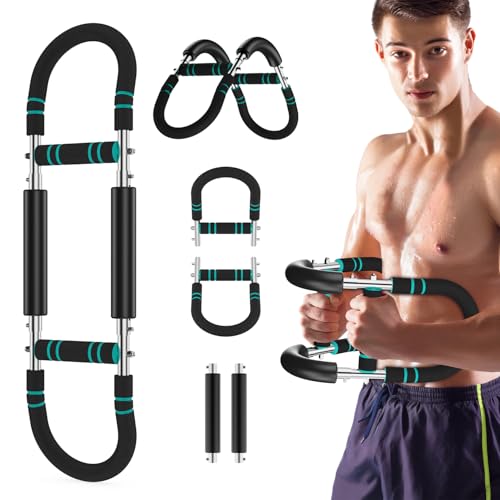
BAHNU U60-100 lb Twister Arm Trainer is a U-shaped torque device aimed at chest and full upper-body movement, so its forearm relevance is secondary to its wider training purpose. The kit name identifies a 60-to-100-pound range, and the product describes a rotating torque design with chest-push mode and work for arms and shoulders. Consider it if you want a broader spring-style session that includes the arms, not isolated wrist rolling. Its product facts do not explain how the resistance range is adjusted, so buyers who need a specific starting level should verify that adjustment before ordering.
Bottom line: Choose this for broader chest and arm training that also engages the forearms.
NOONCRAZY Adjustable Twister Arm Trainer

NOONCRAZY Adjustable Twister Arm Trainer differs from the wrist-specific tools by using four spring bars for adjustable upper-body resistance. The stages are 30, 60, 90, and 120 pounds, and the maker includes forearms among several intended muscle areas. This makes it a better fit for someone who wants a multi-area chest-and-arm device with defined resistance steps. It is not a dedicated wrist roller, and the product facts do not establish a fine-grained forearm isolation movement. Buyers seeking controlled wrist flexion and extension should choose a more focused tool.
Bottom line: Pick this for stepped resistance across broader upper-body exercises, not isolated forearm work.
How to choose forearm fitness equipment
Choose by movement and load control: a wrist roller uses a suspended weight and repeated wrist motion, while a hand trainer or rotating arm device uses a different resistance path. For general strength work, many adults can start with 2 to 3 sets of 8 to 15 controlled repetitions, stopping with a few good repetitions still possible; the appropriate resistance changes with the movement and training background. Increase load gradually rather than swinging or jerking the weight. A simple rule: if you cannot keep your wrist controlled through the full motion, reduce the load or range. These products differ in whether they publish a load, offer rotation, or focus on fingers and wrists, so select the format that matches your training goal.
Wrist roller setup and movement
A wrist roller is used by attaching resistance to its rope, holding the handle, and winding the rope up and down under control. Keep the upper arms steady and move through a comfortable wrist range; letting the shoulders take over shifts work away from the forearms. Start with a light load because a hanging weight creates leverage that can feel harder as it rises. Use a clear floor area and keep feet out from beneath the load. Stop if you feel sharp pain, numbness, or tingling, and do not treat ordinary muscle fatigue as a reason to force a painful range. Load capacity is a ceiling, not a recommended starting weight.
Forearm training formats compared
Wrist rollers, finger-and-wrist trainers, and spring twisters do not train in identical ways. A wrist roller changes how much weight hangs from a rope; a finger trainer concentrates effort around hand and wrist actions; a twister spreads resistance across wider arm or chest movements. Choose the format that matches the motion you want to practice rather than assuming a higher capacity makes a tool more effective. For grip-specific goals, also consider that wrist movement and finger gripping are related but distinct tasks.
| Training need | Equipment format | Key tradeoff |
|---|---|---|
| Raise and lower a hanging load | Wrist roller | Requires compatible resistance and controlled handling |
| Emphasize fingers and wrists | Finger and wrist trainer | Resistance may not be directly comparable by pounds |
| Include chest and upper arms | Twister arm trainer | Less focused on isolated wrist motion |
Common forearm training mistakes
The most common mistake is using more load than the wrist can control, which encourages bouncing and shortened movement. Slow repetitions and a comfortable range make it easier to keep the intended joint moving without letting the shoulders or torso take over. Another mistake is training only wrist flexion: balanced routines also include wrist extension and grip work, with rest between challenging sessions. Forearm muscles also work during pulling and carrying exercises, so adding a dedicated tool does not mean every session needs high-volume wrist work. If wrist discomfort persists beyond a workout or affects daily tasks, stop the provoking exercise and seek qualified medical guidance rather than training through it.
Frequently Asked Questions
How often should I train my forearms?
Two or three focused sessions per week is a reasonable starting point for many people, with at least a day between hard sessions. Reduce frequency if soreness or grip fatigue affects other training.
How much weight should I start with on a wrist roller?
Start with a load light enough to wind the rope smoothly without swinging or losing wrist control. The device’s maximum capacity is not a recommended starting load; increase only after controlled repetitions feel manageable.
Should forearm exercises cause wrist pain?
No sharp pain, numbness, or tingling should be treated as a normal training target. Stop the movement and reduce the load or range; persistent or daily-life pain warrants qualified medical guidance.
Do wrist rollers train grip strength too?
A wrist roller requires you to hold the handle, so grip is involved alongside wrist and forearm action. It is not the same as a dedicated finger-gripping exercise, which emphasizes a different movement.