
Liquid Clear Oil Paint: Bob Ross Options Compared

Bob Ross Liquid Clear 237ml is the direct match for liquid clear oil paint, with an 8.4 fl oz single container for wet-on-wet painting. Choose the Grumbacher clear first coat instead if you want a 16 fl oz can; choose a set if you also need white or black basecoats.
Liquid clear is a transparent oil-painting medium used as a thin basecoat, not a white or colored primer.
We earn a commission if you buy through links on this page. As an Amazon Associate I earn from qualifying purchases. Products are compared on manufacturer specifications, not hands-on testing.
- Best overall: Bob Ross Liquid Clear 237ml – An 8.4 fl oz single container of Bob Ross Liquid Clear.
- Best for larger volume: Grumbacher Liquid First Coat, Clear – The clear safflower oil-based medium comes in a 16 fl oz can.
- Best for a mixed set: Bob Ross Basecoat Value Pack, 4 x 118ml – Includes liquid clear alongside liquid white, liquid black, and brush conditioner.
| Product | Best for | Color | Container size | Format | Shop |
|---|---|---|---|---|---|
| Bob Ross Liquid Clear 237ml | Single clear basecoat | Clear | 8.4 fl oz | Single container | Check Price on Amazon |
| Grumbacher Liquid First Coat, Clear | Larger clear quantity | Clear | 16 fl oz | Single can | Check Price on Amazon |
| Bob Ross Basecoat Value Pack, 4 x 118ml | Mixed basecoat supplies | Multicolor | 3.38 fl oz each | Four-item set | Check Price on Amazon |
| Bob Ross 3-Piece Basecoat Set, 8oz | White and black options | White, black, clear | 8.4 fl oz each | Three-item set | Check Price on Amazon |
Liquid clear oil paint options
Compare single clear mediums with sets that include other wet-on-wet painting supplies.
Bob Ross Liquid Clear 237ml

This is the direct single-container choice for a clear Bob Ross basecoat: the package contains 8.4 fl oz of Liquid Clear. The product conforms to ASTM D4236, and its package weight is 0.65 lb. A clear basecoat supports wet-on-wet work without adding the white or black tint found in other basecoats. Use a thin, even coat; a heavy layer can leave the surface too slick for controlled brushwork. This container does not include other basecoats or a brush conditioner, so it is less suitable if you need a full starter set.
Bottom line: Choose this for one clear Bob Ross basecoat in an 8.4 fl oz container.
Grumbacher Liquid First Coat, Clear

The Grumbacher clear first coat offers the largest single-container amount among the clear options here: 16 fl oz. The maker describes it as a lean, liquid, smooth safflower oil-based medium for wet-on-wet painting. The maker also says it can serve as a canvas primer or paint additive, increase fluidity when mixed with heavy-body oil color, and tint or transparentize oil colors. That versatility suits painters who want a clear medium for more than basecoating. Its formula is not identified as a Bob Ross medium, so buyers seeking that specific system should choose accordingly.
Bottom line: Choose this if you want 16 fl oz of clear medium with several stated uses.
Bob Ross Basecoat Value Pack, 4 x 118ml
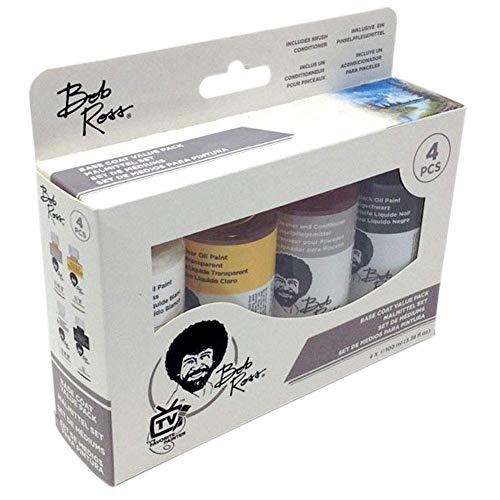
This four-item set differs from a single clear medium by including liquid white, liquid black, liquid clear, and brush conditioner; each container is 118 ml, or about 4 fl oz. The maker says the Bob Ross mediums are designed for wet-on-wet work and allow oil colors to blend directly on the surface. It fits a painter who needs several basecoat types and the conditioner together. Because the clear is only one part of the set, it is a less direct choice if you want a larger amount of clear alone.
Bottom line: Choose this when you need clear plus white, black, and brush conditioner.
Bob Ross 3-Piece Basecoat Set, 8oz

This three-piece set pairs clear with white and black basecoats, making it the option for painters who want all three colors in the same format. The feature states that the set is specially formulated for the wet-on-wet painting method and conforms to ASTM D4236; it also says the set is nontoxic and made in the USA. The package size is 8.4 fl oz per can. Unlike the four-item set, it does not include brush conditioner, and buying it solely for clear means two other basecoat colors may go unused.
Bottom line: Choose this if you want clear, white, and black basecoats together.
Choosing clear versus white basecoat
Choose clear when you want a transparent base and want the canvas or underlying color to remain visible; choose white when you want a pale ground under wet-on-wet colors. Black basecoat changes the underlying value in the opposite direction. A basecoat is a painting medium layer, not the same thing as a prepared canvas ground, which is the surface coating applied before painting. Apply the medium in a thin, even film rather than leaving visible pools. A slick, heavy layer can make brush marks harder to control and can cause colors to slide instead of blending predictably. For an all-purpose palette of basecoat colors, decide whether you also need conditioner before choosing a set.
How much liquid clear to use
Use just enough liquid clear to make a thin, uniform surface film; there is no universal volume because canvas area and absorbency vary. A highly absorbent surface can take up medium quickly, while a smoother, less absorbent surface may remain slick with less. Spread the coat with a clean brush or applicator and remove excess rather than leaving puddles or glossy ridges. The practical decision rule is to stop adding medium once the surface is evenly coated and no wet beads remain. A thin coat gives a more controlled starting point than a visibly wet layer. Keep clear medium separate from the canvas ground: the ground prepares the surface, while the clear coat is part of the painting process.
Wet-on-wet layers and drying
Wet-on-wet means applying fresh oil paint onto a still-wet layer, allowing colors to blend directly on the surface. Oil paints generally dry by oxidation rather than simply evaporating water, so thicker paint films can take much longer to dry than thin ones. Keep the familiar fat-over-lean principle in mind for layered oil painting: later layers should generally be more flexible and oily than earlier lean layers to reduce cracking risk. A clear basecoat does not eliminate that layer-planning rule. If working in multiple sessions, let the painting reach a suitable dry stage before adding a new layer rather than trapping soft paint under a faster-drying film.
| Need | Choose | Reason |
|---|---|---|
| One clear medium | Single clear container | Avoids paying for unwanted basecoat colors |
| Clear plus other basecoats | Multi-item set | Combines clear with white or black |
| Medium for added uses | Clear first coat medium | Maker identifies additive and primer uses |
Frequently Asked Questions
Can liquid clear be used on any canvas?
Use it on a properly prepared surface suitable for oil painting, rather than directly on raw, absorbent canvas. A ground seals and prepares the fibers; liquid clear is a painting medium applied as a thin working layer.
Does liquid clear change oil paint color?
Clear medium does not add white or black pigment, but a wet glossy film can change how colors look while painting. Test the effect on a small prepared area before committing to a large passage.
How thick should a liquid clear coat be?
A thin, even film is the practical target, with no puddles or wet beads. Canvas absorbency and area change how much medium is needed, so spread and remove excess rather than measuring a fixed volume.
Can I mix liquid clear with oil paint?
Some clear mediums are intended to be used as paint additives, but that use depends on the particular formula. Grumbacher’s maker says its clear first coat can be added to heavy-body oil color to increase fluidity; don’t assume every liquid clear has the same use.
Why do oil paintings need fat over lean?
Oil paintings are generally built with later layers more flexible and oily than earlier lean layers to lower cracking risk. Thick paint films also dry more slowly than thin ones, so layer thickness and drying time matter when painting in sessions.