
Royal Purple Purple Ice Coolant: 3 Options Compared

Royal Purple Purple Ice 01600, 12 oz is the closest match for most drivers seeking Royal Purple Purple Ice because it is a single 12-ounce bottle and its features include compatibility with all coolant types. Choose another option if you need a case quantity or want to assess a product with different stated claims.
Purple Ice is a radiator additive, not a replacement for the coolant blend or service specified for a vehicle. Never open a hot radiator or pressurized reservoir; hot coolant can cause severe burns.
We earn a commission if you buy through links on this page. As an Amazon Associate I earn from qualifying purchases. Products are compared on manufacturer specifications, not hands-on testing.
- Best overall: Royal Purple Purple Ice 01600, 12 oz – A single 12-ounce bottle with compatibility across coolant types.
- Best for case quantity: Royal Purple Purple Ice 12600, Case of 12 – The case package contains 12 bottles and lists compatibility with OEM and stock replacement coolants.
- Best for bottle set: Purple Ice Coolant Additive, 12-Bottle Set – A 12-bottle set for shoppers comparing another Purple Ice package option.
| Product | Best for | Package size | Bottle count | Claimed coolant compatibility | Shop |
|---|---|---|---|---|---|
| Royal Purple Purple Ice 01600, 12 oz | Single bottle | 12 oz | 1 | All coolant types | Check Price on Amazon |
| Royal Purple Purple Ice 12600, Case of 12 | Case quantity | 12 oz each | 12 | OEM and stock replacement coolants | Check Price on Amazon |
| Purple Ice Coolant Additive, 12-Bottle Set | Set packaging | 12 oz bottle size | 12 | — | Check Price on Amazon |
Royal Purple Purple Ice Coolant Options
Compare the package formats and the specific claims attached to each Purple Ice option.
Royal Purple Purple Ice 01600, 12 oz
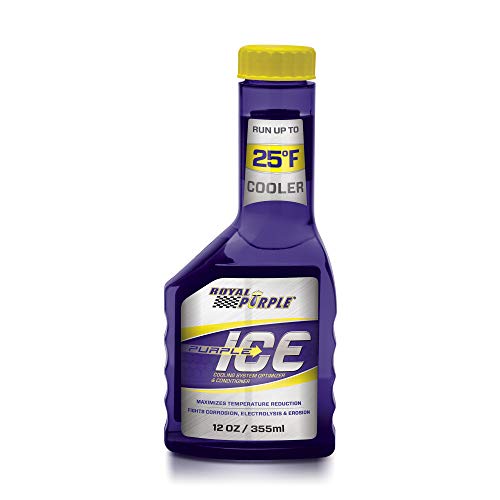
Royal Purple Purple Ice 01600, 12 oz is the single-bottle option, with a 12-ounce container rather than a case. Royal Purple says Purple Ice is compatible with all coolant types, contains lubricants to protect the water pump, and helps prevent erosion and electrolysis. That makes the package a straightforward fit for a buyer who wants one bottle and those stated functions. The product is labeled vehicle-specific, so confirm that the additive is suitable for your vehicle’s cooling system before use; its compatibility claim does not establish the right dose or service interval for every vehicle.
Bottom line: Choose this when you want one 12-ounce bottle and its broad compatibility.
Royal Purple Purple Ice 12600, Case of 12
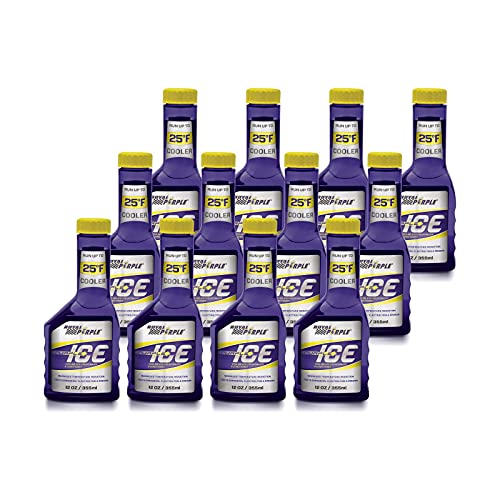
Royal Purple Purple Ice 12600, Case of 12 differs from the single-bottle option by packaging 12-ounce bottles as a case of 12. Royal Purple says the conditioner reduces coolant surface tension to support heat transfer and help reduce hot spots; it also says the product is glycol-free and compatible with OEM and stock replacement coolants, including extended-life antifreezes. The water-only use and track legality do not mean it replaces the vehicle maker’s cooling-system requirements. Case packaging makes this option better suited to someone needing multiple bottles than to a driver seeking one treatment.
Bottom line: Pick this if you need a case and its coolant compatibility suits your system.
Purple Ice Coolant Additive, 12-Bottle Set

Purple Ice Coolant Additive, 12-Bottle Set is another 12-bottle package, but its features focus on direct-fit replacement language and construction rather than Purple Ice’s coolant-specific functions. The product name identifies it as a 12-ounce Purple Ice additive set, while the maker does not establish a coolant compatibility range or a dosing instruction. That distinction matters if you are choosing by coolant chemistry: confirm compatibility and the correct amount for your vehicle before using it. Choose this set only when the package format is useful and those application checks are resolved.
Bottom line: Consider this set only after confirming the coolant compatibility and application.
How to choose a coolant additive
Choose an additive only after identifying the coolant chemistry and service requirement for your vehicle. Cooling systems commonly use ethylene-glycol or propylene-glycol coolant, and formulas can also differ in corrosion-inhibitor chemistry; color alone does not identify a compatible formula. A typical 50/50 ethylene-glycol and water mix has freeze protection around -34°F, but the vehicle maker’s specified coolant and concentration take priority. Do not use an additive to correct a leak, failed thermostat, clogged radiator, or low coolant level. If the engine is overheating, stop safely and let it cool rather than trying to mask the fault with an additive.
Coolant compatibility and mixing
Coolant compatibility depends on the formulation, not simply whether two fluids look alike. Traditional inorganic-additive coolant, organic-acid coolant, and hybrid formulas use different inhibitor packages, so mixing an unknown fluid can reduce corrosion protection or create deposits. Use the vehicle’s specified type and concentration, and avoid topping off with a different chemistry just because the color matches. A 50/50 premix is common for passenger vehicles, while concentrated coolant must be diluted with the water type called for by the vehicle maker. Before adding Purple Ice, confirm both that the product suits the existing coolant and that adding it will not upset the required mixture.
When to add treatment and when to repair
A coolant additive is a supplement, not a repair or a substitute for scheduled coolant replacement. If a vehicle loses coolant, runs hot, or shows residue around a hose or radiator, diagnose the leak or cooling-system fault before adding treatment. Coolant service intervals vary substantially: some conventional formulas have shorter intervals than long-life formulas, so use the vehicle’s maintenance schedule and coolant specification rather than one universal mileage figure. Never remove a radiator cap while the system is hot or pressurized; wait until the engine is fully cool and follow the maker’s safe fill procedure. Keep coolant away from children and pets, and clean spills promptly because many antifreeze ingredients are toxic.
Common mistakes with radiator additives
The most common mistake is treating a broad compatibility claim as approval for every vehicle and every dose. Confirm the exact coolant type, whether the system is water-only or a glycol blend, and the additive amount required before pouring anything in. Another mistake is using an additive to compensate for weak coolant protection: concentration should be checked with an appropriate coolant tester, because too much concentrate can also impair heat transfer. Do not combine multiple treatments unless the vehicle and product instructions permit it. For an overheating vehicle, a mechanical inspection is the right next step; continuing to drive with a temperature warning can damage the engine.
Frequently Asked Questions
Does Purple Ice replace antifreeze in a car?
No; Purple Ice is a radiator additive, while antifreeze provides the vehicle’s specified coolant mixture and freeze protection. A common 50/50 ethylene-glycol mixture protects to about -34°F, so keep the required coolant concentration intact.
Can coolant additives be mixed with any antifreeze?
No universal compatibility rule covers every coolant chemistry. Confirm the vehicle’s specified coolant type and the additive’s compatibility before mixing, since inhibitor packages differ even when coolant colors look alike.
Is water-only coolant safe for normal street driving?
Water-only operation is not a universal substitute for the coolant mixture specified by the vehicle maker. Water alone lacks antifreeze protection and the full inhibitor package, so check the vehicle’s requirements before using a water-only setup.
When is it safe to open a radiator cap?
Open a radiator cap only after the engine and cooling system are fully cool and no longer pressurized. Hot coolant can cause severe burns, and the temperature gauge reaching normal does not by itself confirm the system is safe to open.
How often should engine coolant be replaced?
Use the vehicle maker’s interval because coolant chemistry changes the service schedule; conventional and long-life formulas do not share one universal mileage limit. Check the maintenance schedule and specified coolant type rather than relying on a generic additive interval.