
Locking Hinges for Folding Table Legs Compared

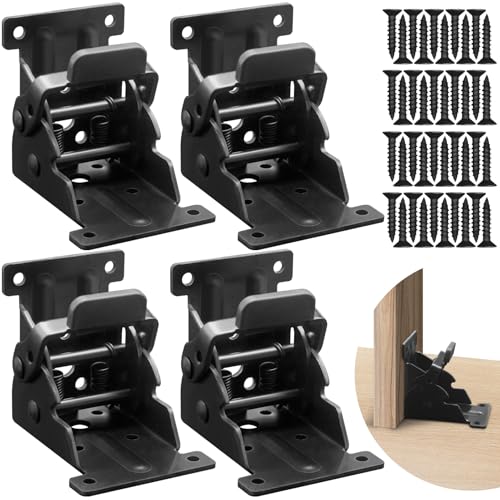
For a typical folding-table project, TopDirect 4-Pack Locking Hinges is a straightforward choice: it is a four-pack with a self-locking design and stated 90-degree position. Choose another set if you need a larger quantity, included screws, or a different stated angle range.
Locking hinges are folding-leg brackets that hold a leg extended; match their mounting footprint and capacity to the table design before installation.
We earn a commission if you buy through links on this page. As an Amazon Associate I earn from qualifying purchases. Products are compared on manufacturer specifications, not hands-on testing.
- Best overall: TopDirect 4-Pack Locking Hinges – Four brackets with dimensions and a self-locking 90-degree position.
- Best for larger projects: 16-Pack 0°–90°–180° Folding Brackets – Sixteen hinges and 160 screws are included, with a 2 mm steel thickness.
- Best for included screws: 4-Pack Folding Brackets with Screws – This four-pack comes with screws and is intended for table or bed legs.
| Product | Best for | Pack count | Material | Thickness | Shop |
|---|---|---|---|---|---|
| TopDirect 4-Pack Locking Hinges | Specified dimensions | 4 hinges | Thick steel | 2.5 mm | Check Price on Amazon |
| 16-Pack 0°–90°–180° Folding Brackets | Larger furniture builds | 16 hinges | Steel | 2 mm | Check Price on Amazon |
| 4-Pack Folding Brackets with Screws | Basic leg projects | 4 brackets | Thick steel | — | Check Price on Amazon |
| Afcabakila 8-Pack Locking Hinges | Eight-hinge projects | 8 hinges | Cold-rolled steel | — | Check Price on Amazon |
| 4-Pack Self-Locking Bracket Kit | Latch-folding legs | 4 brackets | — | — | Check Price on Amazon |
Locking Hinges for Folding Tables
Compare bracket dimensions, pack contents and the specifications that distinguish these folding-leg hinges.
TopDirect 4-Pack Locking Hinges

TopDirect 4-Pack Locking Hinges is the only option here with specific bracket dimensions: 2.48 × 2.68 × 2.13 inches. The four black brackets are thick steel with a rust-resistant surface treatment, and the maker says they lock at 90 degrees and support up to 500 pounds. A built-in double-spring mechanism is intended to lock the leg when extended.
This set suits a project where the footprint can be matched to the leg and mounting area. The 500-pound figure does not explain the load setup, so do not treat it as a per-hinge rating; account for the complete table and its attachments.
Bottom line: Choose this set when its bracket dimensions match your mounting area.
16-Pack 0°–90°–180° Folding Brackets

16-Pack 0°–90°–180° Folding Brackets stands out for quantity and its 0°, 90°, and 180° positions. The package includes 16 hinges and 160 screws, and the brackets are 2 mm thick steel. The maker says the hinges lock at 90 degrees and have a 500-pound capacity; the description also characterizes the steel as weather- and rust-resistant.
The higher count can suit a multi-leg furniture project, but hinge count alone does not establish a safe table load. Confirm that the bracket geometry and screw placement work with your leg material, and plan the load around the full assembly rather than multiplying the maker’s capacity figure.
Bottom line: Pick this set for a project needing many hinges and the three-position range.
4-Pack Folding Brackets with Screws

4-Pack Folding Brackets with Screws differentiates itself by including screws with its four black, thick-steel brackets. The maker says each pair can hold 500 pounds and describes the brackets as self-locking supports for folding table or bed legs. The applications also include workbenches and DIY platforms.
This set fits a basic furniture-leg project when the brackets and screws suit the material and layout. Treat the maker’s capacity as applying to a pair, not to each individual bracket.
Bottom line: Choose it when included screws matter and the bracket footprint can be confirmed.
Afcabakila 8-Pack Locking Hinges

Afcabakila 8-Pack Locking Hinges provides eight black locking hinges made from cold-rolled steel, making the pack size its clearest distinction. The maker describes automatic engagement when the leg is fully extended and claims a 500-pound load capacity. Its intended uses include folding tables, workbenches, bed legs and other furniture.
This set may suit a build needing eight brackets rather than four, but the capacity claim does not identify a test arrangement or specify whether it applies to the set, pair or another configuration. Verify the intended load basis and mounting dimensions with the manufacturer before relying on that figure for a loaded table.
Bottom line: Select this pack when eight cold-rolled-steel hinges fit the project.
4-Pack Self-Locking Bracket Kit
4-Pack Self-Locking Bracket Kit emphasizes a built-in latch that the maker says can be pressed to fold the bracket, with a spring mechanism locking it at 90 degrees when extended. The four-bracket kit includes 40 screws and is aimed at DIY tables, workbenches, desks and furniture.
This is a practical match when a press-to-release style and supplied screws suit the design. As with any folding-leg bracket, the hinge does not replace a stable leg layout or suitable fasteners.
Bottom line: Choose it for a four-bracket kit with a press-to-fold latch design.
How to choose locking hinges for a folding table
Start with the leg geometry and the load path, not the pack size. A folding-leg bracket must sit flat against both the leg and the underside structure; compare its full mounting footprint with the available wood or metal before drilling. As a practical rule, if the bracket footprint is wider than the flat mounting face, choose a different bracket or redesign the mounting block rather than letting an edge overhang.
Next, separate the maker’s capacity claim from a verified capacity for your finished table. A bracket’s fasteners, the material they enter, the number of legs, and how the load is placed all affect the assembly. A 500-pound claim for a pair cannot be assumed to mean 500 pounds per individual hinge or a safe working load for a complete table. Include the table’s own weight and uneven or edge loading in your planning.
Folding table hinge fit and mounting
Bracket fit depends on dimensions, pivot position and screw locations. Measure the leg and the underside mounting area in inches, then compare them with the bracket’s overall dimensions and hole pattern; a bracket that fits by outside width can still place screws too close to an edge. Predrilling pilot holes in wood helps reduce splitting, especially near the end of a narrow leg, and fasteners should be appropriate for the substrate.
Mount the hinge so the leg reaches its intended open position without binding against the apron or tabletop. Test the fold path before final tightening, and check that the lock engages fully when the leg is extended. Do not use a partly engaged locking mechanism as a support point. For a table used by others, check the lock each time before loading it and keep fingers clear of the moving joint.
Self-locking hinge angles and mechanisms
A 90-degree locking position is intended to hold a leg open at a right angle, while the advertised 0°–90°–180° range describes additional positions for a bracket. Those angle labels do not by themselves tell you the usable leg orientation: the bracket’s mounting direction and pivot geometry decide how the leg moves relative to the tabletop.
Spring-loaded or automatic mechanisms can make extension and release quicker, but the lock still needs full engagement. Keep sawdust, paint buildup and other debris out of the moving joint, since obstruction can interfere with travel. Before putting weight on a newly installed table, cycle each leg through its full fold and open motion and confirm that no leg rocks or contacts the frame.
Folding table hinge types and project choices
Most folding table leg projects use either a locking bracket that holds a leg extended or a non-locking hinge paired with a separate brace or latch. The locking type combines pivoting and open-position retention in one assembly; a separate brace gives more design flexibility but adds another component and installation point. Neither configuration compensates for weak fastener attachment or poor leg placement.
Use the table below to narrow the style by installation need. Pack quantity helps estimate project coverage, but it does not define how many hinges a leg requires; that depends on the bracket design and the furniture plan. A 500-pound claim also needs its configuration checked before it guides a load decision.
| Project need | Relevant hinge choice | Check before installation |
|---|---|---|
| Known mounting footprint | Bracket with dimensions | Match dimensions and screw locations to the mounting face |
| Many folding legs | Higher-count hinge pack | Plan hinge placement and fastener attachment for each leg |
| Separate folding positions | Bracket with multiple stated angle positions | Confirm the angle range suits the leg motion |
| Press-to-fold release | Latch-style self-locking bracket | Verify the lock releases and re-engages freely |
Frequently Asked Questions
How many locking hinges does a folding table need?
The needed count depends on the leg design and how each bracket is intended to mount; a pack count alone does not answer it. Use the bracket’s installation plan and confirm that every leg is supported and locks fully before loading the table.
Are 500-pound hinge ratings for each bracket?
Not necessarily: the rating may apply to a pair or another setup, so do not assume it is per hinge. Confirm the load arrangement, and remember that the fasteners, mounting material and table layout also limit the finished assembly.
What should I measure before fitting a folding leg bracket?
Measure the flat mounting face, leg width and clearance through the full fold path in inches. Compare the bracket footprint and hole locations with those measurements; a bracket that overhangs the mounting face or collides with the frame is a poor fit.
Do self-locking table hinges need regular checks?
Check that each lock engages completely before use and inspect the screws and joint periodically, especially after repeated folding. Keep debris out of the pivot, and stop using the table if a bracket loosens, binds or fails to lock.
Can folding table hinges attach to any leg material?
No; fasteners must suit the material and thickness of the leg and table frame. Wood may split near an edge without adequate pilot holes, while metal or composite structures can require a different attachment method; verify compatibility before drilling.