
Red Worm Fishing Lures: 3 Sizes and Styles Compared

Milepetus Red Earthworm Lures, 1.6-Inch is the clearest match for red worm fishing lures because it is a red, 1.6-inch earthworm-shaped soft plastic bait. Choose Soft Plastic Red Worm Baits, 4 cm for a 4-centimeter red worm shape or Red Silicone Maggot Baits, 0.79-Inch for a smaller maggot-style bait aimed at trout and panfish.
These artificial baits imitate worms or larvae; match their length and profile to the fish you are pursuing and the hook you plan to use.
We earn a commission if you buy through links on this page. As an Amazon Associate I earn from qualifying purchases. Products are compared on manufacturer specifications, not hands-on testing.
- Best overall: Milepetus Red Earthworm Lures, 1.6-Inch – Its red earthworm profile and 1.6-inch length fit the red worm search directly.
- Best for scented worms: Soft Plastic Red Worm Baits, 4 cm – The 4-centimeter red worm bait is described as scent-infused.
- Best for small fish: Red Silicone Maggot Baits, 0.79-Inch – Its maggot-style profile measures about 0.79 inch and is intended for trout and panfish.
| Product | Best for | Length | Material | Pack count | Shop |
|---|---|---|---|---|---|
| Milepetus Red Earthworm Lures, 1.6-Inch | Earthworm profile | 1.6 in | Plastic | 200 | Check Price on Amazon |
| Soft Plastic Red Worm Baits, 4 cm | Scented red worms | 1.6 in | Silicone | 200 | Check Price on Amazon |
| Red Silicone Maggot Baits, 0.79-Inch | Maggot-style bait | About 0.79 in | PVC | 50 | Check Price on Amazon |
Red Worm Fishing Lures Compared
Compare bait shape, length and material to find the red artificial worm style that fits your rig.
Milepetus Red Earthworm Lures, 1.6-Inch
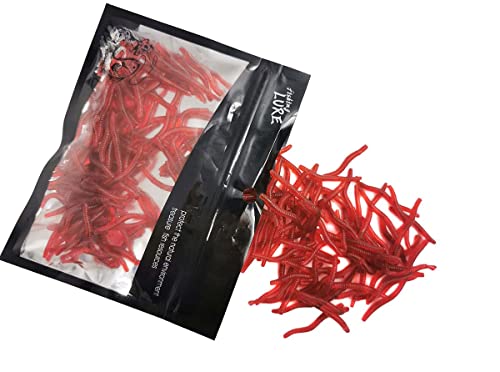
This bait stands out with a 1.6-inch earthworm shape and a 200-piece pack. The soft plastic is reusable, and the maker describes a floating formula intended to disperse scent. Its compact length suits anglers looking for a small red worm imitation that can be carried in quantity. The maker also says the bait creates swimming action for multiple fish species. At 1.6 inches, the profile is much shorter than a typical bass worm, so choose another style if you want a longer worm presentation.
Bottom line: Pick this if a compact red earthworm profile is your priority.
Soft Plastic Red Worm Baits, 4 cm

The 4-centimeter length and silicone construction distinguish this red worm bait from the shorter maggot-shaped option. The maker describes a lifelike shape and texture with infused scent, along with a flexible, reusable material. It is intended for freshwater use with bass, trout and other fish, making it a fit for anglers who want a worm-like bait rather than a larva imitation. The size is small, however, so anglers seeking a larger bass worm should choose a longer bait. The product name gives a 200 count.
Bottom line: Choose this for a small, scented silicone worm shape.
Red Silicone Maggot Baits, 0.79-Inch

This is the smallest profile here: a red maggot-style bait measuring about 0.79 inch, stretchable to about 1 inch. The 50-piece pack is made from PVC, and the maker says it can be used alone or alongside natural or synthetic bait. Its compact size is aimed at trout, crappie, bluegill and carp, so it suits anglers looking for a larva imitation rather than an earthworm shape. The narrow profile is less suitable when the goal is a longer, conspicuous worm presentation.
Bottom line: Pick this for a compact maggot imitation and small-fish presentations.
How to choose red worm fishing lures
Start with bait length and profile: an earthworm-shaped bait presents differently from a compact maggot imitation. Small larvae imitations are commonly about 0.5 to 1 inch, while finesse worms often run several inches; choose a short bait for small hooks and a longer bait when you want a more visible worm silhouette. Hook gap matters too: the hook should leave enough open space to catch the fish rather than being buried in a thick fold of plastic. With a bait under 1 inch, use a proportionally small hook and avoid crowding the point. Check the bait’s length against the hook and target species before rigging.
| Presentation | Best suited profile | Rigging note |
|---|---|---|
| Maggot imitation | About 0.5–1 inch | Use a small hook with an open gap |
| Earthworm imitation | About 1.5–4 inches | Match hook size to bait thickness |
| Finesse bass worm | Several inches | Can be rigged weightless or with a light weight |
Red worm bait shapes and rigging
Use the hook placement to control how a soft plastic moves. A wacky rig hooks a worm through its middle so both ends can move; a Texas rig places the point back into the bait, helping reduce snags around weeds and cover. Small larva shapes can also be threaded straight onto a hook for a compact presentation. A weightless rig falls more slowly than a weighted rig, while added weight helps reach deeper water or maintain contact in current. Keep the hook point exposed or lightly skin-hooked where cover allows, and bury it only as much as needed to limit snags.
Match red worm lures to fish and water
Small panfish and trout commonly take compact larva-like baits, while bass anglers often use longer soft plastic worms; match the imitation to the size of forage and fish in the water. Clear water generally rewards a more restrained presentation, while stained water may call for a bait that is easier to notice, but color alone does not guarantee a strike. In current, a little added weight can keep a bait near the intended depth; in shallow water, a weightless bait can fall more slowly. Keep the bait attached securely and check it after strikes, since a torn or bunched plastic can change its action.
Frequently Asked Questions
How long should a red worm fishing lure be?
Small larva imitations are often about 0.5 to 1 inch, while earthworm imitations are commonly around 1.5 to 4 inches. Choose a length that fits the target fish and leaves room for the hook to work.
Can red worm lures be used without live bait?
Yes, soft plastic worm and maggot imitations are designed to fish as artificial baits. Rig the plastic securely and check it after a strike to make sure it has not shifted over the hook point.
What is the difference between wacky and Texas rigging?
A wacky rig hooks the worm near its middle so both ends move freely. A Texas rig places the hook point into the plastic, which helps reduce snags in weeds and cover.
What hook size works for small worm lures?
Match the hook to bait thickness so the hook gap remains open rather than buried in plastic. For baits under 1 inch, a proportionally small hook helps avoid overwhelming the imitation.
Should I add weight to an artificial worm bait?
Use weight when you need the bait to reach deeper water or stay down in current; fish weightless in shallow water when a slower fall is useful. Keep the weight light enough that the bait still moves naturally.