
Best Sliding Glass Door Pool Safety Latches Compared

For a glass pool gate, 316 Stainless Steel Glass Pool Gate Latch is the closest match because it is designed as an automatic self-locking latch for glass-to-glass installation. Confirm that your gate is compatible with its required hole and glass thickness; the other choices are secondary sliding door security locks, not pool gate latches.
We earn a commission if you buy through links on this page. As an Amazon Associate I earn from qualifying purchases. Products are compared on manufacturer specifications, not hands-on testing.
- Best overall: 316 Stainless Steel Glass Pool Gate Latch – A magnetic, automatic self-locking glass-to-glass latch made for swimming pool gates.
- Best for uneven doors: HBL Sliding Door Loop Lock, 2-3/8-Inch – Its loop bar can be rotated through 0°–180° and is described as suitable for uneven or warped doors.
- Best for tool-free add-on security: Burglabar Clear Sliding Door Lock, 2-Pack – A clear hinge-style secondary lock that requires 3/8-inch clearance between the panels.
| Product | Best for | Glass thickness or clearance | Locking style | Material | Shop |
|---|---|---|---|---|---|
| 316 Stainless Steel Glass Pool Gate Latch | Glass pool gates | 5/16–11/16 in. glass | Magnetic, self-locking | 316 stainless steel | Check Price on Amazon |
| HBL Sliding Door Loop Lock, 2-3/8-Inch | Uneven sliding doors | — | Rotating loop latch | Hardened steel | Check Price on Amazon |
| Burglabar Clear Sliding Door Lock, 2-Pack | Clearance-fit sliders | 3/8 in. clearance | Hinge-style lock | — | Check Price on Amazon |
| Double Bolt Sliding Glass Door Lock, 2-Pack | Dual-point locking | — | Dual-point deadbolt | Aluminum, steel bolts | Check Price on Amazon |
| SKKKBA Sliding Door Loop Latch, 2.36-Inch | Multi-door loop lock | — | 90°/180° loop latch | Zinc alloy, stainless steel | Check Price on Amazon |
Sliding Glass Door Pool Safety Latches
Compare the glass gate latch with secondary sliding door locks, and match the hardware to the job it can actually do.
316 Stainless Steel Glass Pool Gate Latch

Unlike the other choices, this latch is specifically made for a swimming pool glass gate and is designed for glass-to-glass mounting. It fits glass 5/16 to 11/16 inch thick and requires a 3/8-inch hole; the maker says the magnetic latch locks automatically. The 316 stainless steel construction suits a gate exposed to moisture. Choose it when the gate and hole dimensions match. Its glass-to-glass design is a limitation for framed or conventional sliding patio doors, and it should not be treated as a complete pool barrier by itself.
Bottom line: Pick this for a compatible glass pool gate; verify the gate’s hole and thickness before installation.
HBL Sliding Door Loop Lock, 2-3/8-Inch
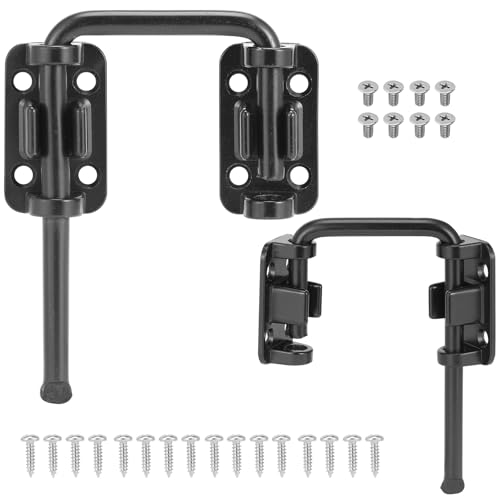
This is a secondary sliding door lock rather than a pool-gate latch, and its rotating loop is the distinguishing feature. The maker says it can be positioned at angles from 0° to 180° and used on uneven or warped doors; the product name gives a 2-3/8-inch size. The two-pack suits someone seeking extra resistance to opening a household slider. It is not described as self-closing or as a pool gate lock, so it should not replace hardware intended to secure a pool barrier.
Bottom line: Choose it only as supplemental security for an uneven household slider, not as a pool gate latch.
Burglabar Clear Sliding Door Lock, 2-Pack

Unlike the adjustable loop locks, this clear hinge-style device depends on a specific gap between the moving door frame and fixed glass pane. It is sold as added security for sliding patio doors and sash windows, and the maker specifies 3/8 inch of clearance; the maker also describes installation as requiring no tools. Measure that gap before choosing it. The clearance-dependent fit and secondary-security purpose make it unsuitable as a substitute for a self-closing, self-latching pool gate.
Bottom line: Pick it for a compatible slider needing an unobtrusive secondary lock, not for pool-barrier compliance.
Double Bolt Sliding Glass Door Lock, 2-Pack

This surface-mounted dual-point deadbolt differs from the simple loop latches by using two vertical steel locking rods that engage a frame retainer. The product uses solid aluminum construction with steel bolts and operates mechanically without batteries or wiring. The maker claims it withstands more than 1,000 pounds of forced-entry load tension. It may suit a buyer looking for added resistance on a sliding door, but it is not presented as a self-closing pool gate latch; its forced-entry claim does not establish pool-barrier suitability.
Bottom line: Choose it for supplemental mechanical security on a slider, not to secure a pool gate on its own.
SKKKBA Sliding Door Loop Latch, 2.36-Inch

This single loop latch is described for several door types, including patio, screen, RV, and barn doors; unlike the two-pack loop option, it is sold as one piece. Its name gives a 2.36-inch size and describes 90°/180° positioning. The maker says the latch uses zinc alloy and stainless steel components and installs without drilling. Its broad door-use positioning does not make it a pool gate safety latch, so use it only as added security where the mounting arrangement fits.
Bottom line: Pick it for a compatible household or screen door as an add-on, not as pool-safety hardware.
How to choose a sliding glass door pool safety latch
Start by deciding whether the opening is a pool barrier gate or a household patio slider: those are different jobs. A pool gate needs a self-closing, self-latching arrangement; an extra loop or deadbolt on a patio door is not a substitute for that gate function. For glass-to-glass mounting, compare the latch’s accepted glass thickness and hole requirement with the gate before selecting hardware. The glass latch here fits 5/16–11/16-inch glass and calls for a 3/8-inch hole. If the gate is framed, do not assume a glass-mounted latch will fit. Pool barrier rules vary by jurisdiction, so confirm local requirements for gate swing, closure, and latch placement.
Pool gate latch placement and barrier fit
Pool gate safety depends on the barrier as a system, not just the latch. Common U.S. residential pool guidance calls for a barrier at least 48 inches high, with openings that do not allow a 4-inch sphere through; local codes can be stricter. Many codes also require the gate to close and latch automatically, and specify latch location or accessibility. Check the rules that apply to your property before drilling or relocating hardware. A latch advertised for glass gates does not establish that the full barrier meets code. Avoid choosing a secondary door lock as the only measure separating a pool from children.
Glass thickness, holes, and clearance
Measure the actual mounting surface before buying glass or slider hardware. The pool gate latch fits 5/16–11/16-inch glass and requires a 3/8-inch hole, so an incompatible pane or hole position can rule it out. The clear Burglabar instead depends on a 3/8-inch gap between the moving door frame and fixed glass. These measurements are not interchangeable: glass thickness describes the pane, while clearance describes the space between surfaces. Measure at the intended mounting point, and do not drill tempered glass unless the panel is manufactured with the required hole; drilling after tempering can cause it to shatter.
Pool gate latches versus sliding door add-on locks
A pool gate latch and a patio slider security lock serve different purposes. The gate latch is intended to catch automatically between glass panels, while loop, hinge, and deadbolt products add resistance to opening a sliding door. Use the table to separate the hardware by function before choosing.
| Hardware type | Primary job | Key fit check |
|---|---|---|
| Glass pool gate latch | Automatic gate latching | Glass thickness and hole |
| Loop or hinge lock | Secondary slider security | Door geometry or clearance |
| Dual-point deadbolt | Added mechanical resistance | Mounting and frame engagement |
Do not infer pool-code compliance from a product’s security purpose or strength claim. The barrier and gate must satisfy the requirements that apply where they are installed.
Frequently Asked Questions
Can a sliding patio door lock replace a pool gate latch?
No; a patio-door loop or deadbolt is a secondary lock, while pool barriers commonly require a gate that closes and latches automatically. Check local code for the exact gate and latch requirements.
How thick can the glass be for a pool gate latch?
The glass gate latch covered here is sized for panes 5/16 to 11/16 inch thick. It also requires a 3/8-inch hole, so check both measurements against the gate before installation.
How much clearance does a Burglabar need?
The maker calls for 3/8 inch between the front sliding door frame and the back fixed glass pane. Measure that gap at the intended mounting position because the lock depends on clearance rather than glass thickness.
Can tempered glass be drilled after installation?
Do not drill tempered glass after it has been tempered; drilling can make the pane shatter. If a glass gate needs a hole, confirm the hole location and size with the glass supplier before the panel is made.
What height should a pool barrier be?
Common U.S. residential pool guidance uses a barrier at least 48 inches high, but local codes may require more or set other measurements. Verify the rules for your jurisdiction before installing or altering a pool gate.