
Best Ultrasonic Rabbit Repeller: 5 Yard Options Compared

360° Solar Ultrasonic Repellent, 2-Pack suits most people seeking an ultrasonic rabbit repeller because its three PIR sensors provide 360-degree motion detection up to 32 feet. Choose another option if you want a detection angle, multiple working modes, or a four-device pack.
Ultrasonic repellers use high-frequency sound, often triggered by motion; results can vary, so pair one with a physical barrier where rabbit damage matters.
We earn a commission if you buy through links on this page. As an Amazon Associate I earn from qualifying purchases. Products are compared on manufacturer specifications, not hands-on testing.
- Best overall: 360° Solar Ultrasonic Repellent, 2-Pack – Three PIR sensors cover 360 degrees and detect movement up to 32 feet away.
- Best for adjustable modes: Solar Ultrasonic Repeller with Five Modes – Offers five working modes and three adjustable ultrasonic volume levels.
- Best for multi-point coverage: Solar Ultrasonic Repeller, 4-Pack – Comes as a four-pack, with a 110-degree sensor detecting movement up to 30 feet away.
| Product | Best for | Pack size | Motion detection | Additional deterrent | Shop |
|---|---|---|---|---|---|
| 360° Solar Ultrasonic Repellent, 2-Pack | Wide sensor coverage | 2 devices | 360°; up to 32 ft | Ultrasonic sound | Check Price on Amazon |
| Solar Ultrasonic Animal Repellent, 2-Pack | Defined sensor angle | 2 devices | 150°; 25–30 ft | Ultrasonic sound, flashing LEDs | Check Price on Amazon |
| Solar Ultrasonic Repeller, 4-Pack | Several garden zones | 4 devices | 110°; up to 30 ft | Ultrasonic sound, white flash | Check Price on Amazon |
| Solar Ultrasonic Repeller with Five Modes | Mode flexibility | — | — | Ultrasonic sound, alarm, flashing lights | Check Price on Amazon |
| Broox Solar Animal Repellent | Simple motion response | 1 device | — | Ultrasonic sound, alarm, flashing LED | Check Price on Amazon |
Ultrasonic Rabbit Repellers
Compare the sensor coverage and deterrent features before choosing a placement strategy for your yard.
360° Solar Ultrasonic Repellent, 2-Pack

Three PIR sensors give this two-pack a 360-degree detection field, setting it apart from models with a single stated angle. Each unit detects motion up to 32 feet away and uses solar power. The maker says the device is designed to deter rabbits and other animals in gardens and yards. Its broad sensing field may suit open areas where animals approach from multiple directions; obstacles and placement can still limit detection. Choose a directional model if you need a defined front-facing sensor angle.
Bottom line: Choose this set for open spaces where animals may approach from different directions.
Solar Ultrasonic Animal Repellent, 2-Pack
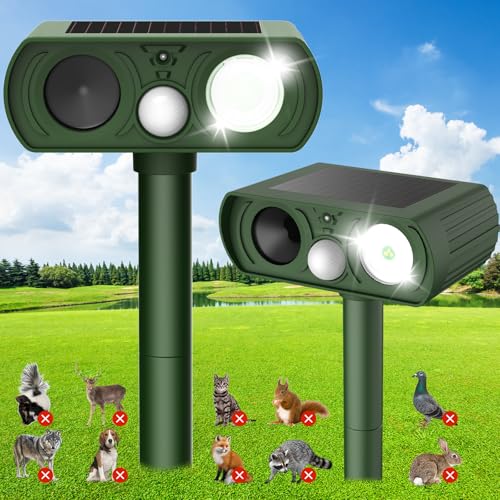
A 150-degree infrared sensor and 25-to-30-foot detection range distinguish this two-pack. Motion activates ultrasonic sound and flashing LED lights, combining two deterrent types in each unit. The maker says it targets rabbits along with several other animals. The pair can serve separate yard areas, but its sensor angle is narrower than an all-around sensing system. Face each unit toward a route where rabbit activity occurs rather than assuming it will detect movement behind it.
Bottom line: Pick this pair when a defined 150-degree approach zone fits your yard.
Solar Ultrasonic Repeller, 4-Pack

This four-pack is the clearest choice for setting up deterrents at several garden approaches, while its single-unit sensor is specified at 110 degrees and up to 30 feet. Motion triggers ultrasonic sound and a white flashing light. The maker says it helps deter rabbits and other animals near beds, shrubs, and young trees. Multiple units allow separate placement, but each sensor has a defined direction; coverage depends on how the units face the paths animals use.
Bottom line: Choose this pack to cover multiple entry points with individually aimed units.
Solar Ultrasonic Repeller with Five Modes

Five working modes and three ultrasonic volume settings distinguish this solar repeller from simpler sensor-triggered designs. Its features also describe variable-frequency alarm sounds and flashing lights, with ultrasonic frequencies ranging from 13.5 to 45.5 kHz. The maker says it is intended to deter rabbits and other animals.
Bottom line: Pick this model if selecting among five modes and adjustable volume matters most.
Broox Solar Animal Repellent
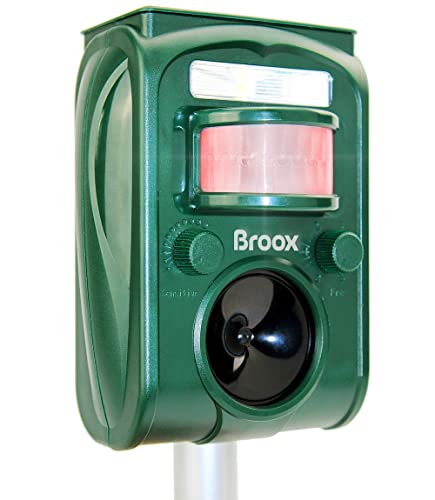
Broox combines motion detection with ultrasonic sound, an alarm, and flashing LED light in a single solar animal repellent. Its housing measures about 4.3 inches on each side and weighs about 0.44 pounds. The maker says the device emits its deterrent response when movement is detected and includes rabbits among its target animals. This may suit someone seeking one compact unit rather than a multi-device pack; no sensor angle or detection distance is available to compare, so confirm those fit requirements before choosing a location.
Bottom line: Choose this single unit if you want a compact motion-triggered deterrent.
How ultrasonic rabbit repellers work
Ultrasonic repellers emit sound above the range most people hear, and many outdoor models activate only after a motion sensor detects movement. The products combine sound with flashing lights or alarms, but no sound frequency guarantees that rabbits will leave: animals can become accustomed to repeated stimuli, and barriers or vegetation can block a sensor’s view. Treat the device as one layer of deterrence, not a rabbit-proof boundary. For dependable protection of a small bed, a physical mesh enclosure is more direct; place an electronic unit facing the route rabbits use and keep the sensor’s view clear.
How to place a repeller in a rabbit-prone yard
Place a motion-activated unit facing a known approach path, with the sensor unobstructed by dense plants, fences, or stored items. A published detection distance is a maximum, not a promise that every small animal will trigger the sensor at that distance; test the intended position and adjust aim if the path is missed. For a long garden edge, overlapping sensor zones or multiple devices can reduce gaps, but coverage still depends on each unit’s angle and obstacles. Avoid pointing flashing lights toward neighboring windows or paths where people may be startled.
When fencing is the better rabbit deterrent
For plants that cannot tolerate repeat browsing, use a physical barrier rather than relying on sound alone. A 2-foot-high fence made of 1-inch mesh is a common garden approach for rabbits; bury the bottom about 6 inches or bend it outward along the ground to discourage digging beneath it. Secure the mesh at ground level and close gaps at gates, since even a short opening can undermine the enclosure. A repeller can supplement a fence around a larger yard, but the fence is the choice when a measurable boundary matters more than discouragement.
| Need | Practical choice |
|---|---|
| Protect a small bed | Mesh enclosure about 2 ft high, with a buried or outward-bent base |
| Discourage use of a route | Motion-activated unit aimed at the approach |
| Cover multiple approaches | Several units positioned so sensor fields overlap |
Common mistakes with rabbit repellers
The most common mistake is treating a device’s maximum detection range as guaranteed coverage. Sensor angle, placement, and obstructions all affect whether movement is detected, so aim the unit toward a route rather than across a solid barrier. Another mistake is using one device to protect several separated beds; a single sensor cannot cover directions outside its field. Rotate or reposition deterrents if activity continues, and pair them with fencing where damage has a high cost. Keep solar panels exposed to daylight as intended and check that the unit remains securely placed after weather or yard work.
Frequently Asked Questions
Do ultrasonic rabbit repellers really work outdoors?
Ultrasonic repellers can discourage some animal approaches, but response varies and rabbits may become accustomed to repeated cues. Use fencing for a physical barrier when protecting a vulnerable bed.
How high should rabbit garden fencing be?
A common garden fence is about 2 feet high with mesh openings around 1 inch. Bury the bottom about 6 inches or bend it outward at ground level to make digging underneath harder.
How far apart should rabbit repellers be placed?
There is no single spacing that fits every yard because sensor angles and obstacles vary. Use each unit’s detection zone as a starting point, aim toward an approach path, and test for missed movement.
Can ultrasonic repellers scare away pets too?
Some devices list cats and dogs among their target animals, so household pets may encounter the sound or flashing lights. Position units away from areas where pets rest or routinely pass.
Do solar rabbit repellers work in shaded gardens?
Solar models need access to daylight to recharge, so heavy shade can limit their practical placement. Position the panel where it receives light while keeping the motion sensor aimed at the animal route.