
Small Electric Water Transfer Pump Options Compared

For small, controlled transfers, Food-Grade Adjustable Water Transfer Pump is the closest fit because its variable flow dial adjusts up to 2 liters per minute. Choose a higher-flow utility pump instead for draining pools or tubs, or a drill-powered attachment if you already have a compatible drill.
A water transfer pump moves liquid through an inlet and discharge hose; flow rate, lift, and liquid compatibility determine whether a compact pump can do the job.
We earn a commission if you buy through links on this page. As an Amazon Associate I earn from qualifying purchases. Products are compared on manufacturer specifications, not hands-on testing.
- Best overall: Food-Grade Adjustable Water Transfer Pump – Adjustable flow up to 2 L/min and food-grade pump head and tube make it suited to controlled liquid transfer.
- Best for brewing: Food-Grade Adjustable Siphon Pump – Food-grade pump head and hose with adjustable speed suit small-batch beverage transfers.
- Best for pool draining: 115V 1/10 HP Utility Transfer Pump – The maker claims a flow rate of 330 gallons per hour and a maximum lift over 42 feet.
| Product | Best for | Maximum flow | Power source | Dimensions (L × W × H) | Shop |
|---|---|---|---|---|---|
| Food-Grade Adjustable Water Transfer Pump | Controlled liquid transfer | 2 L/min | 110V AC | 4.1 × 1.8 × 1.8 in | Check Price on Amazon |
| Food-Grade Adjustable Siphon Pump | Small-batch brewing | 2 L/min | 110–240V | 5.5 × 1.4 × 1.4 in | Check Price on Amazon |
| 115V 1/10 HP Utility Transfer Pump | Pool and tub draining | 330 GPH (5.5 GPM) | 115V AC | 6.1 × 3.15 × 3.15 in | Check Price on Amazon |
| Trupow 115V 1/10 HP Utility Pump | General water draining | 330 GPH (5.5 GPM) | 115V AC | 8.8 × 9.1 × 7.5 in | Check Price on Amazon |
| Milescraft 1314 Drill Pump 750 | Drill-powered transfers | 750 GPH (12.5 GPM) | Drill-powered | 5.5 × 5.13 × 4.25 in | Check Price on Amazon |
Small Electric Water Transfer Pumps
Match the pump’s flow and power source to the liquid and transfer task before choosing a model.
Food-Grade Adjustable Water Transfer Pump

Food-Grade Adjustable Water Transfer Pump stands out for adjustable low-flow control, with a dial that ranges from 0 to 2 L/min. The pump head and tube use food-grade materials, and the package includes two stainless steel filters. The maker says it is self-priming and intended for liquids such as drinking water, wine, juice, and cooking liquids. Its compact 4.1 × 1.8 × 1.8-inch dimensions suit a countertop or storage space. The 2 L/min ceiling is a limitation for anyone trying to drain a pool or move a large volume quickly.
Bottom line: Choose this for controlled transfers of drinking or cooking liquids at modest flow.
Food-Grade Adjustable Siphon Pump
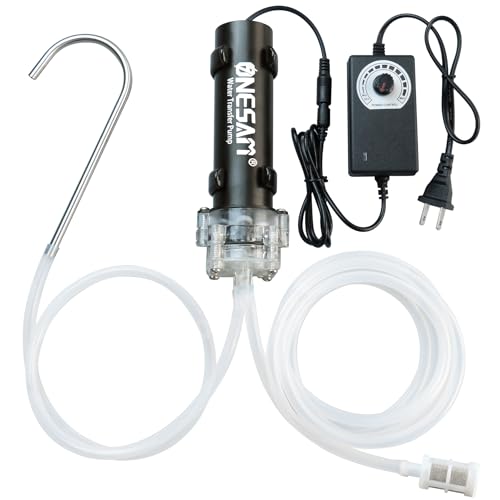
Food-Grade Adjustable Siphon Pump pairs food-grade pump-head and hose materials with an adjustable speed control, making it a compact option for small-batch brewing and other low-volume transfers. The maker claims a maximum output of 2 L/min and describes a copper motor with an aluminum-alloy housing for heat dissipation. Its 5.5 × 1.4 × 1.4-inch dimensions are longer but narrower than Food-Grade Adjustable Water Transfer Pump. The 2 L/min maximum makes this a poor match for fast draining; choose a utility pump when volume matters more than precise, low-flow transfer.
Bottom line: Pick this for a narrow pump format and adjustable flow in small-batch liquid handling.
115V 1/10 HP Utility Transfer Pump

115V 1/10 HP Utility Transfer Pump is a utility pump for draining rather than a food-grade, low-flow transfer pump. Its maker claims a maximum rate of 330 gallons per hour and lift over 42 feet, and the kit includes two 6-foot water hoses. The pump uses a 1/10 HP motor, a zinc-alloy volute, and a waterproof on/off switch. At 5.5 gallons per minute, it moves water much faster than the 2 L/min models, but it is not the right choice when food-grade liquid handling or fine flow adjustment is the priority.
Bottom line: Choose this for water removal where a higher claimed flow and lift are useful.
Trupow 115V 1/10 HP Utility Pump

Trupow 115V 1/10 HP Utility Pump differs from the compact liquid-transfer pumps by focusing on utility draining, with a carrying handle and a discharge thread for a 3/4-inch garden hose. The maker claims a 330-gallon-per-hour rate; the pump has a 1/10 HP motor, stainless-steel construction, carbon-steel housing, and metal hose connectors. Its dimensions are 8.8 × 9.1 × 7.5 inches, larger than the other powered pump bodies here. The model’s utility focus makes it unsuitable for buyers who need food-grade materials or an adjustable 2 L/min flow.
Bottom line: Pick this for a handled utility pump with a garden-hose connection for draining.
Milescraft 1314 Drill Pump 750
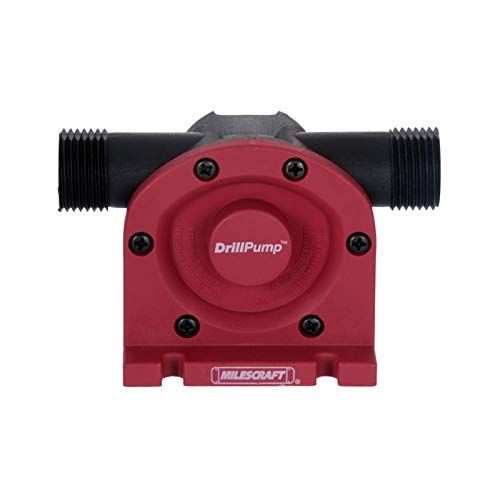
Milescraft 1314 Drill Pump 750 is a drill-powered pump attachment, not a standalone electric pump, and it requires a drill chuck to operate. Its maker claims a maximum rate of 750 gallons per hour, with a 3/4-inch hose connection and a 3/8-inch shank for common drill chucks. The maker explicitly says not to use it with potable water. This is a different fit from the food-grade pumps: avoid it for drinking liquids, and account for the extra drill and post-use silicone-grease maintenance.
Bottom line: Choose this only when you have a compatible drill and are transferring non-potable water.
How to choose a small electric water transfer pump
Start with the needed flow rate: 2 L/min is about 0.53 gallons per minute, while 330 GPH equals 5.5 GPM. For filling a glass or moving a small batch, a dial-controlled pump gives more control than a high-flow utility pump; for draining a pool or tub, prioritize gallons per hour. Also check the pump’s power source and liquid compatibility. Food-grade materials matter for drinking or cooking liquids, but the phrase alone does not establish that every hose, filter, or connection is suitable for every beverage. If the job needs more than 2 L/min, do not select a pump whose maximum is 2 L/min.
Flow rate, lift, and hose fit
Maximum flow is not the same as flow at every hose length or height: a longer discharge run and greater lift generally reduce delivered flow. Compare the pump’s maximum lift with the vertical distance from the water surface to the discharge point, then allow for hose routing. A 3/4-inch garden-hose connection is identified for Trupow 115V 1/10 HP Utility Pump and Milescraft 1314 Drill Pump 750, while 115V 1/10 HP Utility Transfer Pump includes two 6-foot hoses. Before buying, confirm that your hose connections match the pump and that its lift rating covers the job; only 115V 1/10 HP Utility Transfer Pump gives a maximum lift figure here. Keep the intake submerged as directed by the pump design and avoid running a pump dry.
Food-grade pumps versus utility pumps
Food-grade transfer pumps prioritize liquid-contact materials and modest flow, while utility pumps prioritize moving larger volumes of water. That difference changes the right choice: select a food-grade pump for beverage or cooking-liquid handling, and a utility pump for pool or rain-barrel water removal. Drill attachments are another type: they rely on a separate drill rather than a built-in motor. Do not assume a general utility pump is safe for drinking water just because it transfers water. The drill attachment explicitly excludes potable water, and its grease-maintenance requirement adds a step after use.
| Need | Best-matched pump type | Decision point |
|---|---|---|
| Controlled beverage or cooking-liquid transfer | Food-grade adjustable pump | Up to 2 L/min |
| Pool, tub, or rain-barrel draining | Electric utility pump | Compare GPH and lift |
| Non-potable transfer with a drill available | Drill pump attachment | Requires compatible chuck |
Priming and safe pump operation
Self-priming describes a pump’s ability to start moving liquid without manual filling of the pump chamber, but it does not mean the pump can run dry or overcome any lift. Place the intake in the source liquid, secure the discharge hose, and keep electrical connections away from splashes and standing water. Utility pumps are powered equipment: use a properly grounded outlet and a ground-fault circuit interrupter (GFCI) around wet locations, and never handle a plug with wet hands. For a drill pump, follow the attachment’s drill and maintenance requirements; the maker calls for silicone grease after each use and warns against spray lubricants.
Frequently Asked Questions
How much water does a 2 L/min pump move?
A 2 L/min pump moves about 0.53 gallons per minute, or roughly 32 gallons in an hour at its maximum rate. Actual delivered flow can fall with hose length, bends, and lift.
Can a food-grade pump transfer wine or juice?
A pump with food-grade liquid-contact parts may suit wine or juice transfer, but verify that every wetted part, including hoses and filters, is compatible with the specific liquid. Rinse and clean promptly after use to limit residue buildup.
What does self-priming mean on a transfer pump?
Self-priming means the pump can begin moving liquid without manually filling its pump chamber first. It does not remove the need to position the intake correctly or protect the pump from dry running.
Can a drill pump be used for drinking water?
No: the Milescraft drill pump’s maker says it is not for potable water. Use a pump specifically intended for drinking-water contact instead.
How do I choose a pump for draining a pool?
Compare the pump’s gallons-per-hour rating and maximum lift with the volume and vertical distance involved. A 330 GPH equals 5.5 GPM, but real flow decreases as lift and hose resistance increase.