
Merten & Storck Cookware: 5 Options Compared

For the broadest range of everyday tasks, Merten & Storck Tri-Ply 8-Piece Set is the strongest starting point because its eight pieces include frying pans, saucepans and a stock pot. Choose a different option if you need only a skillet, prefer enameled iron for braises, or want a larger frying surface.
These Merten & Storck cookware options span tri-ply stainless steel, pre-seasoned carbon steel and enameled iron; the right material depends on the dishes you cook and the care you want to give it.
We earn a commission if you buy through links on this page. As an Amazon Associate I earn from qualifying purchases. Products are compared on manufacturer specifications, not hands-on testing.
- Best overall: Merten & Storck Tri-Ply 8-Piece Set – The eight-piece set covers frying, saucepans and stock-pot cooking.
- Best for searing: Merten & Storck 10-Inch Carbon Steel Skillet – The 10-inch pre-seasoned carbon-steel skillet is suited to high-heat cooking.
- Best for braising: Merten & Storck Enameled Iron Dutch Oven Set – The set pairs a shallow 3.7-quart braiser with a deeper 5.5-quart Dutch oven.
- Best for large frying: Merten & Storck Tri-Ply 10- and 12-Inch Skillets – The set includes both 10-inch and 12-inch tri-ply frying pans.
| Product | Best for | Type and size | Construction | Oven limit | Shop |
|---|---|---|---|---|---|
| Merten & Storck Tri-Ply 8-Piece Set | Everyday cooking | 8 pieces | Tri-ply stainless steel | 600°F | Check Price on Amazon |
| Merten & Storck 10-Inch Carbon Steel Skillet | High-heat searing | 10-inch skillet | Pre-seasoned carbon steel | — | Check Price on Amazon |
| Merten & Storck Enameled Iron Dutch Oven Set | Braises and stews | 3.7- and 5.5-quart vessels | Enameled iron | — | Check Price on Amazon |
| Merten & Storck Tri-Ply 10- and 12-Inch Skillets | Large frying tasks | 10- and 12-inch skillets | Tri-ply stainless steel | 600°F | Check Price on Amazon |
| Merten & Storck Tri-Ply 3.5-Quart Sauté Pan | One-pan sautéing | 3.5-quart sauté pan | Tri-ply stainless steel | 600°F | Check Price on Amazon |
Merten & Storck Cookware Options
Match the cookware format and material to your regular meals, stovetop and preferred cleanup routine.
Merten & Storck Tri-Ply 8-Piece Set
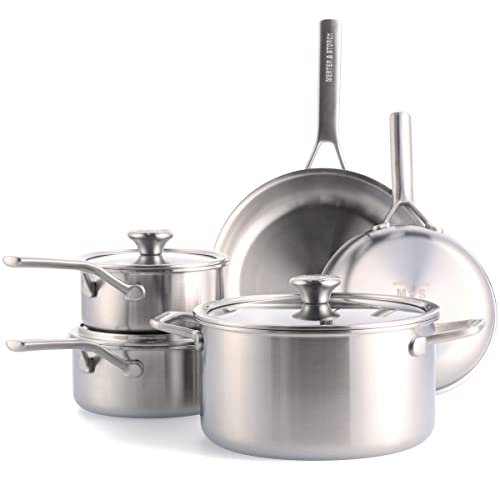
The broadest assortment here is this eight-piece set, which includes 8- and 10-inch frying pans, 1.5- and 2-quart saucepans with lids, and a 6-quart stock pot with lid. Its tri-ply construction has two stainless-steel layers around an aluminum core. The set suits cooks who want several pan shapes in one coordinated group rather than adding pieces individually. Brand says the set is oven- and broiler-safe up to 600°F and dishwasher-safe. The limitation is its smaller frying pan selection; cooks who regularly need a 12-inch surface may prefer a separate larger skillet.
Bottom line: Pick this set if you want frying pans, saucepans and a stock pot together.
Merten & Storck 10-Inch Carbon Steel Skillet
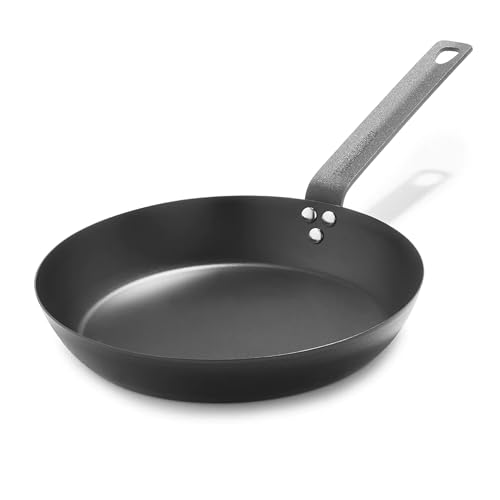
Unlike the stainless-steel choices, this 10-inch skillet is pre-seasoned carbon steel and weighs about 2.65 pounds. Brand says it is ready to cook without additional seasoning, works on induction and other stovetops, and is safe for oven, grill and campfire use. Its lighter build than cast iron may appeal to cooks who want a skillet that is easier to move while searing or browning. Carbon steel needs a different routine from dishwasher-safe stainless: dry it promptly and maintain its seasoning. Its single 10-inch cooking surface is less useful when you need several pots or a broader pan.
Bottom line: Choose it for a versatile 10-inch skillet and a seasoning-based care routine.
Merten & Storck Enameled Iron Dutch Oven Set

This set is the only option here built around two enameled-iron vessels: a wide, shallow 3.7-quart braiser and a deeper 5.5-quart Dutch oven, each with a lid. Brand says the iron heats quickly and evenly and is 30% lighter than the lightest premium cast-iron ovens. The shapes serve different jobs: the braiser offers room for browning before simmering, while the deeper pot accommodates soups and stews. It suits cooks who regularly make slow-cooked dishes. The tradeoff is a heavier, more specialized format than a frying pan or stainless saucepan; it is not the most useful choice for quick skillet meals.
Bottom line: Pick this set for covered braising, soups and longer-cooking dishes.
Merten & Storck Tri-Ply 10- and 12-Inch Skillets

The 12-inch frying pan distinguishes this set from the other stainless-steel options, alongside a 10-inch skillet. Both use tri-ply stainless steel with an aluminum core between two stainless-steel layers, and rounded, encapsulated rims are designed for pouring and draining. Brand says the pans are oven- and broiler-safe up to 600°F and dishwasher-safe. This pair suits cooks who already have pots and saucepans but want two frying surfaces for different batch sizes. It does not include lids or deeper cookware, so buyers seeking a complete cooking set should consider the eight-piece assortment instead.
Bottom line: Choose these pans if you need a 12-inch skillet as well as a 10-inch one.
Merten & Storck Tri-Ply 3.5-Quart Sauté Pan

This single 3.5-quart sauté pan fills the gap between a frying pan and a deeper pot, with a lid and tri-ply stainless-steel body. The aluminum core sits between two stainless-steel layers, and the welded handle leaves a snag-free interior. Brand says it is oven- and broiler-safe up to 600°F and dishwasher-safe. The format suits cooks who want to sauté and continue a dish in the same lidded pan. Unlike the sets, it does not provide other pan sizes, so it is a focused addition rather than a stand-alone range for varied cooking.
Bottom line: Pick this pan for covered sautéing in a single 3.5-quart vessel.
How to Choose Merten & Storck Cookware
Choose cookware by matching its material and shape to the meals you make most often. Tri-ply stainless steel combines stainless cooking surfaces with an aluminum core that spreads heat; it is a practical general-purpose choice for browning, sauces and boiling. Carbon steel is a skillet material that develops a seasoned cooking surface and is suited to high-heat searing, but it needs prompt drying and upkeep. Enameled iron is useful for covered, slower cooking, with a shallow braiser and deeper Dutch oven serving different tasks. As a measurable rule, choose a 12-inch skillet when you regularly cook more than a couple of portions in one layer; crowded food steams instead of browning. If you rarely fry, a lidded sauté pan or pot may be more useful than two skillets.
Cookware Types and Sizes Compared
Pan shape matters as much as material: low, wide vessels expose more food to the cooking surface, while deep pots hold more liquid. Use this chart to map a cooking need to the closest format in this range.
| Cooking need | Useful format | Size cue |
|---|---|---|
| Several everyday tasks | Mixed cookware set | 8 pieces, including 6-quart stock pot |
| Large batches of pan-fried food | Frying skillet | 12-inch pan |
| Sautéing with a lid | Sauté pan | 3.5 quarts |
| Braising and simmering | Braiser and Dutch oven | 3.7 and 5.5 quarts |
For stainless-steel skillets, the 10-inch size is more manageable for smaller portions; choose a 12-inch surface when a wider single layer matters. Capacity in quarts describes volume, not the pan’s usable flat cooking area.
Using Stainless Steel and Carbon Steel
Stainless steel and carbon steel reward different cooking habits. For stainless steel, preheat the pan over moderate heat, add cooking fat, then add dry food; excessive heat can make sticking and scorching more likely. Avoid moving delicate food too soon, since it often releases more readily after a browned crust forms. Carbon steel relies on seasoning, a thin polymerized oil layer that builds with use. Wash it by hand, dry it promptly, and apply a very thin film of cooking oil before storage to reduce rust risk. Do not assume the two materials have identical cleanup: the stainless sets are dishwasher-safe, while the carbon-steel skillet needs more attentive drying and seasoning care.
Care and Safe Heat for Cookware
Use cookware within the temperature limit given for its particular vessel; the tri-ply stainless pieces have an oven and broiler limit of 600°F, while that number should not be transferred to the other materials. For enameled iron, avoid sudden temperature changes: placing a very hot pot under cold water can stress the enamel. Let it cool first and use nonmetal utensils if you want to minimize scratching. Use oven mitts for all hot cookware, including handles that may become hot during stovetop or oven cooking. Before moving a filled pot, check that the handle is secure and that you can lift its combined weight safely; cast-metal and multi-quart vessels can be cumbersome when full.
Frequently Asked Questions
How do I keep stainless steel food from sticking?
Preheat stainless steel over moderate heat, then add cooking fat before the food. Dry ingredients and patience help: browned food often releases more easily once a crust forms.
Does a carbon-steel skillet need seasoning?
Yes, carbon steel uses a seasoning layer that helps create its cooking surface and protect it from rust. Dry the pan promptly after washing and apply a very thin coat of oil before storing.
What size frying pan works for family meals?
A 12-inch skillet gives more room for a single layer than a 10-inch skillet, which helps when browning several portions at once. Avoid crowding food, since trapped moisture can hinder browning.
Can enameled iron go from hot to cold water?
Let enameled iron cool before washing; a sudden temperature change can stress the enamel. Use warm water and avoid abrasive tools that may scratch its surface.
Can I use stainless steel cookware under a broiler?
The tri-ply stainless pieces in this range are rated for broiler use up to 600°F. Use oven mitts when removing hot cookware, and do not apply that temperature limit to other materials.