
UV Spray for Artificial Plants: 4 Options Compared

For artificial plants made with plastic or rubber, UV Protection Spray for Outdoor Surfaces is the closest match because its maker names artificial plants and promises a non-greasy matte finish. Choose SUNGUARD Outdoor Decor UV Protectant, 2-Pack instead for broader garden décor coverage, or another option if its material compatibility better matches your plant.
UV protectant sprays are surface coatings intended to help reduce sun-related fading; compatibility with the plant’s exact materials and finish should decide your choice.
We earn a commission if you buy through links on this page. As an Amazon Associate I earn from qualifying purchases. Products are compared on manufacturer specifications, not hands-on testing.
- Best overall: UV Protection Spray for Outdoor Surfaces – Its maker explicitly names artificial plants and describes a matte, non-greasy finish.
- Best for garden décor: SUNGUARD Outdoor Decor UV Protectant, 2-Pack – The maker names a broad range of outdoor décor materials and gives a 25-square-foot coverage figure per can.
- Best for matte finish: 303 Aerospace Protectant, 10 oz – It covers plastic and rubber and dries to a smooth matte finish.
| Product | Best for | Compatible surfaces | Finish | Volume or coverage | Shop |
|---|---|---|---|---|---|
| UV Protection Spray for Outdoor Surfaces | Artificial plant use | Vinyl, plastic, rubber, PVC, fiberglass | Matte | — | Check Price on Amazon |
| SUNGUARD Outdoor Decor UV Protectant, 2-Pack | Garden decorations | Resin, wood, cement, metal, plastic | Clear semi-gloss | 25 sq. ft. per can | Check Price on Amazon |
| 303 Aerospace Protectant, 10 oz | Matte surface care | Vinyl, plastic, rubber, PVC, metal, gel coat | Smooth matte | 10 fl. oz. | Check Price on Amazon |
| Marinamax Ultimate UV Protectant, 32 oz | Larger surface areas | Vinyl, rubber, plastic | Clear matte barrier | 32 fl. oz. | Check Price on Amazon |
UV Sprays for Artificial Plants
Compare material compatibility and finish first, then match the spray’s application directions to your plant.
UV Protection Spray for Outdoor Surfaces
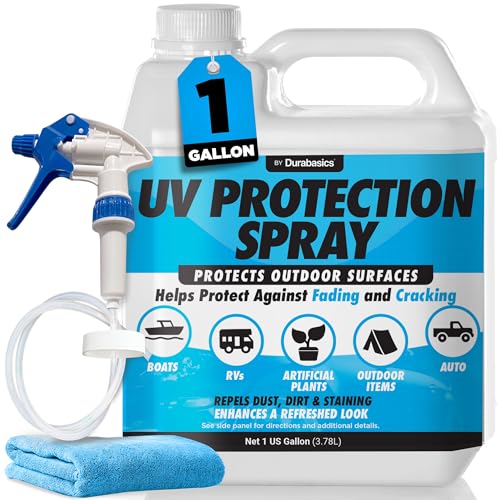
UV Protection Spray for Outdoor Surfaces is the only option here whose maker explicitly names artificial plants, making it the clearest fit for foliage made from compatible plastic or rubber. The maker says it helps reduce fading and cracking and leaves a non-greasy matte finish. Its directions call for cleaning, spraying, and wiping, and the package includes a sprayer and towel. The use spans several surface types, but that does not establish compatibility with every leaf coating or fabric. Test a hidden spot first if the plant has mixed materials or a delicate finish.
Bottom line: Choose this if your artificial plant is made from compatible plastic or rubber and you want a matte finish.
SUNGUARD Outdoor Decor UV Protectant, 2-Pack

SUNGUARD Outdoor Decor UV Protectant, 2-Pack stands out for its coverage figure and broad garden décor material range, including plastic and resin. Its maker says one can covers 25 square feet on non-porous surfaces and dries to the touch in 15 minutes or less, leaving a clear semi-gloss finish. That makes it a plausible option for compatible outdoor plant pots or décor, but the maker does not name artificial plants specifically. The semi-gloss appearance may also differ from the original look of foliage, so test a concealed section before treating visible leaves.
Bottom line: Choose this for compatible garden décor when a clear semi-gloss finish is acceptable.
303 Aerospace Protectant, 10 oz
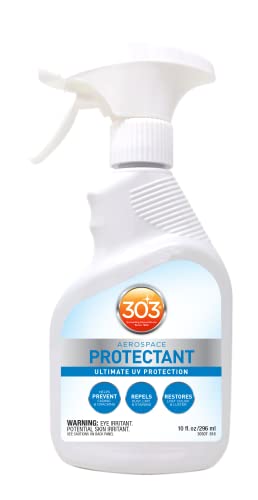
303 Aerospace Protectant, 10 oz provides a specified outdoor reapplication interval, unlike the other options here: its maker recommends applying every 3 to 5 weeks for maximum outdoor protection. The formula is intended for vinyl, plastic, rubber, and several other surfaces, and the maker says it dries to a smooth matte finish. Those materials make it relevant to some artificial plants, but the maker does not call out artificial foliage. Spray only a clean, dry surface out of direct sun, wipe it completely dry, and first check that the finish remains unchanged on a hidden area.
Bottom line: Choose this for compatible plastic or rubber surfaces if a defined reapplication interval is useful.
Marinamax Ultimate UV Protectant, 32 oz

Marinamax Ultimate UV Protectant, 32 oz comes in a 32-fluid-ounce size and is described as suitable for vinyl, rubber, and plastic, making it relevant to artificial foliage made from those materials. Its maker says the spray creates a clear matte barrier and helps protect against fading, drying, cracking, discoloration, dirt, dust, and stains. If a plant combines coated fabric with plastic stems, test each material separately before applying it broadly.
Bottom line: Choose this when the plant’s materials match and you want the larger stated bottle size.
How to Choose UV Spray for Artificial Plants
Material compatibility and the final sheen are the two key filters for choosing an artificial-plant protectant. Foliage may combine molded plastic leaves, fabric, wire, and painted or coated surfaces, so a spray suited to plastic does not automatically suit every part of one plant. Match the maker’s surface list to the material you intend to treat, then try the spray on a hidden leaf or stem and let it dry before deciding whether the appearance works.
Matte finishes tend to preserve a less reflective look, while semi-gloss finishes can make leaves look shinier. If keeping a natural-looking appearance is the priority, favor a product that identifies a matte finish and test it in daylight. Never assume that a UV claim means the product is safe for every synthetic fiber, adhesive, or painted surface.
Applying Protectant to Artificial Foliage
Start with clean, dry foliage and apply the coating lightly in a ventilated area away from direct sun. Dust and grime can interfere with an even finish; a soft brush or dry microfiber cloth is a practical first pass for delicate leaves. Follow the product’s spray-and-wipe directions when provided, and avoid soaking seams, glued joints, or the plant’s base.
Test a concealed section before coating the full plant: wait until it dries, then check for tackiness, color change, stiffness, or shine. Keep spray off nearby flooring and furniture, and keep the treated plant away from flame or heat while applying aerosol products. Outdoor exposure, rain, and cleaning can affect how long a coating remains useful, so do not assume a universal service interval.
Matte and Semi-Gloss Protectant Types
Finish is a useful way to separate these protectant types, but compatibility still comes first. A matte coating is generally the better starting point when artificial leaves already have a low-sheen surface; semi-gloss can visibly change their appearance. Coverage figures also apply only to the surfaces and conditions stated by the maker, not automatically to irregular foliage with overlapping leaves.
Use this quick comparison to narrow the finish and coverage choice before a hidden-area test.
| Need | Useful product characteristic | What to check |
|---|---|---|
| Keep a low sheen | Matte finish | Test for changes to leaf color and texture |
| Know a coverage rate | Coverage per can | Confirm the figure applies to the surface type |
| Treat mixed-material foliage | Broad surface compatibility | Test each material separately |
Common Mistakes When Protecting Artificial Plants
The most common mistake is treating every artificial plant as if it were made from one material. Leaves, stems, and decorative finishes can react differently, so a small hidden-area test is more informative than the product category alone. A second mistake is spraying too heavily: excess coating can collect between leaves or leave a sticky-looking surface rather than an even finish.
Do not treat claimed UV protection as a substitute for shade or indoor storage when a plant is exposed to intense sun for long periods. Direct sun can fade synthetic colors over time, and outdoor conditions can also deposit dust and moisture. Keep the label’s application directions with the product and use only its compatible surfaces.
Frequently Asked Questions
Can I use car protectant on artificial plant leaves?
Some protectants made for plastic or rubber may suit leaves made from those materials, but compatibility is not universal. Test a hidden leaf and let it dry fully before treating visible foliage.
Should artificial plants be clean before spraying?
Yes, start with dry, dust-free surfaces so the coating can be applied evenly. A soft brush or microfiber cloth helps remove loose dust without saturating the leaves.
How often should I reapply UV spray outdoors?
The interval depends on the specific product; one spray here recommends reapplication every 3 to 5 weeks for maximum outdoor protection. Rain, sun exposure, and cleaning can affect the coating, so use only a product’s interval.
Can UV spray protect every part of an artificial plant?
No, artificial plants can combine plastic, fabric, wire, paint, and adhesive, while protectants identify only certain compatible surfaces. Treat only materials covered by the product’s compatibility and test them separately.