
Carquest Premium Gold Brake Pads: Fit and Alternatives

Carquest Premium Gold Ceramic Rear Pads is the closest match for Carquest Premium Gold brake pads because it is a ceramic rear-pad set for 2017–2023 Chrysler Pacifica and Voyager models. Choose another option if your vehicle or axle does not match that application; the alternatives have different listed vehicle fits.
We earn a commission if you buy through links on this page. As an Amazon Associate I earn from qualifying purchases. Products are compared on manufacturer specifications, not hands-on testing.
- Best overall: Carquest Premium Gold Ceramic Rear Pads – Ceramic rear pads fit the 2017–2023 Chrysler Pacifica and Voyager applications and include hardware for most applications.
- Best for Infiniti fit: Akebono ACT905A Ceramic Rear Pads – This ceramic rear-pad set lists compatibility with Infiniti vehicles from 2003 through 2024.
- Best for front fit: Bosch Blue BE866H Ceramic Front Pads – The ceramic front-pad set lists select Chrysler, Dodge, Jeep, and Mitsubishi applications.
| Product | Best for | Axle | Material | Vehicle fit | Shop |
|---|---|---|---|---|---|
| Carquest Premium Gold Ceramic Rear Pads | Pacifica and Voyager | Rear | Ceramic | Chrysler Pacifica, Voyager, 2017–2023 | Check Price on Amazon |
| Akebono ACT905A Ceramic Rear Pads | Infiniti rear brakes | Rear | Ceramic | Infiniti, 2003–2024 | Check Price on Amazon |
| Bosch Blue BE866H Ceramic Front Pads | Select front applications | Front | Ceramic | Select Chrysler, Dodge, Jeep, Mitsubishi | Check Price on Amazon |
| ACDelco Gold 17D1707CH Rear Pads | ACDelco rear fit | Rear | Ceramic, semi-metallic, or organic | Vehicle fit varies | Check Price on Amazon |
| Bendix Premium SBC2371 Ceramic Front Pads | Select newer vehicles | Front | Ceramic | Select Buick, Cadillac, Chevrolet, GMC, Honda | Check Price on Amazon |
Carquest Premium Gold Brake Pads and Alternatives
Match the pad set to your vehicle, axle, and braking system before comparing construction or features.
Carquest Premium Gold Ceramic Rear Pads
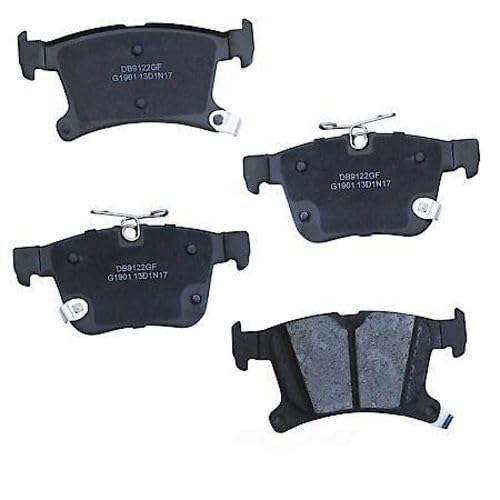
For the Pacifica and Voyager applications, this Carquest set is a ceramic rear-pad replacement with installation hardware included for most applications. Its powder-coated backing plate is intended to resist corrosion, while the maker says the multi-layer shims, slots, and chamfers support quiet braking. The pads are application-specific, so confirm the vehicle year, trim, and rear brake fit before ordering if your Pacifica or Voyager falls near a model-year or configuration change. This set is not a match for front brakes or other vehicle applications.
Bottom line: Choose this set for a 2017–2023 Pacifica or Voyager rear-brake replacement.
Akebono ACT905A Ceramic Rear Pads

Unlike the Chrysler-specific Carquest set, the Akebono ACT905A is identified as a ceramic rear disc pad for Infiniti vehicles across the 2003–2024 range. Its package measures 6.5 by 3.75 by 3.15 inches and weighs 1.85 pounds; those are package dimensions, not confirmation of pad fit. The broad year range makes vehicle-specific verification especially important, since brake configurations can vary by model and trim. Choose this only when the exact Infiniti application and rear axle match.
Bottom line: Choose it only for a confirmed Infiniti rear-pad application.
Bosch Blue BE866H Ceramic Front Pads

Bosch Blue BE866H Ceramic Front Pads is the front-axle alternative in this group, in contrast with the rear-pad options from Carquest, Akebono, and ACDelco. Bosch says its platform-specific ceramic friction formulation is designed for stopping performance and reduced fade; the set also uses a multilayer shim and rust-inhibitive backing-plate coating. Its compatibility name includes select Chrysler 200, Dodge Avenger and Caliber, Jeep Compass and Patriot, and Mitsubishi Eclipse and Outlander applications. Model and trim still matter, so verify the precise front brake fit rather than relying on brand alone.
Bottom line: Pick it for a confirmed compatible front-brake application.
ACDelco Gold 17D1707CH Rear Pads

ACDelco Gold 17D1707CH Rear Pads is a rear disc-pad set with a different emphasis from the Carquest application-specific ceramic set: ACDelco names several possible friction formulas across its applications. Its integrally molded friction material bonds to the backing plate, and the maker says the shims, slots, and chamfers help reduce noise and vibration. The product name does not identify a vehicle application, so do not assume it fits the Pacifica, Voyager, or any other car without checking the exact application. It also differs from the front-axle Bosch and Bendix sets.
Bottom line: Choose it when its exact rear-pad application and friction formula are confirmed.
Bendix Premium SBC2371 Ceramic Front Pads

Bendix Premium SBC2371 Ceramic Front Pads offers another front-axle ceramic option, but its applications differ from the Carquest Chrysler rear fit and the Bosch front fit. The named applications include select Buick Enclave, Cadillac LYRIQ, XT5 and XT6, Chevrolet Blazer and Colorado, GMC Acadia, and Honda Prologue vehicles. Some entries include year, chassis, or brake-code limits, so verify those qualifiers along with the exact vehicle before selecting the set. The maker says the pads are designed to OE specifications and to reduce fade; this set is not a rear-pad substitute.
Bottom line: Choose it for a listed, verified compatible front-brake application.
How to choose brake pads by axle and fit
Start with the vehicle application and axle: a front pad set cannot replace a rear set, even when both are ceramic. Match year, make, model, trim, and any brake-package or VIN qualifiers, then check whether the box includes installation hardware. Ceramic, semi-metallic, and organic compounds differ in noise, dust, wear, and heat behavior; no one material is automatically right for every vehicle. Front pads often wear faster because braking transfers load forward, but driving conditions and brake design change wear. Replace pads as an axle pair rather than mixing a new pad on one side with a worn pad on the other. If the vehicle fit cannot be confirmed from the application information, confirm the exact fit before ordering.
When brake pads need inspection or replacement
Inspect pad thickness during routine tire service; many shops recommend checking brakes about every 6 months, with more frequent checks for heavy city traffic, towing, or mountain driving. A common replacement threshold is around 3 mm of friction material, but the vehicle maker’s service limit takes precedence. Measure the friction material itself, not the steel backing plate. A squeal can come from a wear indicator, while grinding, a pulling vehicle, or a changed pedal feel calls for prompt inspection rather than waiting for a routine interval. Pads should be changed on both sides of the same axle, and the rotor should be checked for thickness, scoring, and heat damage. Rotor thickness must remain above its stamped minimum after any resurfacing.
Brake pad materials and construction
Ceramic pads use ceramic-based friction material and are commonly chosen for everyday passenger vehicles, while semi-metallic compounds contain metal fibers and can suit some heavier-duty or high-heat uses. Organic pads are generally softer, but vehicle design determines which compound is appropriate. Shims, slots, and chamfers are design features that can help manage vibration, noise, and contact behavior; they do not make an incorrect pad fit. Hardware can include clips or other small mounting pieces, but the exact contents vary by application. A pad set must match the caliper shape, rotor diameter, and wear-sensor arrangement. Use the vehicle’s specified pad type and do not treat ceramic as a universal upgrade.
What to check during a brake-pad job
Replace pads in axle pairs and inspect both rotors and calipers before reassembly. A stuck caliper slide or damaged boot can cause uneven wear even with new pads, and a rotor below its minimum thickness cannot be made safe by fitting fresh pads. Keep friction surfaces free of grease and brake fluid; contamination can reduce braking performance. After installation, the hydraulic system may need proper pedal pumping before the vehicle moves, and new pads may require a bedding procedure specified for that pad and vehicle. Never drive if the brake pedal remains soft, a warning light stays on, or braking behavior changes unexpectedly; have the system checked before continuing.
Frequently Asked Questions
Can ceramic brake pads replace semi-metallic pads?
Only when the vehicle application permits that compound. Pad shape, rotor and caliper design, and the manufacturer’s friction-material specification matter more than material preference.
How thick should brake pads be before replacement?
Around 3 mm of friction material is a common replacement point, but use the vehicle maker’s service limit when it differs. Measure the friction lining, not the backing plate.
Do front brake pads usually wear faster than rear pads?
Often, because braking transfers more load toward the front wheels. Towing, driving conditions, brake design, and a sticking caliper can change which axle wears sooner.
Should brake rotors be replaced with new pads?
Not automatically; inspect rotor thickness and condition against the vehicle’s minimum specification. Replace or resurface only when the rotor remains within its permitted thickness and has no disqualifying damage.
How often should brake pads be inspected?
A roughly six-month inspection is a common maintenance cadence, often paired with tire service. Check sooner after heavy towing, frequent hard braking, grinding, pulling, or a change in pedal feel.