
Clear Coat for Acrylic Paint: 4 Finishes Compared

For a glossy clear coat on acrylic paintings and crafts, Clear Acrylic Paint Sealer, High Gloss is the best fit because it is a brush-on varnish made for canvas, painted rocks and wood. Choose a different finish if you need a spray application or a varnish that can be mixed with matte varnish to adjust sheen.
We earn a commission if you buy through links on this page. As an Amazon Associate I earn from qualifying purchases. Products are compared on manufacturer specifications, not hands-on testing.
- Best overall: Clear Acrylic Paint Sealer, High Gloss – Brush-on gloss varnish is made for acrylic artwork and crafts, including canvas, painted rocks and wood.
- Best for adjustable sheen: Liquitex BASICS Gloss Varnish, 250 ml – The gloss varnish can be mixed with matte varnish to vary the finish.
- Best for small projects: Bluebird Gloss Acrylic Varnish, 3.4 fl oz – The 3.4-ounce water-based varnish suits canvas, rocks, miniatures and crafts.
- Best for spray application: Aleene’s Spray Acrylic Sealer, Gloss, 6 oz – The 6-ounce aerosol sealer applies as a clear gloss finish.
| Product | Best for | Application | Finish | Size | Shop |
|---|---|---|---|---|---|
| Clear Acrylic Paint Sealer, High Gloss | Glossy craft projects | Brush-on | High gloss | — | Check Price on Amazon |
| Liquitex BASICS Gloss Varnish, 250 ml | Sheen adjustment | Brush-on | Gloss | 8.4 fl oz | Check Price on Amazon |
| Bluebird Gloss Acrylic Varnish, 3.4 fl oz | Small craft work | Brush-on | Gloss | 3.4 fl oz | Check Price on Amazon |
| Aleene’s Spray Acrylic Sealer, Gloss, 6 oz | Spray-on sealing | Spray | Gloss | 6 oz | Check Price on Amazon |
Clear Coat for Acrylic Paint
Choose by the surface you are sealing, the sheen you want and whether you prefer brushing or spraying.
Clear Acrylic Paint Sealer, High Gloss
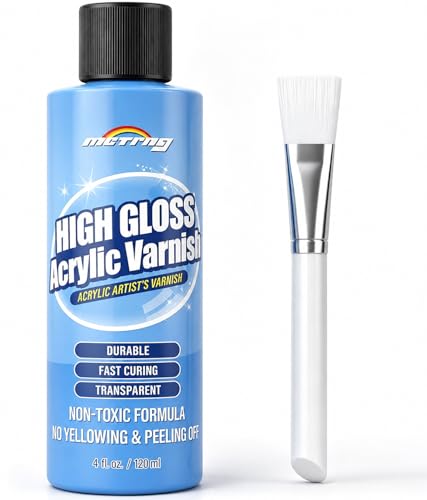
For a brush-on high gloss finish, this sealer is made for acrylic paintings and crafts such as canvas, painted rocks and wood. Its self-leveling formula is intended to reduce brush marks and bubbles, and the maker says it dries fast and non-yellowing. Apply thin, even coats for a clear, reflective finish. The product suits artists who want shine and brush control across several craft surfaces. Its gloss sheen is a limitation for anyone seeking a matte or low-sheen appearance.
Bottom line: Pick this when a brush-on, high gloss coat is the priority.
Liquitex BASICS Gloss Varnish, 250 ml

Among these brush-on varnishes, this one offers a way to adjust sheen: the maker says its gloss varnish may be mixed with matte varnish. The 8.4-ounce bottle is intended to protect finished paintings, and the maker says it dries clear and non-yellowing. The flexible, non-tacky hard surface and ACMI certification are useful distinctions for art users and educational settings. Apply with a large soft brush, as the maker recommends. This is a gloss product on its own, so a matte finish requires the separate matte varnish.
Bottom line: Choose this if you want to blend gloss with matte varnish to vary sheen.
Bluebird Gloss Acrylic Varnish, 3.4 fl oz

The 3.4-ounce size makes this brush-on gloss varnish a compact option for small craft projects. It is formulated for acrylic work on canvas, paper, wood panels, painted rocks, miniatures and mixed media. The maker says it is water-based, non-yellowing and anti-crazing, and recommends one or two thin coats applied in one direction, letting each coat dry fully. That makes it a fit for hobbyists working across varied surfaces. The bottle is smaller than the 8.4-ounce option, which matters for larger canvases or frequent use.
Bottom line: Pick this for smaller projects across several craft surfaces.
Aleene’s Spray Acrylic Sealer, Gloss, 6 oz

This aerosol sealer differs from the brush-on varnishes by applying as a spray, which can suit projects where a brushed application is inconvenient. The 6-ounce can produces a clear gloss finish, and the maker says it is intended for indoor and outdoor art and craft projects. Its spray format is useful for even coverage, but it gives less direct control than brushing near edges or small details. Use spray coatings with good ventilation and keep them away from ignition sources; follow the can’s safety directions.
Bottom line: Choose this when you want a spray-applied gloss sealer.
How to choose a clear coat for acrylic paint
Choose a clear coat by finish and application: gloss reflects light and can make colors look deeper, while matte diffuses reflections; satin falls between them. Brush-on varnish gives direct placement control, whereas aerosol reaches recesses without brush contact. Apply thin, even coats because a heavy layer is more likely to pool or dry unevenly. Test the coating on a painted sample first, especially when the paint color or surface appearance must remain consistent.
For artwork, a dedicated acrylic varnish is designed for finished paintings; craft sealers may be aimed at broader projects. The named products include brush-on gloss varnishes and spray sealers, so anyone seeking a low-reflection finish should choose a compatible matte product instead. With small details or edges under about 1 inch wide, a brush generally offers more placement control than aerosol.
| Need | Choose |
|---|---|
| Direct control | Brush-on varnish |
| Recesses or broad coverage | Spray sealer |
| Low reflection | Matte finish |
| Reflective shine | Gloss finish |
Preparing acrylic paint before sealing
Acrylic paint should be fully dry before a clear coat is applied, and thick or layered paintings need more drying time than a thin layer. Surface-dry paint can remain soft beneath the top layer, so waiting several days is a cautious approach for substantial artwork. Dust and loose debris can become trapped under varnish; remove them gently before coating. Keep the workspace clean and avoid touching the painted surface while it dries.
Apply one thin coat first and let it dry completely before deciding whether another is needed. Several light coats are easier to control than one heavy coat, which may streak, bubble or remain uneven. A soft, broad brush helps cover a flat canvas with fewer marks; aerosol should be applied in moving, light passes rather than concentrated in one spot. Use an inconspicuous test area to check compatibility and the final sheen.
Brush-on and spray clear coats compared
Brush-on clear coats suit work where precise placement matters, while spray coatings avoid brush contact and can cover textured or recessed areas. A broad soft brush is useful on flat canvases, but small details and narrow borders benefit from controlled strokes. Sprays need a ventilated area and should be kept away from flames and sparks; aerosol mist can travel beyond the project, so protect nearby surfaces.
Gloss and matte describe how the dried surface reflects light, not how much protection a coating provides. Gloss produces stronger reflections and may make color appear richer, while matte softens glare; satin is an intermediate appearance. For spray products, use light overlapping passes and allow each layer to dry before adding another. For brush-on varnish, work in one direction with thin, even strokes. Never mix products unless their makers identify them as compatible.
Common clear-coat mistakes on acrylic paint
The most common mistake is coating paint that is still soft, which can leave marks or disrupt the finish. Another is applying a thick layer: excess coating can pool, trap bubbles or dry with visible streaks. Choose a small test panel before treating a finished canvas or craft, since a gloss layer changes surface reflections and can alter the way colors appear under room lighting.
Spraying too close or holding the can still can deposit a wet patch; keep the spray moving and follow the can’s specified distance and safety directions. Brushing repeatedly over a coat as it begins to tack can also leave drag marks, so finish each pass and let it dry. For aerosol sealers, use ventilation, keep the spray away from ignition sources, and avoid breathing mist.
Frequently Asked Questions
How long should acrylic paint dry before clear coating?
Let acrylic paint dry completely before applying varnish; surface-dry paint can still be soft underneath. For thicker or layered painting, waiting at least several days is a cautious rule, and longer drying can help before sealing.
Can I spray clear coat over acrylic paint?
Yes, spray sealers are used over dry acrylic paint, but test an inconspicuous area first because formulations and painted surfaces differ. Apply light, even passes rather than a heavy coat, and use aerosol products with ventilation away from flames or sparks.
How many coats of clear varnish should I apply?
Start with one thin coat and add another only after the first is fully dry if the finish needs more coverage. Some art varnishes recommend one or two coats; thick coats can pool, streak or dry unevenly.
Does gloss clear coat make acrylic paint look darker?
Gloss can make acrylic colors appear richer or deeper by reflecting more light from the surface. Try the finish on a sample first, since the perceived color and shine depend on the paint and lighting.
Should I use brush-on or spray varnish on canvas?
Either format can be used for suitable dry acrylic paintings, but brush-on gives direct placement control while spray avoids brush contact. On a large canvas, work in thin, even coats and use a ventilated area for aerosol products.