
Best Sona Masoori Rice in USA: 4 Bags Compared

Laxmi Sona Masoori Rice, 10 lb suits most cooks because its uses span pongal, biryani, idlis and fried rice, making it the most versatile choice among these 10-pound bags. Choose Organic Tattva Sona Masoori, 10 lb instead if organic sourcing and a mild aroma are your priorities, or TAJ Sona Masoori Rice, 10 lb if you want rice specifically described for South Indian dishes.
We earn a commission if you buy through links on this page. As an Amazon Associate I earn from qualifying purchases. Products are compared on manufacturer specifications, not hands-on testing.
- Best overall: Laxmi Sona Masoori Rice, 10 lb – Its suggested uses cover four different preparations, from pongal to fried rice.
- Best for organic everyday meals: Organic Tattva Sona Masoori, 10 lb – It is described as organic, medium grain and suitable for steamed rice and pongal.
- Best for South Indian dishes: TAJ Sona Masoori Rice, 10 lb – Its suggested uses include lemon rice, curd rice and tamarind rice.
| Product | Best for | Grain and texture | Organic claim | Suggested uses | Shop |
|---|---|---|---|---|---|
| Laxmi Sona Masoori Rice, 10 lb | Versatile cooking | — | Organic | Pongal, biryani, idlis, fried rice | Check Price on Amazon |
| Organic Tattva Sona Masoori, 10 lb | Organic daily meals | Medium grain; fluffy, non-sticky | Organic; USDA certified | Steamed rice, pongal, curd rice | Check Price on Amazon |
| TAJ Sona Masoori Rice, 10 lb | South Indian dishes | Medium grain; light, slightly sweet | — | Curries, lemon rice, curd rice, tamarind rice | Check Price on Amazon |
| Khazana Organic Sona Masoori Rice, 10 lb | Organic grain option | Medium grain; fluffy, slightly nutty | Organic | — | Check Price on Amazon |
Sona Masoori Rice Compared
These four 10-pound bags differ most in their grain character, production claims and suggested dishes.
Laxmi Sona Masoori Rice, 10 lb

Laxmi Sona Masoori Rice, 10 lb has the broadest set of named uses here: sweet pongal, biryani, idlis and fried rice. The 10-pound bag is a straightforward option for households that cook several styles of rice dishes rather than focusing on one regional preparation. Its features also identify it as gluten-free and organic. The specifications do not characterize the cooked grain’s texture or aroma, so cooks who need a particular result—such as separate grains for biryani—should choose based on a small trial batch and adjust water accordingly.
Bottom line: Choose this if you want one bag for a mix of Indian and everyday rice dishes.
Organic Tattva Sona Masoori, 10 lb

Organic Tattva Sona Masoori, 10 lb is the clearest match for cooks seeking an organic, medium-grain rice for regular meals. Its cooking cues are a mild aroma and fluffy, non-sticky texture; suggested dishes include steamed rice, pongal and curd rice. The fields also identify it as vegan, kosher and non-GMO, and say it has no additives. Unlike options with a wider mix of named dishes, its examples center on daily meals and South Indian preparations. Its package is 10 pounds, so consider pantry space and how quickly your household uses rice.
Bottom line: Pick this when organic claims and everyday South Indian meals are your main priorities.
TAJ Sona Masoori Rice, 10 lb
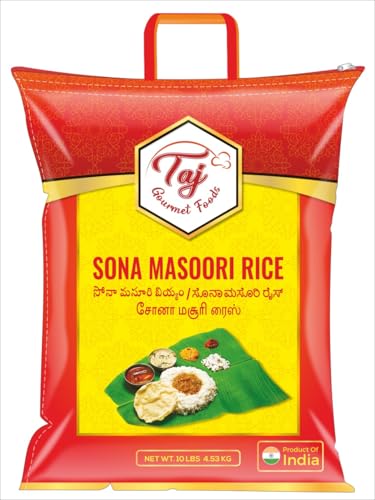
TAJ Sona Masoori Rice, 10 lb stands out for its specific South Indian dish suggestions: curries, stews, lemon rice, curd rice and tamarind rice. It is described as medium grain, light in texture and slightly sweet, with non-sticky cooking among its qualities. Those cues make it useful for cooks choosing a familiar table rice to pair with saucy meals or season after cooking. The fields do not give a cooking ratio, so begin with a standard method and adjust after checking how tender the grains become in your pot.
Bottom line: Choose this for its explicit pairing with curries and classic South Indian rice dishes.
Khazana Organic Sona Masoori Rice, 10 lb

Khazana Organic Sona Masoori Rice, 10 lb is described as a lightweight medium-grain rice with a fluffy texture and slightly nutty taste, a distinct flavor cue among these choices. The 10-pound bag is identified as organic, non-GMO, gluten-free and kosher. Its features also make nutrition-related claims; those claims should not determine a health decision, and rice is not a substitute for medical or dietary advice. The text cuts off while naming a use, so this choice is best for shoppers who prioritize its grain style and production attributes rather than a particular recipe recommendation.
Bottom line: Pick this if a slightly nutty profile and organic production claims matter most.
How to Choose Sona Masoori Rice
Choose by the dishes you cook most often, then use texture cues to narrow the options. Medium-grain rice is shorter and plumper than long-grain basmati, and it generally cooks tender rather than producing basmati’s long, distinct grains. For mixed use, a bag with several suggested preparations can be more practical; for everyday bowls, prioritize the texture and aroma you prefer. Organic claims can help buyers who specifically seek organic food, but compare the exact wording on the package and any certification mark. A useful decision rule: if you need a specific grain separation for biryani, cook a small test portion before serving guests; water, rinsing and pot shape all affect stickiness.
Rinsing and Cooking Sona Masoori
Start with a 1:2 ratio of rice to water by volume for stovetop cooking, then adjust the next batch to your preferred tenderness. Rinse in several changes of cool water until it looks less cloudy; removing loose surface starch can reduce gumminess, though it does not guarantee separate grains. Bring the pot to a boil, cover it, lower the heat and cook gently until the water is absorbed, then rest the rice covered for about 10 minutes before fluffing. Grain age, pot seal and desired softness change the result, so use the ratio as a starting point rather than a fixed rule. Avoid repeatedly lifting the lid, which releases steam and can leave the top unevenly cooked.
Choosing Rice for Different Meals
Match the grain result to the dish: softer, cohesive rice works well when stirred or mashed, while fluffy grains suit plain servings alongside curries. Use this guide as a starting point rather than a promise about any particular bag; rinsing and water adjustment change the cooked texture.
| Meal need | Useful cue | Adjustment |
|---|---|---|
| Pongal or soft rice | Tender, cohesive grains | Add a little more water and cook gently |
| Everyday rice with curry | Fluffy, medium-grain texture | Rest covered, then fluff |
| Fried rice | Less surface moisture | Cool cooked rice promptly before frying |
For fried rice, chilling cooked rice helps firm the grains, but food safety matters: refrigerate cooked rice within two hours rather than leaving it at room temperature.
Storing Rice Safely
Keep uncooked rice in a cool, dry pantry in a sealed container to limit moisture and pests; a 10-pound bag is easier to manage when divided into smaller airtight containers. Cooked rice needs quicker attention because bacterial spores can survive cooking and multiply if rice sits warm. Refrigerate leftovers within two hours in shallow containers, and use them within 3 to 4 days. Reheat leftovers until steaming hot throughout, and discard rice that has remained at room temperature beyond the safe window. Do not rely on smell alone to judge safety. For meal prep, portion rice before chilling so it cools faster and is easier to reheat evenly.
Frequently Asked Questions
How much water should I use for Sona Masoori rice?
A practical stovetop starting point is 2 cups water for each cup of rice. Rinse first, then adjust the next batch if you prefer firmer or softer grains; pot shape and lid fit also affect absorption.
Should I soak Sona Masoori rice before cooking?
Soaking is optional for ordinary stovetop rice, but a 15- to 30-minute soak can shorten cooking and encourage more even hydration. Drain it well and reduce the cooking water slightly if the result is too soft.
How do I keep cooked rice safe for leftovers?
Refrigerate cooked rice within two hours in shallow containers and use it within 3 to 4 days. Reheat until steaming hot throughout, and discard rice left out longer than two hours.
Can Sona Masoori rice be used for fried rice?
Yes, it can be cooked for fried rice; cool the rice promptly and refrigerate it before frying for firmer grains. Keep it refrigerated no longer than 3 to 4 days.
Is Sona Masoori the same as basmati rice?
No. Sona Masoori is generally a medium-grain rice, while basmati is a long-grain type known for elongating and separating during cooking. Choose based on the texture your dish needs.