
ComforTemp Pool Heat Pump: Models Compared by Fit

The Sun2Solar ComforTemp 32,000-BTU heat pump suits pools up to 7,500 gallons, so it is the named ComforTemp model to consider when your pool is within that capacity. Choose another option if your pool is larger or you need an explicitly specified 220-volt installation.
A pool heat pump draws warmth from ambient air and transfers it to pool water; output and pool volume determine whether its capacity fits your setup.
We earn a commission if you buy through links on this page. As an Amazon Associate I earn from qualifying purchases. Products are compared on manufacturer specifications, not hands-on testing.
- Best overall: Sun2Solar ComforTemp 32,000 BTU – Its 32,000-BTU output is specified for pools up to 7,500 gallons.
- Best for higher output: Blue Torrent ComforTemp 137,000 BTU – Its output is 137,000 BTU and it uses 2-inch plumbing.
- Best for inverter control: Varpoolfaye 120,000 BTU Inverter – The 120,000-BTU model describes inverter operation and Wi-Fi app control.
| Product | Best for | Heating output | Pool capacity | Electrical / plumbing | Shop |
|---|---|---|---|---|---|
| Sun2Solar ComforTemp 32,000 BTU | Pools up to 7,500 gallons | 32,000 BTU | Up to 7,500 gallons | — | Check Price on Amazon |
| Blue Torrent ComforTemp 137,000 BTU | Higher output needs | 137,000 BTU | 45,000 gallons in name | 220 V; 2-inch plumbing | Check Price on Amazon |
| Varpoolfaye 120,000 BTU Inverter | App-based control | 120,000 BTU | 33,000 gallons | 220 V | Check Price on Amazon |
| Raypak WeatherKing TWPH-6560 | Pool and spa use | 118,000 BTU | — | — | Check Price on Amazon |
ComforTemp pool heat pumps compared
Match the heating output and pool capacity to your pool before weighing controls or installation requirements.
Sun2Solar ComforTemp 32,000 BTU

The Sun2Solar ComforTemp is the directly named model here, with a 32,000-BTU output for pools up to 7,500 gallons. Its pool examples are most 15-foot round above-ground pools or 10-by-16-foot inground pools. The electric heat pump draws ambient warmth rather than generating heat through gas combustion, and its titanium heat exchanger is identified as suitable for saltwater pools. This is the clearest fit when your pool stays within the volume; a larger pool should be matched to a higher-output unit instead. Its voltage and plumbing requirements should be confirmed for the installation.
Bottom line: Pick it for a pool within 7,500 gallons, especially when its example pool sizes match.
Blue Torrent ComforTemp 137,000 BTU

The Blue Torrent ComforTemp has the highest explicitly named output among the two ComforTemp options, at 137,000 BTU, and specifies a 220-volt supply with a 60-amp breaker plus 2-inch plumbing unions. Its titanium condenser is corrosion resistant, and the controls include self-diagnostics and programming. The product name associates it with a 45,000-gallon pool, which is a substantially larger stated capacity than the Sun2Solar model. Choose it when the higher output and installation setup fit your pool; the required electrical circuit and plumbing make it a poor match for a plug-in style installation.
Bottom line: Choose it for a larger pool when your site can support the specified electrical and plumbing setup.
Varpoolfaye 120,000 BTU Inverter
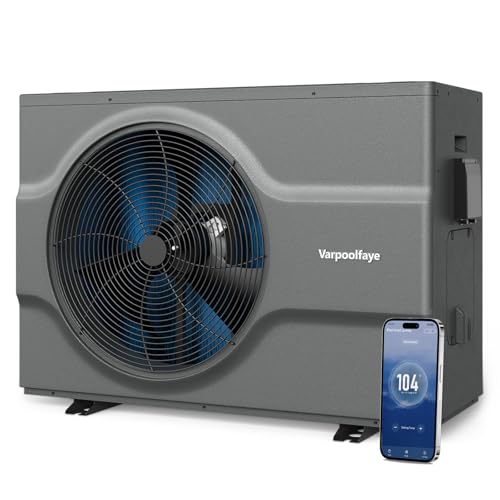
The Varpoolfaye offers a different approach from the ComforTemp-branded models: its 120,000-BTU output is paired with inverter operation and Wi-Fi app control. The product identifies a 33,000-gallon capacity and 220-volt operation, and says it serves both above-ground and inground pools, including saltwater pools. Its sound figure is 47 dB. This is a related alternative rather than a ComforTemp model, and it makes sense if app control and inverter operation matter more than matching the requested brand. Its gallon capacity is below the 45,000-gallon figure in the Blue Torrent name.
Bottom line: Consider it when app control and inverter operation are priorities over the ComforTemp name.
Raypak WeatherKing TWPH-6560

The Raypak WeatherKing is a related alternative with 118,000 BTU of output and a titanium heat exchanger, rather than a ComforTemp-branded unit. It is identified for both inground and above-ground pools and spas, and its scroll compressor is described as quiet. Digital controls are included. The warranty terms are 2 years for labor, 7 years for parts, and 10 years for the titanium tube heat exchanger. Its output is lower than the 120,000- and 137,000-BTU alternatives here, so buyers comparing large pool heaters should use pool volume and local conditions to determine whether that output suits their needs.
Bottom line: Choose it if spa compatibility and the specified warranty coverage are important.
How to size a pool heat pump
Choose heat-pump capacity by pool volume, desired temperature rise, and the weather during the heating season. A larger pool needs more heat to gain the same number of degrees, while cool nights and wind increase heat loss at the surface. As a practical decision rule, start with a model whose gallon capacity meets or exceeds your pool volume; do not treat pool dimensions alone as a capacity rating. Pool covers reduce evaporation, the largest source of heat loss, and can help maintain temperature. For a pool above the model’s volume, compare a higher-output unit rather than expecting a smaller unit to heat quickly.
Heat pump installation requirements
Electrical service and plumbing can determine whether a heat pump fits an existing pool pad. The Blue Torrent ComforTemp calls for 220 volts, a 60-amp breaker, and 2-inch plumbing unions, while the Varpoolfaye identifies 220-volt operation. Heat pumps also need open airflow around the air intake and exhaust; enclosing the unit or placing it against a wall can restrict air movement. Keep the unit level on a stable pad and route condensate away from the foundation. Before purchase, confirm the required circuit and connection sizes with a qualified pool electrician or installer.
Heat pump versus gas pool heater
Heat pumps transfer heat from outdoor air into pool water, so their heating output and efficiency depend on ambient temperature. Gas heaters burn natural gas or propane and can heat water regardless of outdoor air temperature, making them useful for rapid, occasional heating. Heat pumps generally suit owners who maintain a pool temperature over a longer season, while gas can suit short-notice heating or colder conditions. A pool cover helps either type by reducing evaporative heat loss. Compare the expected air temperatures, how quickly you need a temperature rise, and the available electrical or gas service before choosing a heater type.
Keeping pool heat in the water
A pool cover is one of the most effective ways to reduce heating demand because evaporation removes substantial heat from the water surface. Wind exposure, low nighttime temperatures, and uncovered water can extend heating time even when a heater is adequately sized. Use a cover whenever the pool is not in use, especially overnight, and keep leaves and debris from blocking the heat pump’s airflow. Pool heaters also need seasonal inspection: clear vegetation around the unit and have electrical connections and water-side plumbing checked before regular use. Never open energized electrical equipment yourself; pool equipment combines water and potentially lethal voltage.
Frequently Asked Questions
How many BTUs does a pool heat pump need?
Pool volume and the temperature rise you want determine the required output. Compare the manufacturer’s gallon capacity with your pool volume, and choose a higher-output heater if your pool exceeds that rating.
Can a pool heat pump work in cold weather?
A heat pump’s output falls as outdoor air gets colder because it draws heat from the air. Gas heaters can heat independently of air temperature, so they may be a better fit for frequent heating in cold conditions.
Does a pool cover help a heat pump?
Yes, a pool cover reduces heat loss from evaporation at the water surface. Covering the pool overnight and when it is unused can reduce how much heating is needed.
What electrical service does a pool heat pump need?
Requirements vary by model: the Blue Torrent ComforTemp specifies 220 volts and a 60-amp breaker, and the Varpoolfaye specifies 220 volts. Have a qualified electrician verify the circuit and local code requirements before installation.
Can a pool heat pump heat saltwater pools?
Some models are identified for saltwater use, including the Sun2Solar and Varpoolfaye options here. Saltwater can be corrosive, so confirm that the particular heat exchanger and pool system are compatible before connecting equipment.